
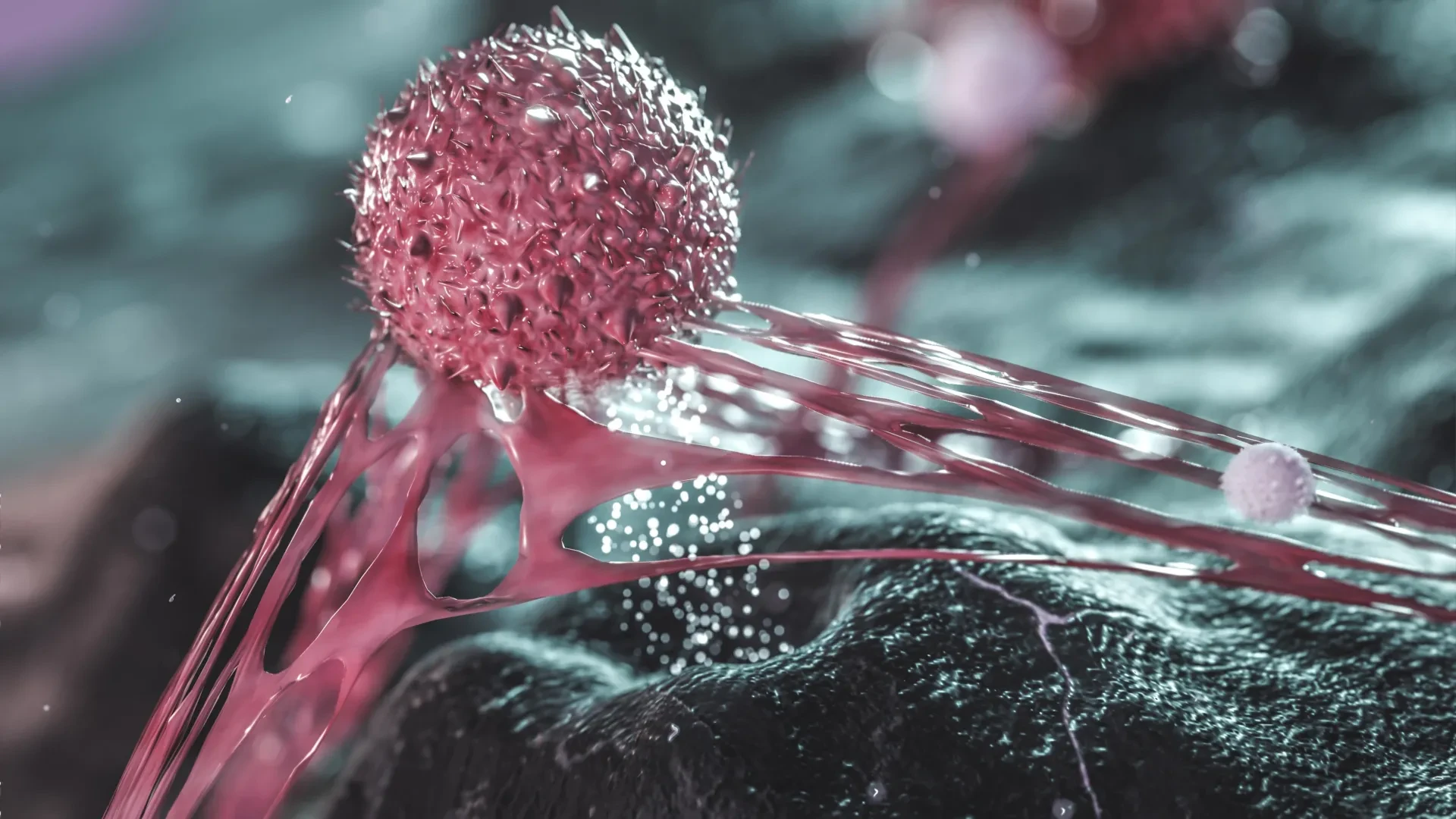
Researchers have successfully constructed a high-resolution, detailed cellular map of breast tumors, offering an unprecedented look into the internal architecture of cancer. The groundbreaking study, which sheds light on why some cancers manage to survive treatment and return years later, reveals that breast tumors are far from uniform. Instead, they are complex mosaics featuring distinct regions filled with actively dividing cancer cells alongside isolated pockets containing dormant, sleeping cells.
Published in the journal Genome Medicine, the collaborative research was led by scientists from the MRC Laboratory of Medical Sciences (LMS), Imperial College London, and the UCL Genetics Institute. Their findings demonstrate that these inactive cancer cells do not sit idly in isolation; rather, they are frequently surrounded by specialized immune and connective tissue cells that appear to construct a protective biological barrier, shielding them from the lethal effects of conventional therapies.
The implications of this spatial analysis suggest that future cancer treatments must evolve beyond simply targeting fast-growing, highly visible tumor masses. To achieve long-term remission and drastically reduce the risk of relapse, medical interventions will likely need to systematically target both the rapidly multiplying cells and the stubbornly dormant populations, as well as the specialized local environments that allow these hidden cells to persist.
Hidden Cells Inside Breast Tumors
For decades, modern oncology has understood that breast tumors are extraordinarily complex ecosystems. They are not merely solid masses of uniform rogue cells, but rather chaotic tissues made up of many diverse cell types. Alongside rapidly multiplying cancer cells that drive the outward growth of the tumor, these environments harbor various immune cells, newly formed blood vessels, and a particularly elusive and concerning group of cancer cells that remain unusually quiet.
These dormant, or "quiescent," cells possess the uncanny ability to weather aggressive medical treatments such as chemotherapy. Once the storm of treatment has passed, these lingering survivors can later reactivate, sparking a recurrence of the disease or driving the spread of cancer to other parts of the body. To better understand this treacherous phenomenon, researchers at the LMS, Imperial, and UCL set out to map where these cells are located within untreated tumors, what cellular characteristics distinguish them from their actively dividing neighbors, and which specific cell types tend to congregate around them.
Utilizing publicly available data and advanced computational models, the research team mapped breast cancer tumors at an unprecedented scale. They discovered distinct, localized clusters of quiescent cells. Crucially, these clusters were consistently surrounded by other supporting cells that may act as a protective barrier, insulating the dormant cancer cells from outside threats.
Why Dormant Cancer Cells Are Dangerous
The clinical danger posed by these resting cells cannot be overstated. "Quiescent cancer cells are very dangerous," explains Dr. Alexis Barr, co-lead author of the study and head of the Cell Cycle Control group at the LMS. "These cells can hide from chemotherapy and then remain in this dormant quiescent state in the tumor, and then later reactivate to drive proliferation."
This state of dormancy is often triggered by stressful conditions deep within a rapidly growing tumor. As a tumor expands at a furious pace, the local network of blood vessels and the supply of vital nutrients frequently fail to keep up with the surging demand. Faced with a hostile, resource-depleted environment, some cancer cells adapt by essentially putting their cellular growth and division entirely on hold.
The biological mechanism is conceptually similar to hibernation. Much like a bear sleeping through harsh winter conditions, these cells can remain completely inactive until external conditions become significantly more favorable. Frequently, that window of opportunity opens only after medical treatments have concluded and the immediate therapeutic pressure has lifted.
"If we want to achieve long-term control of peoples’ tumors and prevent tumor relapse, we have to focus on these dormant quiescent cancer cells, and have to understand more about them," Dr. Barr adds, emphasizing the urgent need to shift research paradigms toward this neglected population.
Mapping the Tumor Cell by Cell
To investigate these hidden cell populations, Dr. Barr partnered with computational biologist Dr. Maria Secrier and her team at UCL. Together, they worked to construct a comprehensive, multi-dimensional picture of the tumor landscape, examining both the cancer cells themselves and the intricate web of immune and support cells that populate the surrounding microenvironment.
The researchers achieved this by combining single-cell RNA sequencing—a powerful technique that reveals precisely which genes individual cells are actively using—with spatial transcriptomics. This advanced spatial mapping technology allows scientists to visualize exactly where those cells are positioned within the tissue architecture and identify which neighboring cells are interacting with them in real time.
"We found cells that resemble therapy-resistant cells already residing in the tumor before we give any treatment," says Dr. Secrier. This discovery suggests that many of the biological characteristics associated with treatment resistance may already exist naturally within the tumor before therapy even begins, rather than evolving strictly as an adaptive response to the drugs themselves.
Intriguingly, the researchers observed this exact pattern across both aggressive forms of breast cancer and slower-developing classes of the disease. This was a particularly unexpected result for the scientific team, because cellular quiescence had historically been linked more closely with slow-growing, less aggressive types of cancer.
Protective Neighborhoods Around Dormant Cells
The scope of the analysis went far beyond the cancer cells alone, prompting the team to closely examine the wide array of supporting cell types that infiltrate and become permanent fixtures of the tumor ecosystem. As the data came together, a striking and consistent pattern emerged across the samples.
Dormant cancer cells were frequently located in close physical proximity to CXCL10-positive macrophages—a specific type of immune cell—and myofibroblastic cancer-associated fibroblasts, which are specialized cells known to support tumor development. These surrounding populations appear to have been recruited or chemically altered by the tumor in ways that directly protect the dormant cancer cells nestled among them.
One leading hypothesis is that these surrounding cells construct a physical or biochemical shield, preventing cancer-killing immune cells or circulating chemotherapy drugs from successfully reaching the inactive cells.
"The cancer cells are really encapsulated within these areas of macrophages and fibroblasts that we think act as shields for these dormant cancer cells," Dr. Secrier notes. However, she cautions that the exact biological mechanism remains an open question: "We don’t yet know the direction of cause and effect: whether the surrounding cells push cancer cells into dormancy or if the cancer cells attract or alter their surroundings. It’s very likely coming from both sides."
Different Tumor Regions May Need Different Treatments
The discovery of these distinct cellular neighborhoods underscores a major limitation in traditional oncology. Many conventional chemotherapy drugs are designed to target and destroy cells that are dividing rapidly. Because dormant cells are temporarily paused and not actively multiplying, they are inherently much harder for standard therapies to eradicate.
This fundamental difference implies that rapidly growing regions and dormant niches within the exact same tumor will likely respond differently to identical treatments. During their analysis, the researchers detected heightened activity in the complement pathway—a critical branch of the immune system—specifically localized within these dormant cell niches. This finding raises the intriguing possibility that introducing treatments designed to inhibit or target this specific pathway could render those protected areas vulnerable to medical intervention.
Similarly, the supporting cells that encircle the dormant cancer cells represent another potential therapeutic target. However, scientists emphasize that further research is required to definitively prove whether these supporting cells actively maintain dormancy and how vital they are to the long-term survival of the cancer cells.
"Different parts of the tumor will likely respond to different drugs," Dr. Secrier explains. "If we understand what drug combinations we can use to target both the proliferative and the dormant areas, potentially that could be more successful than current therapies. This is giving us a first insight into how we can then intervene with different therapeutics that specifically target different areas of the tumor where the cells have adapted and have evolved differently."
Echoing this perspective, Dr. Barr emphasizes the need to rebalance research priorities. "It is clearly important to focus on proliferative cancer cells, but we also need to understand this population of quiescent dormant cancer cells. And that’s been less studied."
A Possible Path Toward Longer-Lasting Treatments
While the revolutionary ideas generated by this detailed computational mapping still need to be rigorously tested through direct laboratory experimentation, the study marks a crucial step forward. By locating treatment-resistant regions that pre-exist inside tumors and identifying the specific cells that shelter and support them, scientists are laying the groundwork for a new generation of combination cancer therapies.
By charting the exact locations of quiescent cells and understanding the protective environments that surround them, future medical treatments may finally be designed to tackle the full scope of the disease. Such therapies could simultaneously attack the rapidly growing portions of a tumor while neutralizing the stubborn, dormant cells that possess the terrifying capacity to survive standard treatments and spark a recurrence years down the road.
This foundational research was primarily funded by a UKRI Future Leaders Fellowship, the Medical Research Council, and the Biotechnology and Biological Sciences Research Council.