
For decades, the standard playbook for real estate investing has followed a predictable, incremental path. New investors typically purchase a single-family rental, learn the ropes through hands-on property management and maintenance, and eventually upgrade to small multifamily units, slowly snowballing their portfolio over a period of years. However, a compelling question frequently divides industry veterans: What if an investor has enough capital to bypass the single-family stage entirely and jump straight into a sizable multifamily property on deal number one?
This debate and several other pressing real estate dilemmas took center stage during a recent episode of the BiggerPockets Podcast. Regular co-host Henry Washington was joined by special guest Chauncey Pham—a Dallas-Fort Worth-based broker, investor, and six-figure-per-deal operator—to answer real questions pulled directly from the BiggerPockets Forums. From evaluating whether to purchase a 16-unit apartment building as a first-time investor to navigating contractor budgets and the realities of real estate brokerages, the discussion highlighted the stark contrast between conservative caution and calculated boldness in modern real estate.
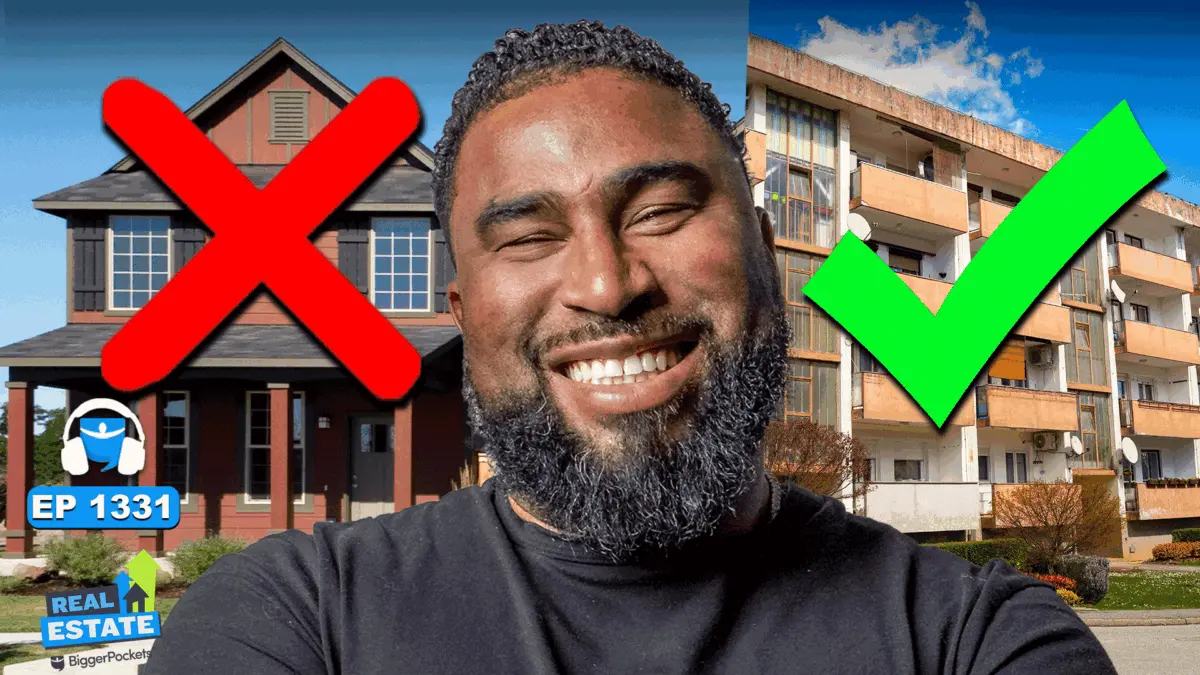
Skipping the Single-Family Ladder: Big Leap or Recipe for Disaster?
The conversation kicked off with a dilemma submitted by Nekesh from Charlotte, North Carolina. Nekesh noted the traditional trend of starting small with single-family homes before eventually consolidating into multifamily assets. However, having saved enough capital for a substantial down payment, he found himself eyeing quadplexes and even 16-unit apartment buildings in his local market. Wondering if taking this leap would mean skipping ahead inappropriately, he asked whether targeting a larger property on a first deal is a terrible idea or a viable shortcut.
The question immediately exposed a philosophical split between the co-hosts. Pham argued that the traditional wisdom of crawling before walking and walking before running is often a form of "groupthink" perpetuated on online forums by individuals who may lack the capacity or capital to scale quickly.
"I think that if you have the opportunity, you have the funds, and you understand the risk involved with the acquisition of a 16-unit, then if you got the resources, do it," Pham said. "You’re able to do an acquisition of 16 doors in one shot, one inspection, get exposure to a commercial loan product, and really get yourself out there without having to go through 16 single-family homes just to build that many doors."
Washington offered a more measured and conservative perspective, emphasizing that brand-new investors who lack prior deal experience, research time, or industry connections face substantial risks when jumping straight into commercial-scale properties. While acknowledging that wealth can be built through various paths, Washington warned that a single catastrophic mistake on a 16-unit asset could completely wipe out an inexperienced investor.
"If you’ve never done a deal, it’s sometimes best to take your bumps and bruises on a single-family home where you’re not going to lose your shirt," Washington explained. "Multifamilies can be largely more profitable, but a lot of times it’s because they come with more risk."
Ultimately, both hosts agreed that if an investor chooses to dive straight into a large multifamily property without prior experience, aligning with an experienced partner or securing a knowledgeable mentor is critical to navigating complex property management and extensive renovation scopes.
Navigating Risk as a Young Investor with Limited Capital
The discussion then shifted to a question from Jackson, a 19-year-old in Columbus, Ohio, who earns a solid W-2 income and wants to build a lasting business for his future family. Renting his current residence, Jackson had saved approximately $20,000, maintained good credit, and possessed a background in construction alongside valuable contractor connections. Eager to launch his investing career while managing fear of failure, he sought advice on how to move quickly without jeopardizing his financial stability.
Washington emphasized that at 19 years old, time is an investor’s greatest asset, advising Jackson to focus on executing a single successful deal rather than worrying about aggressive scaling. Washington strongly advocated for house hacking as an ideal first step, noting that utilizing low down-payment options on a multifamily property allows young investors to significantly reduce living expenses, live for free, and learn the fundamentals of real estate operations.
Pham agreed that failure at age 19 is financially cheaper than at any other stage of life, but she introduced an alternative strategic path tailored to Jackson’s construction background. Rather than starting immediately with real estate investing or basic house hacking, Pham suggested leveraging wholesaling and contractor skills to rapidly accumulate capital.
"He has a very unique opportunity to market deals that not only give him assignment fees, which is going to be quick capital, but that will also ultimately feed his construction business," Pham explained.
By functioning as a wholesaler who provides accurate scopes of work, realistic construction bids, and direct execution on the back end, Jackson could build vital industry relationships, stack his cash reserves to $75,000 or $100,000, and position himself to make a much safer, well-capitalized investment decision down the road.
Managing Contractor Budgets and Renovation Expectations
Addressing another common hurdle, Ollie from Houston asked whether investors should disclose their maximum renovation budgets to contractors upfront. The concern centers on whether sharing a $70,000 budget will result in a contractor’s quote conveniently returning at $69,800, or whether an upfront budget helps shape a realistic scope of work.
Pham asserted that investors should not only share their financial parameters with contractors, but they must also possess a fully defined design plan before soliciting bids. According to Pham, many renovation disputes arise because investors lack specific interior design plans—such as faucet placements or sink configurations—leading to unexpected cost overruns that strain relationships with construction teams.
"Tell them what your number is and what you’re working with, and they can give you a realistic expectation," Pham noted.
Washington added that honesty in contractor relationships generally fosters mutual transparency. However, he emphasized that having a specific budget does not guarantee a property can be renovated within that financial limit.
"You need to be less focused on sharing the budget per se, and more focused on dialing in your scope of work and sharing that," Washington said. "Because if you give a good contractor a well-designed, well-thought-out scope of work, they will get you an accurate bid, period."
The Most Critical Network Connection and the Real Estate License Debate
When Amber from Tampa-St. Petersburg, Florida, asked which single professional is most vital to an investing network—ranging from CPAs and lenders to realtors, property managers, contractors, and insurance brokers—the co-hosts offered distinct perspectives rooted in their operational backgrounds.
Pham highlighted her project manager, who also maintains a real estate license, as the central figure of her ecosystem. By tying together property acquisitions, subcontractor management, and material procurement—and incentivizing him through a cost-savings structure—Pham maintains tight control over project timelines and budgets.
Washington took a more traditional approach, designating his investor-friendly real estate agent as the most impactful team member due to their extensive network connections and ability to help navigate deals. However, Washington also spotlighted the CPA and bookkeeper as an indispensable, often overlooked asset necessary for tracking portfolio profitability and operational performance.
The conversation naturally segued into whether new investors should obtain a real estate license. Pham strongly advocated for getting licensed, arguing that the experience provides deep insight into consumer psychology and retail sales, which ultimately helps investors create better products for renters and buyers. Washington offered a counterpoint, cautioning that studying for a real estate license can sometimes serve as an excuse for newcomers to delay taking decisive action on actual deals, though he acknowledged the educational value if pursued simultaneously with deal analysis.
Realities of the Brokerage Industry for New Commercial Agents
The episode concluded with a question from Sophia, who joined a brokerage hoping to specialize in commercial multifamily real estate but found herself receiving minimal training, navigating a competitive environment where she felt isolated, and realizing that commercial real estate requires extreme self-reliance.
Pham offered a blunt, highly pragmatic assessment of the real estate brokerage model, comparing a license to filing for a basic business operating permit and a brokerage to a shopping center that simply houses retail storefronts.
"Your brokerage is nothing more than the strip center or shopping mall that you decide to house your store in, but it is ultimately your store," Pham explained. "Their job is one thing and one thing only, and that is to create a safe environment for consumers to conduct real estate transactions… They are not here to teach you how to be a business owner."
Pham emphasized that new agents often hold misconceptions fueled by media portrayals, failing to realize that success requires independent marketing, business acumen, networking, and sales proficiency. Washington reinforced this sentiment, reminding listeners that the challenges and isolation Sophia experienced are fundamental aspects of entrepreneurship.
The BiggerPockets Podcast regularly sources its discussion topics from its online community forum at biggerpockets.com/forums, where millions of members exchange advice and insights on real estate investing strategies.