
The race to build the next major frontier in artificial intelligence has turned one of the industry’s most fascinating concepts into a high-stakes mystery. This week, moderating a panel on world models at the All In conference provided a rare window into a secretive corner of the tech world. At the forefront of this emerging field are high-profile ventures like Yann LeCun’s AMI Labs and Fei-Fei Li’s World Labs. Both organizations have successfully accumulated massive amounts of buzz and substantial financial backing, yet they currently rank quite low on the traditional metric of trying to turn a profit.
At their core, world models are designed to automate spatial intelligence, paving the way for a wide array of potentially lucrative and transformative applications. The technology could eventually power everything from advanced robotics and interactive video creation to more complex, reliable self-driving vehicle systems.
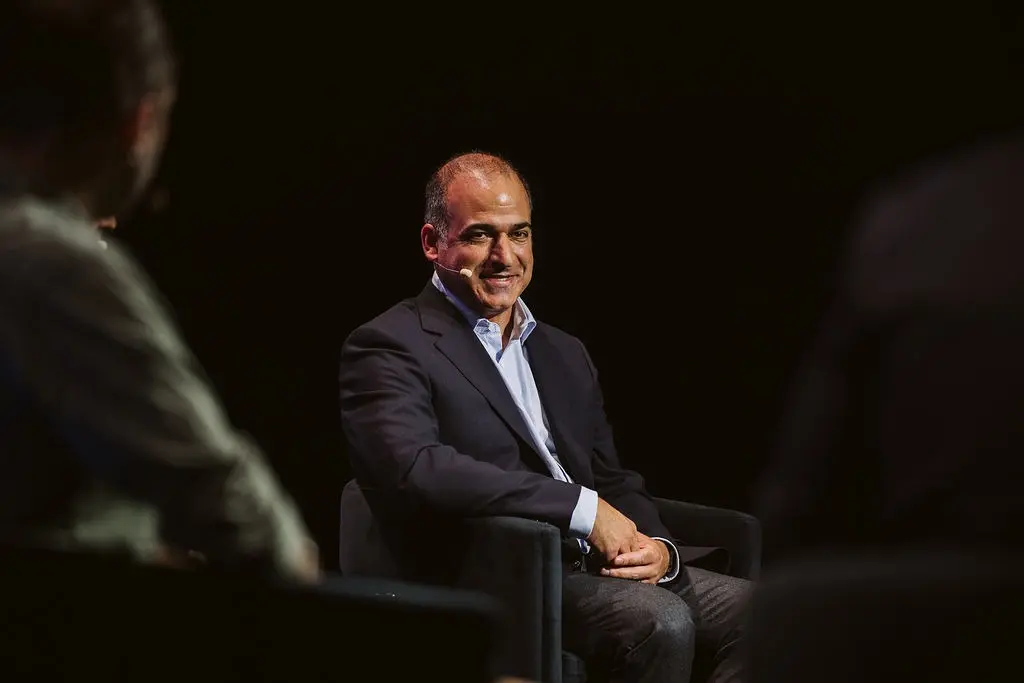
However, when pressed on where the technology will actually see commercial deployment first, the picture quickly becomes foggy. The closest entity to an authoritative voice on the matter is Michael Rabbat, a co-founder of AMI Labs and the company’s vice president of world models, who joined the panel discussion. When questioned about the specific projects currently underway inside the laboratory, Rabbat remained notably cagey. “We’ll talk about it when we’re ready to talk about it,” he stated. In a subsequent email clarification, he added that the organization remains firmly in a research and building phase, choosing to keep public details regarding product plans and timelines under wraps.
To be fair, AMI Labs is less than a year old, making a period of quiet development entirely reasonable. Yet, this atmosphere of secrecy extends far beyond a single startup, permeating the entire world-modeling space. World Labs’ Marble platform represents perhaps the most fully developed product currently available in the market. Its public demonstrations range from straightforward media creation and the generation of explorable environments for video games to complex computer-generated imagery effects. While there are certainly clear robotics use cases for the platform, the overall impression is that these tools are currently designed more to demonstrate underlying capabilities than to serve as turnkey commercial products.
This pervasive secrecy even affects the ecosystem of suppliers supporting these labs. On the sidelines of the same conference, Alex de Vigan, the chief executive officer of Physicl—a specialized data supplier for the burgeoning world model business—shared his perspective. De Vigan noted that while he knows Physicl’s data has proven useful for whatever the major labs are building, he remains entirely in the dark about the specifics of those projects. “I wish they would tell us more. We could build more useful data if we knew what they were working on,” de Vigan remarked.
Part of the persistent mystery stems from the inherent versatility of world models as an overarching conceptual framework. In its simplest iteration, a world model functions as a navigable digital map of the environment, much like the AI architectures that currently assist self-driving cars in navigating complex roadways. However, the exact same underlying modeling approach that helps a Waymo vehicle weave safely through dense city traffic could theoretically be repurposed to help a humanoid robot sort and carry inventory boxes in a warehouse, or instantly transform a few minutes of standard video footage into a fully explorable, three-dimensional environment. AMI Labs has already dipped its toes into a remarkably diverse array of sectors, including manufacturing, biomedicine, robotics, and specialized AI software for healthcare professionals through its partnership with Nabia. It is statistically certain that the company will not pursue all of those potential avenues simultaneously, but the question remains as to which specific pathways are currently rising to the top.
No knowledgeable observer doubts that there are numerous viable businesses waiting to be built on top of world model technology. As long as venture capital and strategic fundraising remain relatively frictionless, there is little immediate market pressure for these labs to narrow their focus to a single commercial application. In fact, there is compelling strategic rationale for keeping options open. If a prominent player like AMI announced tomorrow that it had successfully built a commercially viable humanoid platform or a next-generation Hollywood-grade rendering system, a host of rival laboratories would instantly pivot their attention and resources toward that exact vertical. Before long, the pioneer would face intense potential competition not only from other dedicated world-model companies and specialized neolabs, but potentially from industry heavyweights like OpenAI and Anthropic as well.
In many ways, this dynamic represents the flip side of the current fundraising boom. The same abundance of capital that allows an ambitious lab to build powerful technology under the radar is also actively funding a multitude of potential rivals who are simply waiting for a clear path to market to emerge. Even if that eventual market competition is completely inevitable, standard business strategy dictates that delaying it for as long as possible is the optimal course of action. For these labs, maintaining operational security means keeping quiet about the exact nature of the products taking shape behind closed doors.
Fans of science fiction author Cixin Liu will readily recognize this dynamic as a classic dark forest scenario: when you are operating in a vast, unknown environment and you do not know who else might be lurking in the woods, the safest approach is simply not to attract attention to yourself.