
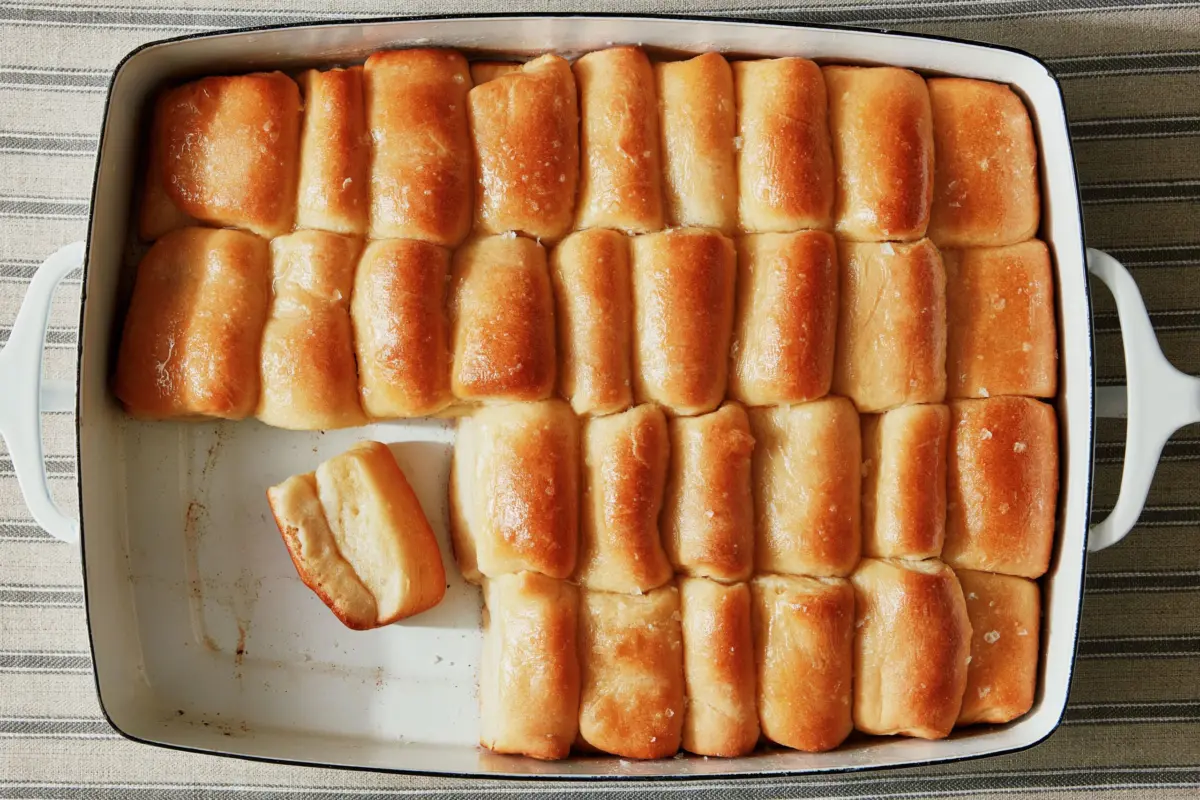
With their burnished, golden-brown tops, exceptionally buttery layers, and a delicate finish of flaky sea salt, Parker House rolls stand firmly as the quintessential American dinner roll. Originating at Boston’s historic Parker House Hotel during the late 19th century, these soft, fluffy yeast-risen rolls have earned a permanent place at holiday tables across the nation. Often affectionately referred to as "pocketbook rolls" due to their signature folded shape, they offer a versatile accompaniment that can easily transition from savory feasts to sweet morning treats. Whether served steaming hot alongside a traditional Thanksgiving turkey or a glossy glazed holiday ham, these rolls invite diners to pry open their buttery seams and slather the interiors with honey or jam for a comforting breakfast the next morning.
Adapted from the pages of The Fannie Farmer Baking Book, this classic Parker House roll recipe remains straightforward and approachable enough for even novice bread bakers. The enriched yeast dough is exceptionally forgiving and easy to knead by hand, though home cooks who prefer convenience can easily rely on a standard kitchen stand mixer to do the heavy lifting. The true magic of the recipe lies in the meticulous assembly technique: brushing each individual piece of dough with melted butter before folding it over itself creates the rolls’ characteristic pocketbook shape and distinct layers. A second swab of butter applied immediately after baking ensures that the tops emerge from the oven with a brilliant, appetizing sheen.
Parker House Rolls FAQ
What makes a Parker House roll different from a regular dinner roll?
The defining characteristic of a Parker House roll lies entirely in the fold. Rather than shaping the enriched yeast dough into traditional round balls—as is common with standard dinner rolls—Parker House rolls are rolled, cut into rectangles, generously brushed with melted butter, and folded over themselves before the final rise and bake. This deliberate folding technique yields their distinctive pocketbook shape, complete with a buttery interior seam that makes the baked rolls exceptionally easy to pull apart piece by piece.
Can I make Parker House rolls ahead of time?
Home cooks planning a large holiday meal or dinner party will find that Parker House rolls offer remarkable flexibility when it comes to scheduling. The yeast dough can be mixed up to eight hours ahead of time, covered tightly, and left to rest in the refrigerator to slow down the fermentation process. Furthermore, once the rolls have been shaped into their final pocketbook form, they can be covered and refrigerated for a minimum of 30 minutes and up to six hours before they are transferred to the oven for baking.
For those who wish to get even further ahead on event days, the rolls can be partially baked earlier in the day. To do this, bakers remove the rolls from the oven about five minutes before they are fully finished cooking; at this stage, they should be fully puffed and cooked through on the inside, but their tops should not yet have turned a deep golden brown. When dinner time arrives and guests are seated, the rolls can be popped back into the oven to finish baking and regain their fresh-from-the-oven warmth and texture.
Why did my Parker House rolls turn out dense?
Achieving the iconic light, fluffy texture of a proper Parker House roll requires careful attention to ingredient measurements and rising times. Using too much flour or failing to let the dough rise sufficiently can easily produce dense, heavy rolls rather than the desired airy pillow-like consistency. For the most accurate results, bakers are encouraged to weigh their flour using a kitchen scale rather than scooping it by volume with measuring cups, which often packs too much flour into the recipe. Additionally, allowing the dough to complete its initial bulk fermentation until it has fully doubled in size before shaping is essential for developing a proper crumb structure.
Conversely, overproofing the dough can also inadvertently create a dense roll. When yeast dough is allowed to rise for too long, the gas bubbles become overextended and eventually deflate, leaving the baked product heavy and compact. To eliminate the guesswork, bakers often rely on the classic poke test to accurately determine the exact moment when their shaped rolls have finished proofing and are ready to be slid into a hot oven.
Can I freeze Parker House rolls?
Parker House rolls freeze exceptionally well, making them a convenient option for meal-preppers and holiday planners alike. Fully baked and subsequently cooled rolls can be stored in the freezer for up to one month. When it is time to serve them, the frozen rolls should be thawed and gently rewarmed in a low-temperature oven to restore their original soft, tender texture. To prevent the crust from drying out during the reheating process, giving the rolls a light spritz of water on top helps keep them plush and stops the exterior from becoming excessively dark or tough.
Alternatively, bakers can freeze the fully risen, unbaked rolls for up to a month before they ever see the heat of an oven. These frozen unbaked rolls can be baked straight from the freezer, though home cooks should account for an additional five minutes of extra cooking time to ensure they bake through evenly from the center out.
This timeless recipe was adapted for style from the beloved culinary reference The Fannie Farmer Baking Book by Marion Cunningham. The complete volume, filled with foundational baking techniques and classic American recipes, is widely available for purchase through booksellers such as Amazon and ThriftBooks.