
The ongoing debate surrounding no-trade clauses (NTCs) and no-move clauses (NMCs) in the National Hockey League has intensified significantly following recent remarks from league leadership and the players’ union. What began as a commissioner’s critique of modern roster management has swiftly evolved into a high-stakes labor friction point, raising questions about player autonomy, general manager accountability, and the future of collective bargaining in professional hockey.
In recent weeks, the issue of NHL players wielding NTCs and NMCs to dictate their employment destinations has taken center stage across the league. The discussion brings to light the delicate balance of power between front offices striving for maximum roster flexibility and athletes seeking career stability and control over their lives and livelihoods.
Gary Bettman Sparks the Debate
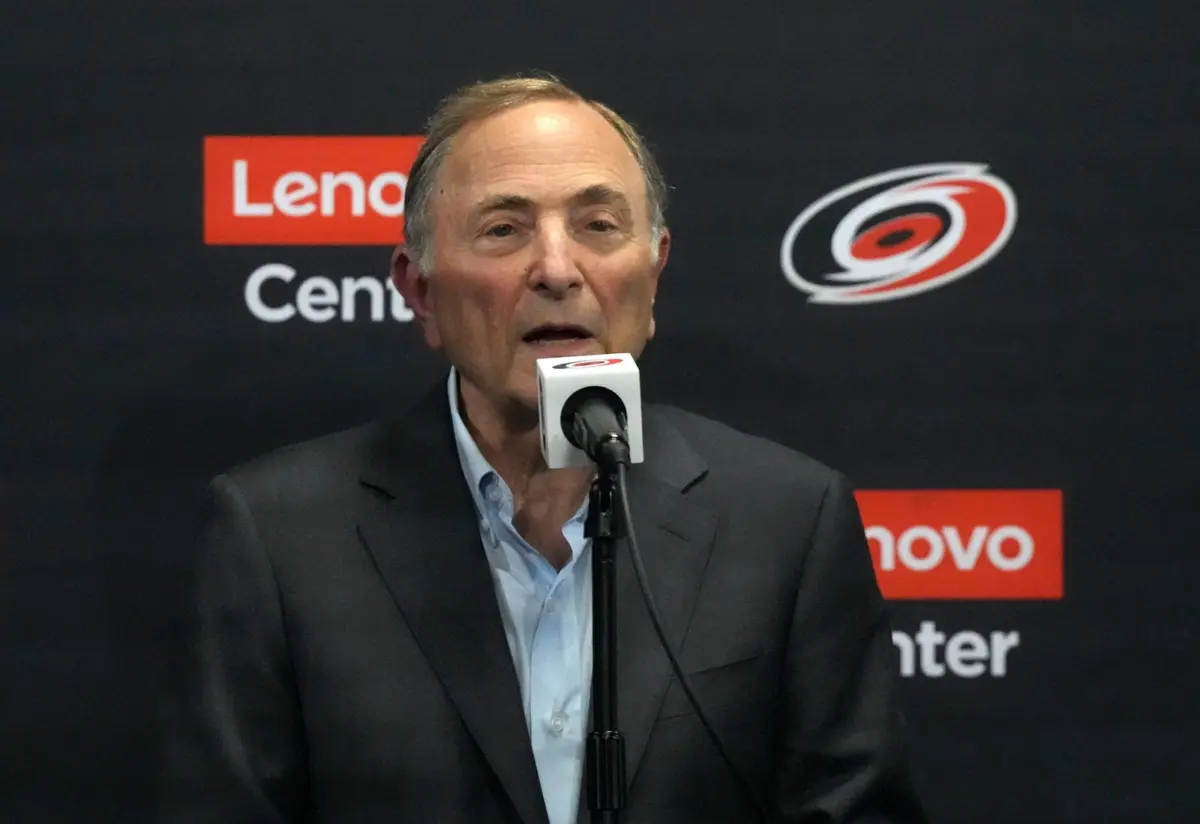
The public discourse was ignited by NHL Commissioner Gary Bettman, who did not mince words when sharing his perspective on the proliferation of trade restrictions in modern player contracts. Speaking candidly about how these clauses impact the operational landscape of the league, Bettman openly expressed his view that NTCs and NMCs are detrimental to the overall health and competitiveness of the NHL.
"This notion now where, (a) you can select where you want to go, to and (b) you can demand a trade… That was never the original intention," Bettman stated at the start of October. "If this becomes a problem — I don’t think one off-season a problem makes — but if this becomes a problem, it’s something we’re going to have to discuss with the players’ association."
Bettman’s critique targets a growing trend where marquee players leverage contract clauses not only to block unwanted transactions but actively to request trades to preferred destinations, narrowing a general manager’s leverage to a fraction of the league. While the commissioner acknowledged that a single off-season does not constitute an immediate crisis, his willingness to flag the issue signals that the league office views player movement restrictions as a mounting hurdle for franchise management.
The NHLPA Fires Back: Defending Bargained Rights
The league’s critique did not go unanswered for long. The NHL Players Association quickly mobilized a defense, led by assistant executive director Ron Hainsey, who offered a robust and uncompromising pushback against the commissioner’s characterization of player movement clauses.
"His conversation about no-move and no-trade clauses, we do take as an attack on players’ CBA-negotiated rights," Hainsey said. "It’s a player’s right to negotiate salary, salary structure, term, as well as a no-move or no-trade with their club if they’re able to do so and bargain in good faith. It’s pretty simple if you’ve negotiated a no-trade. Whether it’s 10 teams or 15 or 32, the club isn’t able to trade you to those teams without your consent. Our position is that the clauses are acting as they were intended to work."
Hainsey’s pointed commentary underscored the union’s foundational stance: these clauses are not loopholes or modern aberrations, but rather legitimate, hard-earned provisions secured through collective bargaining. To the NHLPA, any attempt to characterize these negotiated terms as harmful to the game is interpreted as a direct challenge to the rights guaranteed to players under the current collective bargaining agreement.
Marty Walsh Weighs In With a Measured Approach
As the public exchange drew widespread attention across the hockey world, NHLPA executive director Marty Walsh stepped into the fray to reinforce the union’s unified front. On Wednesday, Walsh backed Hainsey’s firm defense of the membership, though his tone struck a more conciliatory and diplomatic chord than that of his assistant executive director.

Despite the tempered delivery, Walsh’s message was fundamentally identical to Hainsey’s. He reiterated that players bargained in good faith to include these protective measures in the league’s labor agreement. Furthermore, Walsh emphasized that nothing transpiring since the collective bargaining agreement was ratified this past off-season runs contrary to the shared understandings and positions held by both the league and the players’ association during their negotiations.
By presenting a unified, calm, yet resolute front, the union made it clear that players will not easily cede ground on a mechanism they view as essential to their professional security.
Looking Ahead: The Economics of the Next CBA
From an analytical standpoint, the NHLPA appears to hold a distinct advantage in the early stages of this debate. No union member holds a metaphorical knife to the backs of NHL general managers when lucrative contracts featuring NMCs and NTCs are handed out. Front offices willingly utilize these clauses as recruitment and retention tools, often sweetening contract terms to convince elite talent to sign or stay in a particular market.
While Bettman remains fully within his rights to revisit the topic when the league and the players’ association sit down to negotiate a new collective bargaining agreement ahead of 2030, any push by ownership to eliminate or severely restrict these clauses will come at a steep price. If the league intends to trade away or limit those player rights to satisfy management’s desire for flexibility, the NHLPA will inevitably demand significant concessions in return.
To understand the players’ steadfast resistance, one must look at the historical context of professional sports labor relations. A return to an era where players have little to no say in their geographical employment would echo the early, restrictive days of professional sports—a dynamic closer to indentured servitude than a modern labor partnership. Today’s players simply will not accept that level of all-encompassing control from team owners.
Consequently, while it is fundamentally the commissioner’s job to identify operational pain points in every labor deal and attempt to address them in subsequent collective bargaining agreements, it is equally the executive director’s mandate to ensure balance. If players are expected to yield to owner requests in specific negotiation areas, owners will unquestionably be forced to give back in others.
Ultimately, regardless of how much executives and fans may dislike the restrictive nature of NTCs and NMCs, these clauses are firmly entrenched and are going nowhere for the next four years, and quite possibly longer. Until these clauses actually disappear from the negotiation landscape, the responsibility for curbing their proliferation rests entirely on the shoulders of NHL general managers and team owners.
Nobody is forcing front offices to hand out no-move and no-trade clauses. Until GMs and owners exercise restraint and stop offering them, players will continue to demand them, and the prevalence of these clauses across the league will only continue to grow.