
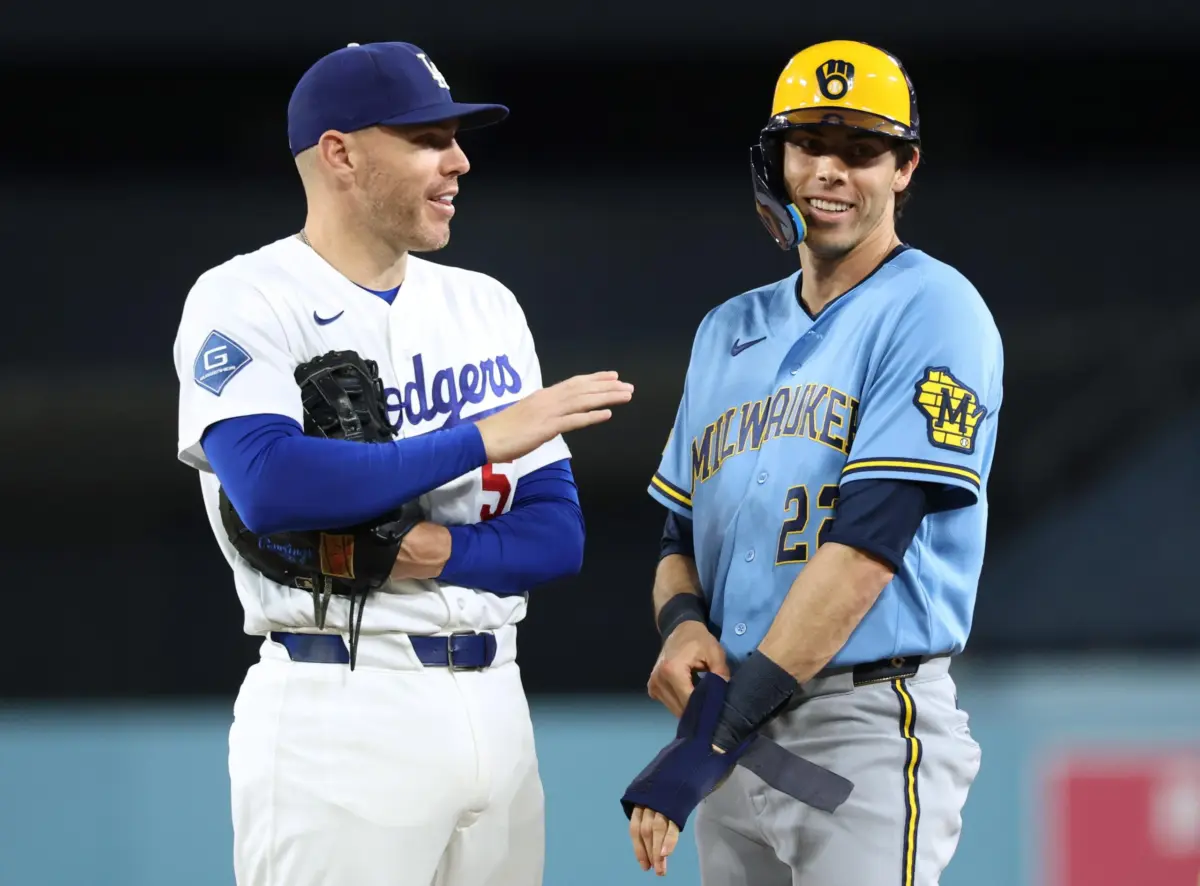
The road to the World Series runs through a familiar matchup in the National League, as the Los Angeles Dodgers and the Milwaukee Brewers lock horns once again in the National League Championship Series. For baseball fans, the clash serves as a high-stakes rematch of the 2025 NLCS, a series that ultimately favored the Dodgers when they swept the Brewers in four decisive games on their way to capturing a second consecutive World Series title.
Now, the landscape of the postseason brings a fresh set of questions. Can the powerhouse Dodgers keep their historic three-peat aspirations alive, or will the Brewers finally break through to reach the Fall Classic for the first time since their heartbreaking loss in the 1982 World Series? As the battle for the pennant intensifies, the stakes could not be higher for two franchises that have charted contrasting paths to this October showdown.
NLCS schedule and scores
The heavyweight battle between the Dodgers and the Brewers is mapped out across a grueling seven-game slate, bringing fans marquee postseason baseball through mid-October. All game times are listed in Eastern Standard Time.
The action kicked off on Sunday, October 11, with Game 1, where the Brewers managed to draw first blood with a hard-fought 2-1 victory, taking an early 1-0 edge in the series. Milwaukee doubled down on Monday, October 12, in Game 2, outslugging the Dodgers 7-4 to extend their series lead to 2-0 as the scene shifts to Los Angeles.
The series moves to the West Coast for Game 3 on Wednesday, October 14, scheduled for an 8:00 p.m. first pitch broadcast on FS1. Game 4 follows immediately on Thursday, October 15, at 9:00 p.m., also on FS1. If necessary, Game 5 will be played on Friday, October 16, at 9:00 p.m. on FS1. Should the series extend beyond five games, the action will return to Milwaukee for Game 6 on Sunday, October 18, at 8:00 p.m. on FS1, with a potential Game 7 winner-take-all showdown slated for Monday, October 19, at 8:00 p.m. on the primary FOX network.
What happened in the regular season?
The path to the 2026 NLCS has featured no shortage of familiarity between these two pennant contenders. This postseason series marks the third time the Brewers and Dodgers have crossed paths over the course of the grueling 162-game regular season schedule.
Their first meeting took place in late May during a three-game series hosted in Milwaukee. The Brewers asserted themselves early in the opener, leaning on a stellar, scoreless five-inning performance from starting pitcher Logan Henderson to cruise to a comfortable 5-1 victory. However, the resilient Dodgers bats answered in force during the second game of the set, erupting for an 11-3 blowout win before securing the series victory by taking the rubber match with another 5-1 decision.
The rivalry renewed itself in mid-August, this time shifting to the friendly confines of Los Angeles. The Brewers flipped the script to capture the series win, drawing first blood in the opener with a dramatic 5-4 triumph after plating three earned runs off Dodgers closer Edwin Diaz in the top of the ninth inning. Though Los Angeles bounced back to take the second game 3-1, Milwaukee reclaimed momentum in the third contest with a 4-2 win, before Henderson delivered another masterclass on the mound to help the Brewers clinch the series finale 6-2.
When the dust settled on the regular season, Milwaukee held a slight edge, winning four of the seven total head-to-head meetings. Yet, history serves as a stark reminder that regular-season dominance rarely translates to October success. Just a year prior, the Brewers swept the regular-season series against Los Angeles entirely, only to watch the Dodgers return the favor by sweeping them right out of the NLCS on their march to a championship crown.
NLCS prediction
Attempting to forecast the outcome of this series forces analysts to weigh two distinct philosophies of roster construction and momentum. On one side stand the Los Angeles Dodgers, an organization perennially built for October dominance. Backed by a staggering $339 million payroll—ranking second in Major League Baseball behind only the New York Mets—the Dodgers carry the historical weight of a franchise pursuing a rare three-peat, a feat achieved by only a select few teams in baseball history.
Conversely, the Milwaukee Brewers may not possess the financial might of their West Coast adversaries, but they earned their status as the top team in the National League through sheer depth, execution, and resilience, capturing the regular-season crown and securing home-field advantage throughout the league playoffs. Crucially, unlike the circumstances surrounding their postseason meeting a year ago, the Brewers enter this NLCS with their pitching infrastructure in a vastly superior position.
Last autumn, Milwaukee limped out of a grueling five-game National League Division Series against the Chicago Cubs. That grueling battle forced the Brewers to burn arm talent, culminating in a Game 5 start for Jacob Misiorowski just to keep their championship dreams alive. That heavy usage forced Milwaukee to piece together a bullpen day featuring reliever Aaron Ashby and an injured Quinn Priester—who was later diagnosed with thoracic outlet syndrome—to open the NLCS against Los Angeles.
This October tells a completely different story. The Brewers have their rotation locked in precisely where they want it. Misiorowski takes the ball for Game 1, followed by Logan Henderson for Game 2. Henderson enters the series carrying an incredible streak, having yet to allow three runs or more in any of his 24 combined starts across the regular season and postseason. While questions inevitably linger about the deeper layers of the pitching staff, the Brewers are undeniably better equipped to handle the opening salvos of this high-stakes series.
Then, of course, there is the unpredictable variable of Shohei Ohtani. During the 2025 NLCS, Ohtani authored one of the most astonishing individual performances in postseason history during Game 4, launching three home runs while simultaneously striking out ten batters as the starting pitcher to cement the Dodgers’ sweep.
However, physical ailments have forced Los Angeles to shut down Ohtani’s pitching duties this season, leaving opposing hurlers to contend solely with his bat. Even so, the superstar designated hitter has experienced a noticeable cooling off period after a scorching month of June. His August offensive output dipped to a .241/.322/.472 slash line, and his struggles carried over into the NLDS against the Atlanta Braves, where he managed just two singles in 13 at-bats for a meager .154/.267/.154 line. While the Dodgers boast a star-studded lineup that extends far beyond one player—evidenced by Ohtani being dropped to fifth in the batting order for Game 3, the lowest lineup placement of his Dodgers tenure—the downward trendline of his production remains a talking point.
Ultimately, this matchup features the elements of a classic, hard-fought war of attrition between two elite baseball operations. While the Dodgers possess the pedigree and championship muscle memory, the Brewers’ stabilized pitching rotation, regular-season consistency, and determination to rewrite recent history give them the edge needed to navigate the gauntlet.
The battle for the National League pennant promises to push both clubs to their absolute limits, pointing toward a dramatic conclusion.
Prediction: Brewers in seven.