
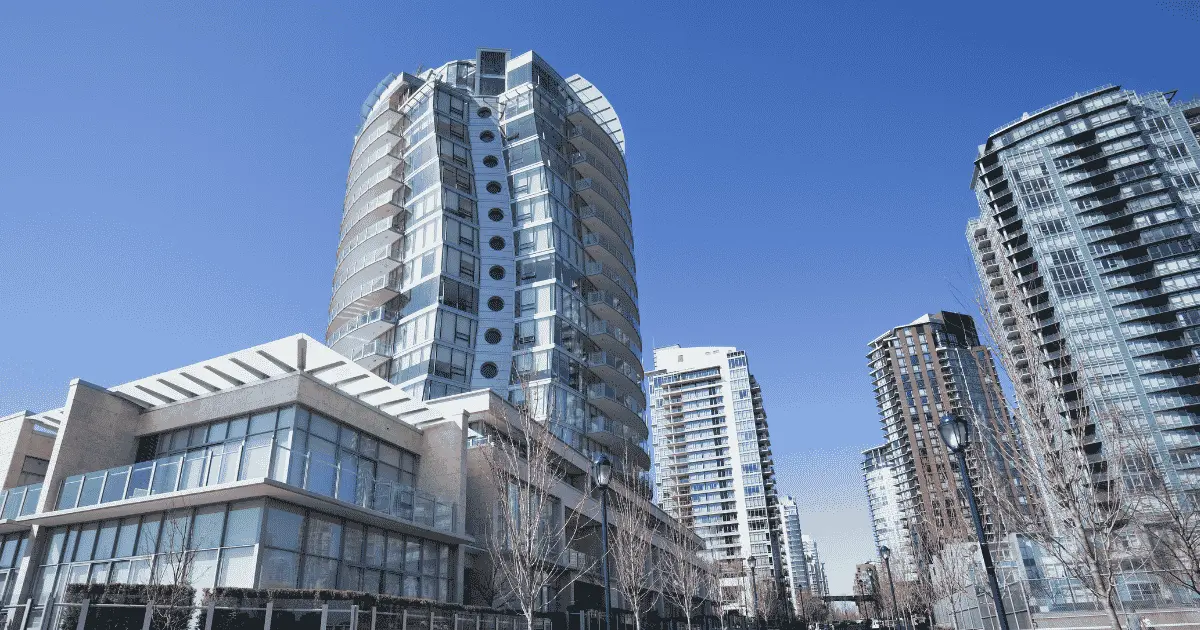
Canada’s national housing conversation has long been dominated by a singular, pressing narrative: a severe shortage of available homes driving up the cost of living for everyday citizens. However, a comprehensive new report from real estate analytics firm CoStar reveals a surprising, bifurcated reality hiding beneath the surface of the country’s broader real estate crisis.
While everyday renters face fierce competition and vanishing options in the lower price brackets, the high-end luxury rental market is experiencing a massive glut. According to CoStar’s data, high-end rentals in Canada currently suffer a vacancy rate of nearly 17 per cent. This figure stands in stark contrast to the tighter, healthier vacancy rates hovering close to three per cent for more affordable, modest rental inventory.
CoStar, which categorizes rental properties using its own rigorous rating system, zeroed in on the country’s most exclusive housing stock. Out of 26,600 five-star units across Canada, a staggering 4,500 are sitting empty, translating to a daunting vacancy rate of 16.9 per cent.
The firm notes that four- and five-star buildings are uniquely positioned in the marketplace, distinguished by high-quality interior finishes, extensive premium amenity offerings, and striking, architecturally significant facades designed to attract affluent clientele. Yet, this exclusivity has not translated into sustained occupancy. For four- and five-star units combined, 25,500 are vacant out of a total 222,190 units across Canada, pushing the combined vacancy rate to 11.5 per cent.
This upper-tier reality diverges sharply from the rest of the market. CoStar reports that three-star buildings enjoy a much healthier vacancy rate of four per cent, while one- and two-star buildings record a tight 2.7 per cent vacancy rate.
Two distinct narratives
For industry analysts, the stark divide in vacancy rates points to two entirely separate narratives unfolding simultaneously within the Canadian rental market—one defined by abundance at the top and acute scarcity at the bottom.
Mario Lefebvre, CoStar’s chief economist for Canada, highlighted this dichotomy in an interview with Real Estate Magazine. He places the blame for the dramatic accumulation of vacant luxury units squarely on the shoulders of real estate developers who heavily concentrated their efforts on building high-end stock. Crucially, this shift was not born out of a cynical attempt to exclusively court the wealthy, but rather out of necessity driven by runaway construction costs.
Lefebvre explained that construction expenses escalated dramatically during the COVID-19 pandemic and have continued their upward trajectory ever since, surging by an estimated 60 to 70 per cent. At the same time, average household incomes have failed to keep pace with these compounding costs. This severe economic mismatch has made it exceedingly difficult for developers to construct genuinely affordable housing while still managing to recoup their skyrocketing initial investments.
"Developers started doing the math themselves and said… ‘I’m going to go to the higher end,’" Lefebvre said. "The problem is, they built and they built, and now we wind up with double digits at the higher end in terms of vacancy."
Facing prohibitive overhead, developers calculated that the only viable financial path forward was to lean into higher-end materials, luxury finishes, and comprehensive amenity packages, allowing them to charge premium rental rates to justify the project costs.
However, the macroeconomic conditions when these projects were first conceived earlier in the decade look drastically different from the economic landscape of today. Initial financial projections were built on highly optimistic assumptions about rapid population growth and robust economic expansion. Since then, the market has cooled significantly due to a confluence of headwinds, including lower immigration targets, persistent inflation, and broader economic strains, such as the lingering threat of U.S. tariffs.
According to CoStar’s report, tenant absorption simply could not keep pace with the massive wave of newly delivered high-end units. As a result, vacancy rates in the luxury segment have escalated sharply, jumping from roughly seven per cent in 2022 to the double-digit figures recorded today. Consequently, analysts emphasize that when policymakers and the public discuss a shortage of available homes in Canada, they are specifically referring to a profound shortage of affordable housing, as the market actually boasts a surplus of luxury options.
A slow return to equilibrium
Addressing how the market might correct this imbalance, Lefebvre suggested that Canada’s rental sector will experience a slow, gradual return to equilibrium. Over time, landlords are expected to lower their rental expectations, making upper-tier stock slightly more accessible to a broader segment of the population. Simultaneously, the overall pace of residential construction has already begun to slow, which will eventually allow organic demand to catch up with the current oversupply. Even with these adjustments, Lefebvre cautioned that it will take several years to fully absorb the excess high-end inventory.
CoStar’s report forecasts a steady increase in tenant absorption beginning around the end of 2026. This recovery is projected to take hold as rents begin to adjust downward, supply tightens, and landlords increasingly rely on financial concessions—such as offering a few months of free rent—to entice hesitant renters. Nevertheless, the firm anticipates that the vacancy rate within the high-end rental segment will stubbornly remain above 10 per cent through the end of 2028.
Not expensive by design
While CoStar’s figures illustrate a stark surplus in luxury housing, other industry authorities observe a slightly different baseline, though they agree on the underlying market pressures. The Canada Mortgage and Housing Corporation (CMHC) calculates vacancy rates for premium rentals using a different methodology, placing the figures notably lower than CoStar.
According to CMHC data released in October 2025, the vacancy rate for the highest quartile of rents in Canada stood at 5.2 per cent. At the time, the national average rent across this high-end bracket sat at a little over $1,950 a month. While a 5.2 per cent vacancy rate indicates a more balanced market than CoStar’s double-digit findings, it still represents a substantial shift from historical norms. Specifically, it is nearly double the typical pre-pandemic vacancy rate for high-end rentals, which sat at a tight 2.8 per cent in October 2019.
Tania Bourassa-Ochoa, deputy chief economist at CMHC, noted that vacancies have been visibly elevated for newer builds over the last few years. She explained that this trend is largely a byproduct of recent construction booms, which have temporarily increased competition among property managers and landlords trying to secure tenants.
Bourassa-Ochoa echoed the sentiment that newer builds naturally command higher price points—often to the point of being financially out of reach for a significant portion of the Canadian population. However, she stressed that these properties are not necessarily expensive by design, meaning developers are not simply chasing the luxury market for sport. Rather, ballooning development costs have forced builders to price units at levels that many ordinary Canadians simply cannot afford.
"The demand for rental housing has slowed down quite significantly," Bourassa-Ochoa said, summarizing the current mood of the marketplace. "That demand has not disappeared, it’s just waiting for better conditions and more affordable options."