
For most people, evidence of a balanced, mindful connection to pocket-sized digital computers is remarkably difficult to find. On a personal level, while the smartphone remains undeniably useful as a tool for modern communication and logistics, it still frequently feels like a foreign, intrusive object in the hand. That peculiar sensation is often brought into stark relief the moment children are old enough to pick up a glowing screen. To a generation raised in the digital age, a tablet or a smartphone offers an enticing, comforting, and even productive space. It might not be entirely healthy, strictly speaking, but it is deeply familiar.
For adults who remember the analog world before the ubiquitous screen, however, the smartphone can feel alien—serving as ground zero for a continuous cultural battle against mental fatigue, fractured attention spans, and the erosion of physical reality itself. For many, simply interacting with these devices generates a low-humming, persistent stress.
Valuable perspective on this modern dilemma can be found in a thoughtful, expansive essay written by Karl Ove Knausgaard, the acclaimed Norwegian author renowned for his uncanny ability to observe the contemporary world in meticulous detail. Writing in Harper’s Magazine, Knausgaard examines how our relationship with technology is fundamentally shaped by the era in which we came of age.
The author points to an observation often attributed to Napoleon Bonaparte: to truly understand a person, one must understand what was happening in the world when he was twenty years old. While the historical attribution of the quote is likely apocryphal, Knausgaard suggests that the underlying sentiment remains profoundly true.
For adults belonging to Knausgaard’s generation, who are now in their mid-fifties, the internet barely existed when they were in their twenties. Yet Knausgaard candidly admits that he has spent decades largely ignoring the profound, civilization-altering impacts of technological advancements that followed. In his essay, he reflects on this willful blindness, noting that not once in forty years has he truly turned his full attention to technology in an effort to understand how it operates on its own terms, or how it operates internally within human psychology.
It is, he writes, as if he had moved to a foreign country and simply never bothered to learn its language, choosing instead to remain content with his own isolated world and willfully ignorant of what is happening all around him. Lately, he confesses, this detachment feels less like a harmless personal choice and more like a serious form of neglect.
This sentiment resonates deeply with anyone trying to navigate modern life. While many adults spend considerable time and cognitive energy trying to understand, monitor, and control the impacts of excessive screen time on their children’s developing brains, they frequently pay almost no attention to their own compulsive digital habits. What are we actually doing when we check our emails, Slack messages, and text alerts with the compulsive repetition of a laboratory rat? What drives us to scroll endlessly through news feeds and social media platforms at every available moment of downtime, or get lost down the proverbial rabbit holes of video-sharing platforms and photo apps? More importantly, what can—and should—we do about it?
In search of technological insight, Knausgaard traveled to Athens, Greece, to converse with James Bridle, an author and artist who specializes in nonhuman ways of thinking, ranging from artificial intelligence to what humans might learn from the political behavior of orangutans. From Bridle’s perspective, modern technology frequently acts as a barrier, getting directly in the way of genuine human experience.
Sounding somewhat like an advocate for radical, unfiltered engagement with the physical environment, Bridle argues that the only true path forward involves direct, unmediated experience. You have to do it yourself, you have to experience it, and it has to happen to you physically and bodily, because you are an inextricable part of the material world.
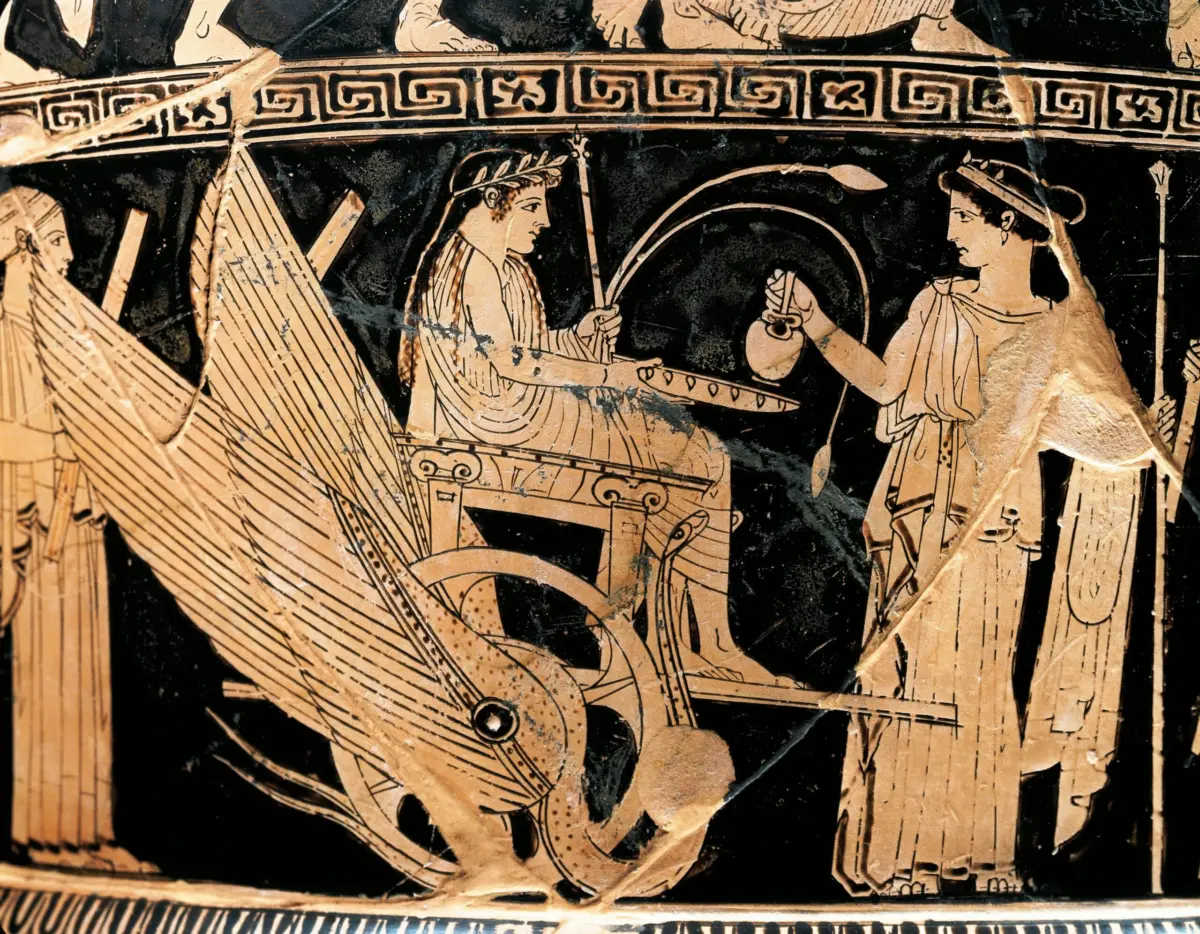
Bridle expands upon this philosophy by drawing on historical context, specifically offering the example of the ancient Eleusinian mysteries—an initiation ceremony practiced in ancient Greece. During these sacred rituals, initiates were led into a dark room and exposed to a whirlwind of intense impressions and sensory phenomena, without anyone telling them precisely what they were looking at or what those sights meant. They were left entirely on their own to interpret the experience. A year later, those same initiates were shown the ritual from the outside. Bridle suggests that only then, when the internal, subjective gaze was complemented by an external, objective perspective, was the initiation truly completed.
For many observers wrestling with digital overload, this historical metaphor serves as an illuminating framework for the modern digital condition. Humanity is far too often trapped on the inside, staring endlessly at the hyperactive whirlwind of the internet with very little conscious control or objective understanding of the forces at play. Increasingly, individuals are attempting to step outside of this digital matrix—to recognize the unseen systems and algorithmic influences operating behind the scenes, and in doing so, find a way to step back from total immersion.
Humanity is certainly not going to turn back the clock to 2006, that relatively innocent epoch just before the introduction of the iPhone fundamentally transformed global communication. Nor should returning to the past be the ultimate goal. The technological innovations introduced over the last two decades are astonishingly powerful, representing a massive leap forward in human capability and connectivity. Yet, no matter how sophisticated our devices become, they remain incapable of replacing the grounding, irreplaceable lessons learned when a person simply puts down the phone and experiences the real, physical world as it unfolds.