
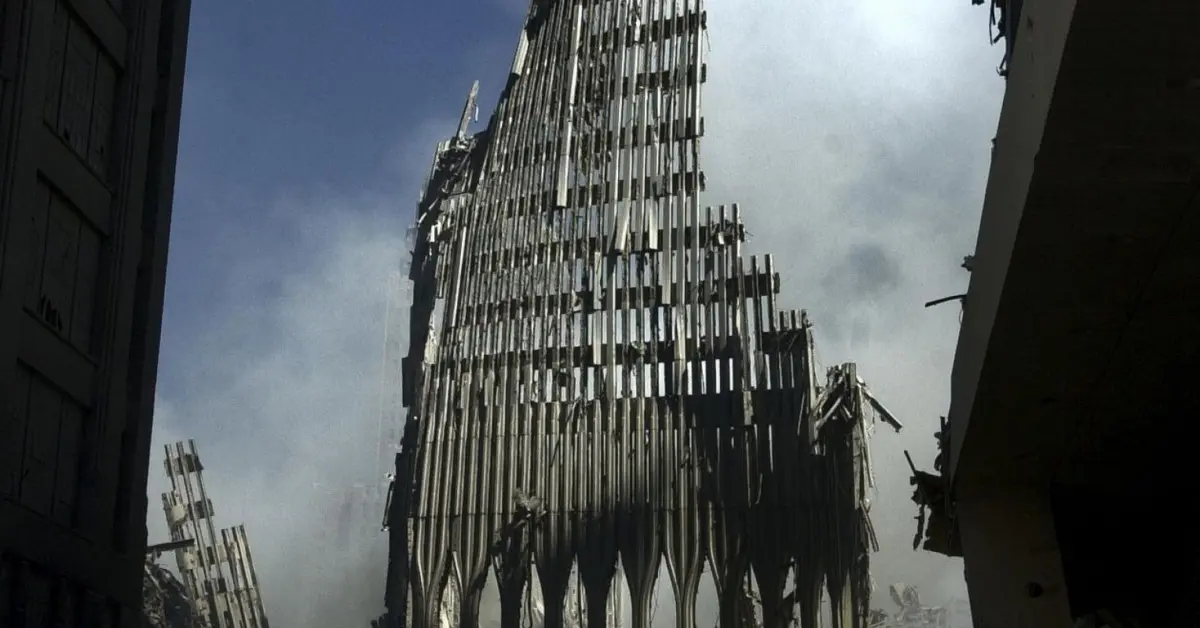
As the global community approaches the twenty-fifth anniversary of the tragic events of September 11, 2001, public memory naturally turns to the thousands of innocent lives lost that day, the countless individuals subsequently affected by chronic illness, and the families forever transformed by the wars and military service that followed. Yet, while the geopolitical shockwaves of 9/11 remain indelible in the modern consciousness, the tragedy also served as a modern watershed moment for how society understands, approaches, and treats human grief.
Reflecting on nearly a quarter-century of collective recovery, experts in psychological trauma and survivor advocacy emphasize that the mechanisms we use to heal today are rooted in both ancient human history and modern innovations in peer-to-peer support. Among the leading organizations navigating this space is the Tragedy Assistance Program for Survivors (TAPS), which has provided critical, compassionate support to more than 100,000 bereaved family members since its inception, including 14,858 individuals linked specifically to 9/11 military losses.
To understand how contemporary society manages large-scale trauma, mental health professionals and survivor advocates look back across the sweep of human history, where grief has long been recognized as a universal human experience. Long before the advent of written records, the pain of loss was a fundamental part of the human condition. Societal and religious traditions of lamentation are practically legion, stretching from the dawn of civilization to the present day.
The earliest written records in Western civilization are replete with profound mentions of grief, demonstrating that mourning has always demanded external expression. Historical evidence from the Old Kingdom of Egypt around 2600 BC indicates that mourning a loss was largely a public experience characterized by great pomp and circumstance, particularly when the deceased belonged to the wealthy or ruling classes. Centuries later, fifth-century Greek tragedies functioned as large-scale public rituals designed to allow for the cathartic expression of loss and trauma. These dramatic presentations effectively transformed private grieving into a civic experience, if not an outright social obligation.
As history progressed, Nordic and Germanic traditions maintained this thematic view of grief as a civic responsibility. In those cultures, however, grief was frequently channeled through public mythological storytelling and highly ritualized remembrances, including elaborate funerals. With the subsequent rise of Christianity and other major world religions, organized public funerals spread widely in popularity, cementing the communal aspect of mourning.
By the late nineteenth and early twentieth centuries, grief transitioned from purely cultural and religious domains into the burgeoning field of psychology. Sigmund Freud’s seminal 1917 work, Mourning and Melancholia, marked the first formal psychological theory of grief. Freud’s framework emphasized the vital psychological necessity of "letting go" of that which was lost to move forward.
However, in more recent decades, Freud’s traditional notion of letting go has faced significant challenge and revision within the psychological community. Contemporary clinical perspectives increasingly favor reformulating connection through "reattachment" with what was lost, rather than enforcing the strict detachment previously advocated by early psychoanalysts, as explored extensively by researchers like Klass, Silverman, and Nickman in their 1996 foundational work on continuing bonds.
Throughout history, the overarching process of grieving loss has been characterized by public displays and communal rituals. Grieving has fundamentally been understood as a process best shared openly rather than denied, hidden away, or suffered in isolation. If there is one relatively recent watershed moment that concretized this modern ethos of "never forgetting" and collective remembrance, it is unquestionably the tragedy of September 11, 2001.
An Approach to Large-Scale Healing
The sheer magnitude of the losses sustained on September 11, combined with the protracted conflicts that followed, forced a radical evolution in how psychological and emotional support is delivered. Fulfilling the massive, long-term mission of supporting tens of thousands of grieving families required a paradigm shift. Organizations like TAPS quickly realized that providing psychological support through the traditional, exclusive reliance on licensed mental health clinicians was entirely insufficient to meet the overwhelming demand.
Instead, the paradigm had to expand, leading to the widespread adoption and institutionalization of structured peer support models.
The Peers
In psychological and behavioral health contexts, peers are defined broadly as two or more individuals who share a common denominator, most typically a shared lived experience. Individuals who have successfully navigated profoundly challenging life events can, when equipped with proper training, serve effectively in a peer support capacity. These peer supporters harness the unique, authentic bond of shared experience to establish immediate credibility, deep perceived empathy, and a vital sense of hopefulness for those newly navigating tragedy, as noted by guidelines from the Substance Abuse and Mental Health Services Administration (SAMHSA).
In the wake of September 11, 2001, peers were systematically trained and mobilized to provide direct support to military and civilian families alike. Crucially, to truly harness the transformative power of this approach, the peer supporters selected were individuals who had themselves experienced the agonizing pain of similar losses, but who had progressed along their own healing journeys.
Under established frameworks like the TAPS approach, these peers are trained within a non-linear bereavement model, recognizing that mourning does not follow a strict timeline or predictable set of stages. Decades of walking alongside bereaved families have consistently confirmed that peer support can be profoundly therapeutic in ways traditional clinical settings sometimes struggle to replicate. These same successful principles are now being applied globally, including in modern conflict zones such as Ukraine, where communities face unprecedented waves of loss.
Looking back across decades of crisis response and recovery reveals a clear, threefold revelation about human trauma: first, grief is a process best understood as a continuous journey; second, that journey is infinitely better undertaken in the company of others; and third, the absolute best companions for the road are those who have successfully made a similar journey before. True healing is found in the ability to sit quietly with someone who requires no explanation of grief, who inherently understands that mourning has no fixed timetable, and who offers living, breathing proof that it is entirely possible to survive devastating loss while continuing to carry love forward.
As the nation marks twenty-five years since the events of 9/11, a core promise remains entirely unchanged: no one who is grieving the death of a loved one who served the nation should ever have to walk that difficult road alone. Survivors caring for survivors has stood at the very heart of this healing mission from the very beginning, remaining one of the most powerful expressions of recovery, enduring hope, and unbreakable bonds of love. This fundamental promise extends to all survivors of loss, regardless of its origin. Ultimately, the ancient societies and early cultures got it fundamentally right. They inherently understood that healing from loss should never be a solitary, hidden experience, and that the compassionate support of others teaches the most essential, enduring lessons of love and hope.