
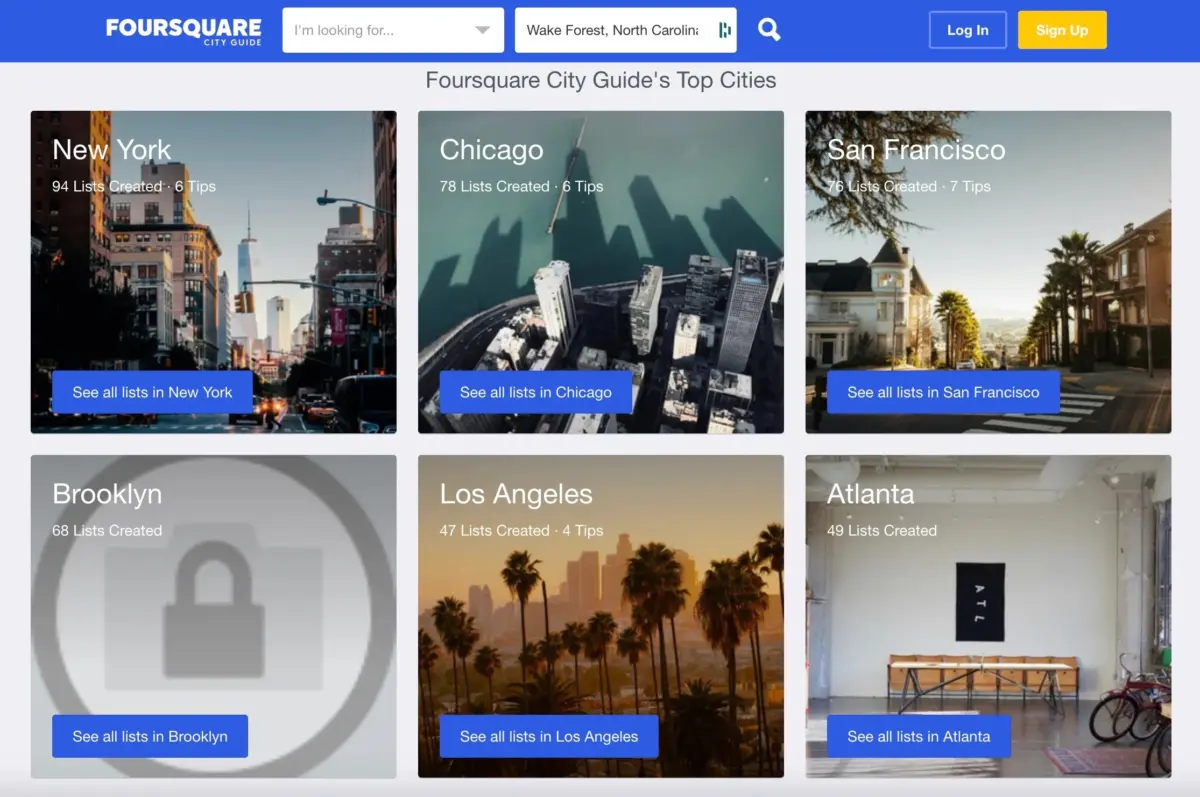
Last month, advertising company Infillion acquired location-data platform Foursquare—once a wildly popular social network that pioneered check-ins and gamified urban exploration—in a deal for an undisclosed value. Now, in a candid new blog post, Foursquare co-founder and former CEO Dennis Crowley has revealed that the company’s investors did not see any financial returns from the sale.
Crowley referenced a post by an angel investor, inferring that neither preferred nor common stockholders got any value out of the ultimate deal, and expressed deep disappointment by the outcome of a company he helped build from the ground up over nearly two decades.
"I was heartbroken by this ending," he said in the post. "So many people put so much time and energy and passion and love into building Foursquare – the company, the products, the brand, the culture. If you were part of it (or even close to it), you know exactly what I’m talking about. To our ~1600 former employees over 17 years, I am sorry the Foursquare story ended in such a way that makes it seem like our collective efforts were worth… nothing?"
Reflecting on the trajectory of the business, Crowley noted that the company performed quite well after shifting its strategic focus toward enterprise-level business operations. According to the co-founder, the firm enjoyed consecutive years with over $100 million in revenue. In 2019, the company raised significant capital from a private equity firm. Later, in 2021, the company brought in the banker who led that funding raise to serve as its chief executive officer. Crowley openly blamed the final outcome of the company on that leadership transition, asserting that the subsequent management team was ultimately unable to preserve existing corporate value or create new value for stakeholders.
Over the course of its long existence, Foursquare raised more than $411 million in venture capital and funding, according to data from PitchBook. Despite its historical significance in the mobile app ecosystem and its multi-million dollar revenue figures in the enterprise space, the company eventually wound down its operations by shutting down its standalone app in 2024, clearing the path for its final transition into an enterprise-focused location data provider before being swallowed entirely by Infillion’s ad tech stack last month.
Following the publication of Crowley’s post, numerous figures from the tech industry and early digital community reacted to the news, sharing memories of the platform’s heyday. Many noted that Foursquare was immensely useful to them in discovering new restaurants, bars, and hidden gems in their respective cities, while also serving as a major technical inspiration that sparked ideas for entirely new consumer applications.
The DNA of Foursquare’s pioneering location-sharing features has long outlived its original app interface. In the years following Foursquare’s cultural peak, subsequent startups like Zenly and Jagat built dedicated communities around the concept of social maps for real-life connections. Meanwhile, mainstream technology giants like Instagram and Snapchat have continuously iterated on the concept through features like the Snap Map and Instagram’s own location-based map tools, proving that the appetite for location-aware social networking never truly disappeared, even if the pioneer behind it failed to reward its earliest financial backers.