
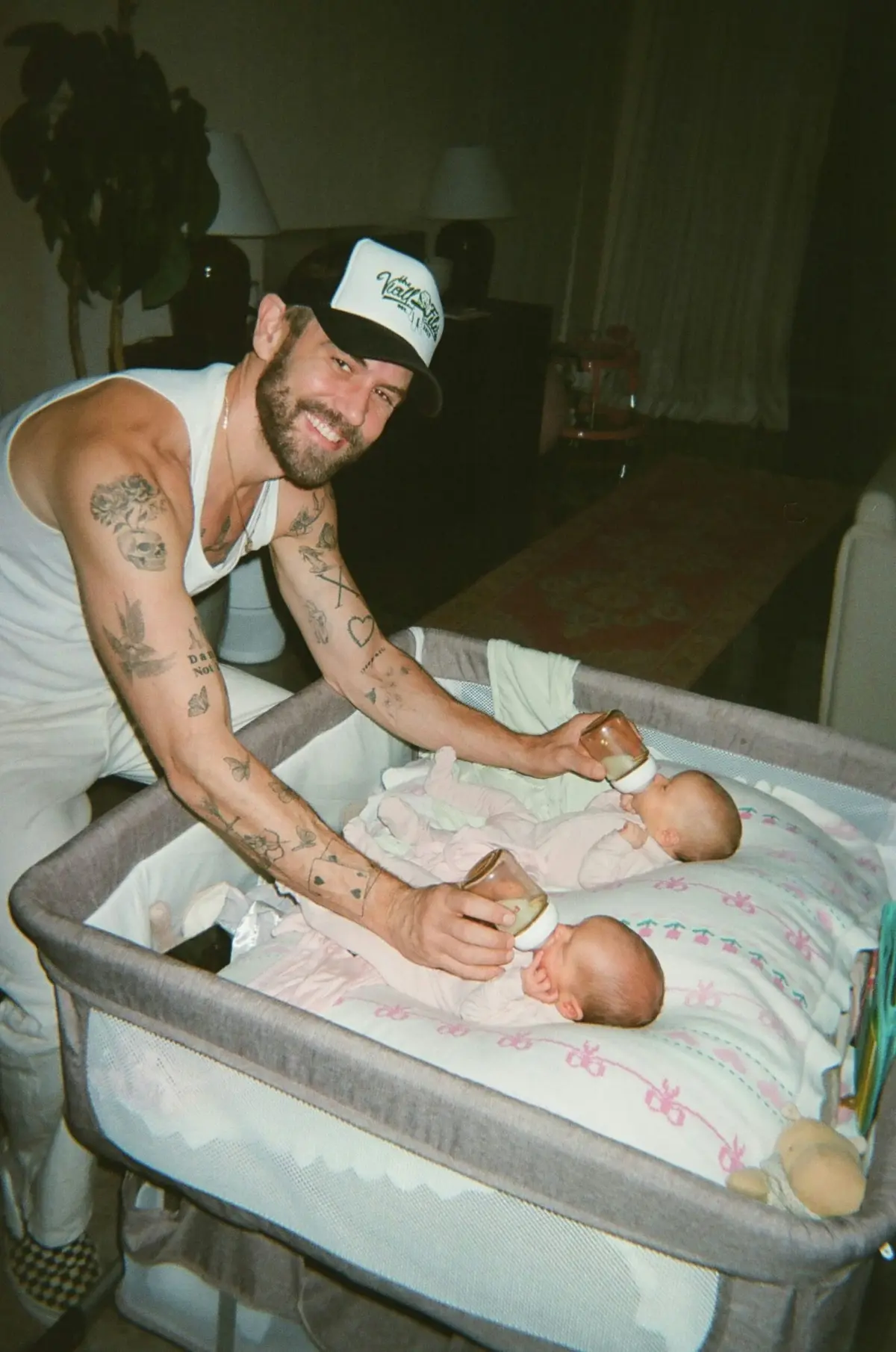
Nick Viall has spent more than a decade in the relentless glare of the reality television spotlight. First capturing national attention 12 years ago on The Bachelorette, he quickly became one of the franchise’s most recognizable and enduring figures. Over the years, his television resume expanded to include stints on Bachelor in Paradise, Dancing With the Stars, The Masked Singer, and most recently, Age of Attraction, a dating show he currently co-hosts with his wife, Natalie Joy Viall. Beyond the screen, the couple reaches millions of listeners through The Viall Files, a top-ranking Apple relationship podcast that drops three to four episodes a week, keeping Viall’s voice and face ubiquitous in entertainment media.
Yet, away from the microphones and television cameras, a very different kind of reality occupies the Wisconsin native’s day-to-day life. Viall is the second oldest of 11 siblings, bringing a deeply ingrained, large-family perspective to his own household. Today, he and Natalie are navigating the intense and joyous whirlwind of raising three children under the age of three: a two-year-old daughter named River, and twin infants who arrived this past July.
Transitioning into life as a father of twins can sound daunting to outsiders, but Viall approaches the experience with characteristic pragmatism and humor. When asked how he manages the demands of twin newborns, he points out the common tendency for people to offer pessimistic warnings before the babies arrive.
When you tell people you’re expecting twins, people are more prone to give what Viall describes as "doomsday advice," warning of impending exhaustion and chaos. However, once the babies actually arrive, that narrative quickly shifts. Viall notes that despite the inevitable sleepless nights and round-the-clock feedings, the reality feels much more like a blessing—or, as he jokingly puts it to his wife, a "buy one, get one free" deal. While he readily acknowledges that carrying and delivering twins places a far heavier physical toll on mothers, he finds immense joy in looking at their family and realizing they have three children from just two pregnancies.
Reflecting on his parenting philosophy, Viall describes himself as a hyper-involved, hands-on father. This egalitarian approach to household responsibilities and child-rearing is not something he and Natalie had to figure out from scratch after welcoming children; it was a cornerstone of their relationship from the beginning. Viall credits his own upbringing for shaping this dynamic. Growing up in a lower-middle-class, blue-collar household with 10 brothers and sisters, he witnessed firsthand how his parents operated as an integrated team.
While his mother stayed home to raise the children and his work schedule kept his father busy, traditional gender roles were never rigidly enforced. His father would frequently cook dinner, while his mother might mow the lawn—it was an all-hands-on-deck environment where everyone contributed. Viall and his wife adopted this exact philosophy, dividing and conquering household tasks based on practical preferences rather than rigid expectations. Viall cheerfully admits that while he happily takes on the dishes, he jokingly considers himself "allergic" to laundry, a chore Natalie prefers to handle. Whether managing their shared responsibilities at home or collaborating professionally on their media projects, the couple operates as a unified front.
This deep-rooted sense of family history also manifests in the physical spaces Viall hopes to share with his children. A few years ago, he achieved a lifelong dream by purchasing his grandfather’s former lake house in Wisconsin. For Viall, that property was the defining sanctuary of his childhood—a place of pure freedom and imagination. When his grandfather passed away when Viall was in the fourth grade, the family was forced to sell the property, an event he describes as a genuine childhood trauma that haunted him with recurring dreams well into adulthood.
Being able to buy the lake house back means he can now pass that same magical outdoor experience down to his own children. In an era where modern technology, smartphones, and screens dominate children’s attention, Viall hopes to foster a renaissance of outdoor play. Drawing parallels to contemporary discussions surrounding digital distraction and the changing nature of childhood freedom, he emphasizes the importance of letting kids explore nature, ride bikes, and engage in unstructured make-believe games with their peers, just as he did growing up in Wisconsin.
Balancing a high-profile media career with a bustling young family inevitably brings its own set of daily negotiations, particularly when it comes to supporting his wife through the intense postpartum period. Viall views his primary role in the household as acting as Natalie’s rock and personal cheerleader. Recognizing the heavy mental and physical burdens placed on new mothers, he makes a conscious effort to step in, offer breaks, and reassure her that she is doing an exceptional job.
At the same time, life with a partner always involves a bit of good-natured friction. When asked what his wife might find annoying about him, Viall laughs and rattles off a familiar list of domestic grievances. He admits to leaving a trail of disorganization, struggling to close cupboards, and generally being messier than their two-year-old toddler. He has also recently reintroduced video games into his routine as a way to unwind—a hobby that occasionally draws an eye-roll, though Natalie tolerates it with grace. Viall offers a piece of tongue-in-cheek advice for fellow fathers who enjoy gaming: the absolute secret is to ensure it never interferes with being an active partner and a reliable dad.
Ultimately, Viall views fatherhood as a profound grounding force that has transformed his perspective on life. In an industry defined by individual accolades, professional milestones, and public perception, parenthood provides an unshakeable sense of purpose. Even during the most exhausting 2:00 AM wake-up calls, the motivation is absolute and clear.
Viall acknowledges that he is naturally an anxious, high-stress individual who can easily become consumed by the pressures of work and the wider world. Coming home acts as an immediate antidote to that stress. To ease the transition from a demanding workday to family life, he and Natalie have established a deliberate household practice: whenever Viall walks through the front door, he puts his phone away entirely. Even if work remains unfinished, he ensures his oldest daughter, River, receives his undivided attention the moment he steps inside.
While parenting has increasingly become a polarizing and deeply debated topic in modern culture, Viall finds immense fulfillment in the daily reality of raising his children. Surrounded by family, deeply involved in the minutiae of daily caregiving, and grounded by the simple joy of his children’s presence, he continues to embrace the most demanding and rewarding role of his life.