
As the National Hockey League season moves well past its second week, a pair of high-profile trade standoffs continues to loom large over the league, highlighting a tense clash between modern player empowerment and front-office pragmatism. In two separate Canadian and American markets, general managers are digging in their heels against star players who have made it clear they want out, setting up a prolonged chess match with no immediate resolution in sight.
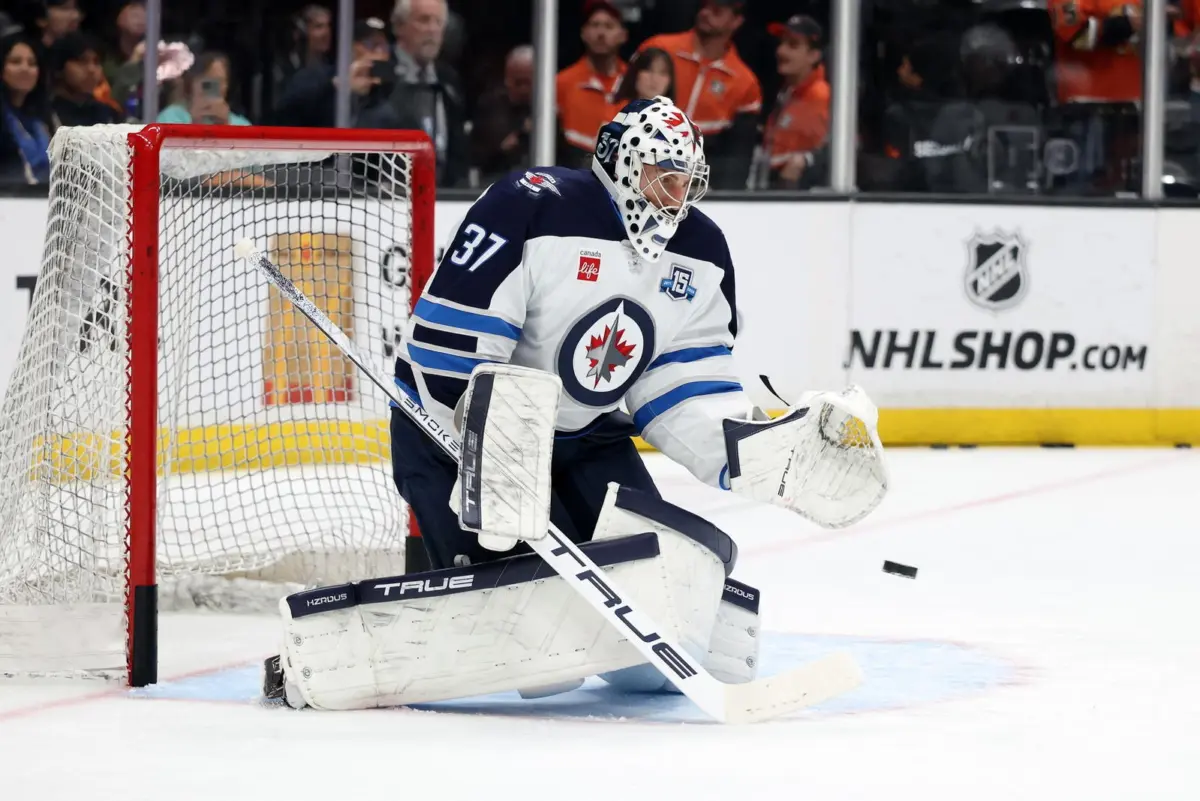
In Detroit, the Red Wings find themselves navigating a delicate and emotionally charged situation with star center Dylan Larkin. A former team captain, a proud Michigan native, and the emotional heartbeat of the franchise for years, Larkin shocked the hockey world by asking out of Motown. Meanwhile, up north in Winnipeg, superstar goaltender Connor Hellebuyck has forced a dramatic confrontation by demanding a trade and outright refusing to report to training camp. That severe escalation prompted the Jets to take the unprecedented step of suspending their franchise cornerstone indefinitely, leaving a massive void in the crease.
These twin disputes underscore a broader evolution across the professional sports landscape, where the age of NHL player empowerment is undeniably upon us. Armed with lucrative contracts, leverage via representation, and a desire to control their own destinies as elite athletes, spouses, and fathers, players increasingly feel empowered to dictate their professional futures rather than leaving them entirely in the hands of the organizations that drafted them.
However, the pushback from management has been equally fierce. Red Wings interim general manager Shawn Horcoff and Jets general manager Kevin Cheveldayoff are holding the line, refusing to be pressured into suboptimal deals. Just as it can be argued that Hellebuyck and Larkin are fully within their rights to chart their own courses, it is equally true that NHL front offices are acting within their rights—and fiduciary responsibilities—to do what they genuinely feel is best for the long-term health and competitive viability of their respective organizations.
The Reality of Team Leverage and Valuation
Larkin and Hellebuyck might not want to hear it, but the fundamental bottom line in any trade demand battle of this magnitude is that teams ultimately dictate the value of their players. No matter how much a player wants a fresh start or a change of scenery, a franchise cannot simply give away a generational talent or a foundational leader for pennies on the dollar just to appease an unsettled star and his agent.
Those are the high-stakes realities facing Cheveldayoff and Horcoff at this juncture in the NHL calendar. Neither Winnipeg nor Detroit can afford to absorb a trade return that fails to deliver what the organization desperately needs at its specific point in the competitive cycle. Furthermore, the operational realities confronting the two franchises are vastly different, meaning their respective approaches to resolving these stalemates cannot and will not look the same.
In the modern salary cap era, orchestrating a blockbuster trade involving a superstar is an intricate mathematical puzzle. Not only do general managers have to be completely satisfied with the caliber of the trade return—whether that means elite prospects, high-draft capital, or established NHL roster players—they also have to find dance partners who possess the requisite financial flexibility. Interested clubs must have the right amount of salary cap space available to fit a massive new contract under their internal financial umbrella without triggering cap compliance violations.
Why the Hellebuyck Market Has Stalled in Winnipeg
This financial and structural complexity explains why it has been virtually impossible for Cheveldayoff to find a workable trade partner for Hellebuyck. Across the league, teams that might covet a Vezina Trophy-winning goaltender simply do not have the necessary salary cap space to absorb his contract, they lack the high-end trade capital required to satisfy Winnipeg’s steep demands, or they are hamstrung by both limitations.

Complicating matters further, potential trade discussions often hit a brick wall when structured assets are exchanged. A team might possess the means and the cap space to acquire Hellebuyck, but only if they insist on sending a veteran goaltender back to Winnipeg to stabilize their own crease. From the Jets’ perspective, taking on another expensive, aging starting netminder could be an absolute deal-killer, completely defeating the purpose of restructuring the position for the future. As a result, Hellebuyck remains in hockey purgatory, suspended and forfeiting substantial salary daily, while Cheveldayoff waits patiently for a market that makes sense for the Jets.
Larkin’s Differing Reality in Detroit
The situation in Hockeytown presents a distinct dynamic. Unlike Hellebuyck, who chose a complete boycott of team activities, Larkin opted to report to training camp and has actively suited up for regular-season games. He has even scored goals upon his return, demonstrating a high level of professionalism on the ice despite the swirling trade rumors and the occasional hostile reception from fans who are conflicted about his desire to leave.
Yet, despite his on-ice participation, Larkin’s core trade request has not been rescinded. There is no tangible indication from his camp that he has changed his mind about wanting a future outside of Detroit.
For Horcoff, managing this delicate scenario requires walking a very fine line. While the interim general manager may not necessarily require players who can immediately contribute to the lineup in a potential return package, he is under immense pressure to defend any prospective Larkin trade from a long-term perspective. A trade of this magnitude must make sense not just for the opening weeks of the season, but for the next five to ten years of the franchise’s trajectory. Consequently, Horcoff is erring heavily on the side of caution, refusing to ship Larkin off to a preferred destination just to satisfy the player and his representation.
Accountability to Ownership and the Fan Base
At the end of the day, general managers like Cheveldayoff and Horcoff are ultimately beholden to two primary groups of stakeholders: team ownership and the paying consumers who fill the arenas and buy the merchandise. While maintaining a positive, open working relationship with players is undeniably important for organizational culture, it ultimately takes a back seat to a GM’s ability to look ownership and the fan base in the eye and state, without reservation, that every decision made was strictly in the best interest of the team’s competitive future.
If executing that responsibility means exercising extreme patience and letting a trade standoff drag on for weeks or even months, then so be it. Fans in Winnipeg and Detroit deserve leadership groups that are not afraid of stepping on a few toes, weathering temporary media storms, and enduring awkward locker room dynamics as they try to orchestrate the complex moves required to eventually capture a Stanley Cup championship.
Players are entirely within their rights to voice their frustrations and push for greener pastures, just as general managers frequently lament the proliferation of no-trade and no-move clauses that tie their hands in roster construction. However, this is the operational ecosystem that both sides have collectively bargained into existence through the NHL collective bargaining agreement. As long as those structural mechanisms remain in place, high-profile standoffs between disgruntled stars and resolute front offices will continue to be an inevitable reality of life in the National Hockey League.