
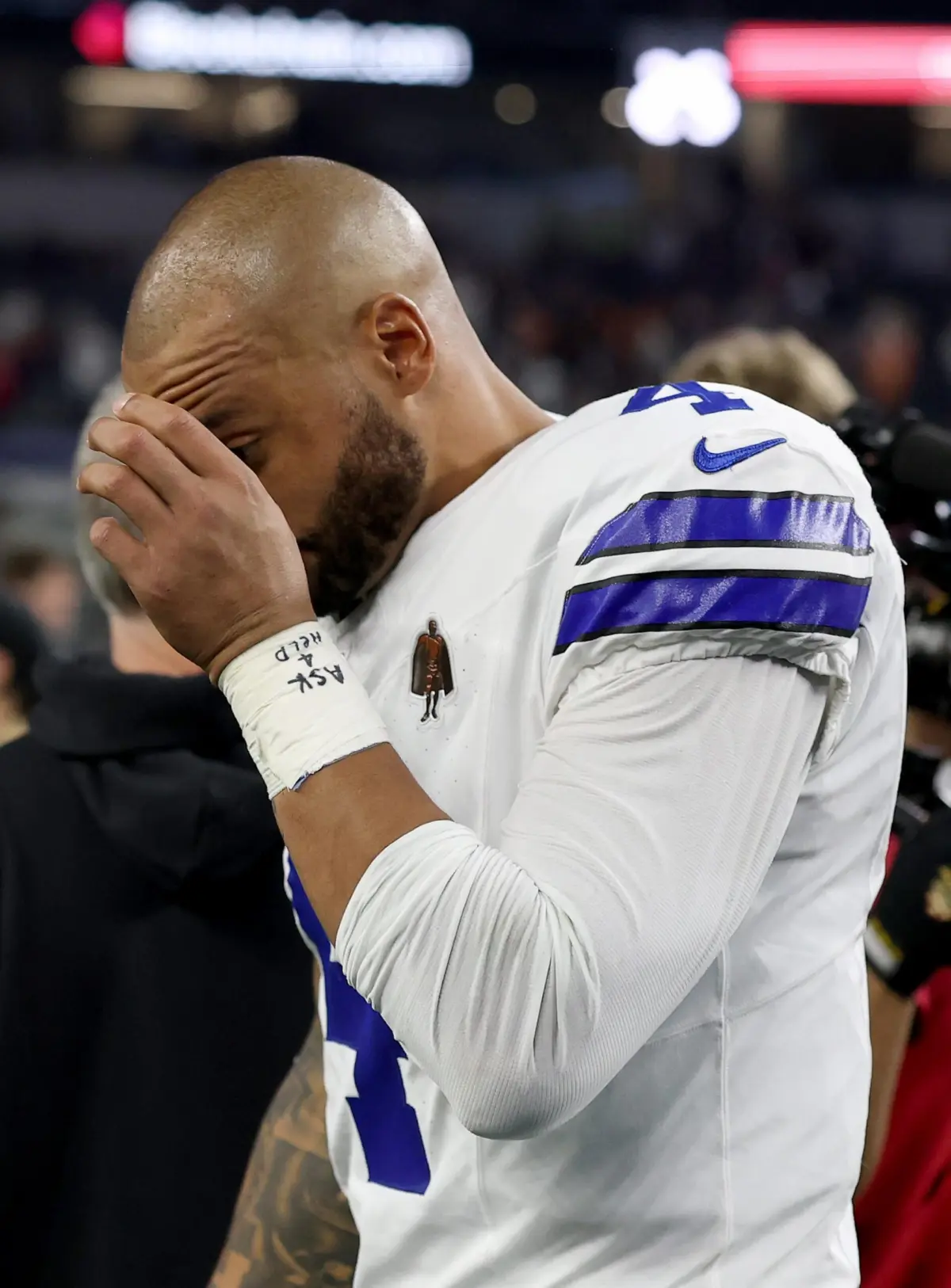
The Dallas Cowboys put on an abysmal performance on Thursday night, etching their name into the NFL history books in the worst possible fashion. By suffering a disheartening loss to the Tampa Bay Buccaneers, Dallas became only the second team since 1975 to drop a home game to a winless 0-4 opponent. For a franchise that has built a reputation on high expectations followed by underachievement over the last three decades, this latest disaster feels entirely par for the course. Exceptional mediocrity has firmly established itself as the modern brand of America’s Team.
For a loyal fan base desperate for something to cheer about, digesting these repeated failures would be considerably easier if there were a singular nexus of blame—a clear, identifiable problem that could be pointed to with the simple assertion that this specific issue is why Dallas is losing. Unfortunately, there is no single answer to what has gone wrong in North Texas. There is no silver bullet, no isolated flaw to focus on, correct, and ultimately use as a stepping stone toward improvement. Critics can certainly point to the front office leadership of Jerry and Stephen Jones as the root of the problem, and make no mistake, they are major contributors to the ongoing turmoil. Yet, the issues extend far beyond the owner’s suite. Over the years, the organization has shuffled through head coaches, executed blockbuster trades, and invested astronomical sums of money into its star players. Despite all of these heavy investments, the Cowboys still manage to stumble on national television against a struggling football team operating with a backup quarterback making his very first NFL start.
The Front Office: Jerry and Stephen Jones
There is no escaping the reality that Jerry and Stephen Jones represent a massive, persistent problem for this franchise, and they have been for a long time. Embodying the platonic ideal of an interfering owner who refuses to step back, Jerry has spent the better part of four decades convinced that he is consistently the smartest man in the room. This hubris was vividly displayed when he boldly claimed that the Cowboys were actually going to improve "by subtraction" after trading away star edge rusher Micah Parsons—a prediction that has proven glaringly false as the defense continues to flounder.
Furthermore, Jerry was the driving force behind a costly trade that sent a valuable first-round draft pick to acquire defensive tackle Quinnen Williams, a move justified by the urgent need to shore up a leaky run defense. Regrettably, Williams has been objectively disappointing since his arrival in Dallas, grading out merely as a mid-tier starter rather than the kind of game-changing anchor you mortgage the future to acquire. This same front office oversaw three consecutive 12-win seasons under former head coach Mike McCarthy, only for Jerry to pull the trigger on his firing because McCarthy could not push the team over the postseason hump. In McCarthy’s place, the keys to the franchise were handed to Brian Schottenheimer, a thoroughly mediocre coaching hire in his own right.
Meanwhile, Stephen Jones has consistently served as an enabler to his father’s worst executive tendencies. This dynamic was perfectly typified by the trade to bring in cornerback Joey Porter Jr. While nobody disputes that Porter is a phenomenal football player, the transaction represents the exact brand of shortsighted, win-now deal executed by an ownership group convinced they are merely one piece away from a championship, completely misreading where the Dallas roster actually stands in the competitive landscape of the league.
Brian Schottenheimer and Offensive Regression
Head coach Brian Schottenheimer has quickly emerged as a significant problem for the organization. Inheriting a roster with championship aspirations, Schottenheimer now holds a dismal 9-12-1 record at the helm. He has seemingly dragged the team backward since his arrival, tinkering with offensive schemes in a manner that has caused demonstrable, alarming damage to Dak Prescott’s performance under center.
In a staggering admission, Schottenheimer revealed that he was changing far too much with respect to the quarterback position. Altering the foundational mechanics and approach of a seasoned 10-year veteran as if he were a developmental third-year project requiring a complete mechanical rebuild is a baffling strategy. Compounding these on-field concerns, Schottenheimer failed to provide coherent answers regarding why the team’s clock management was so catastrophically poor at the end of their difficult loss to the Ravens in Brazil. It has become increasingly apparent that his hiring was a massive miscalculation by the front office. Hindsight suggests Dallas would be in a far healthier position today had they simply retained Mike McCarthy, promoted offensive coordinator Kellen Moore before letting him slip away, or even stuck with Jason Garrett at this rate.
The Inconsistency of Dak Prescott
While the coaching staff shares a heavy burden, the quarterback position has not escaped scrutiny. Dak Prescott, despite his undeniable talent, has evolved into a problem of his own. The silent killer of NFL offenses is rarely sheer lack of talent; rather, it is debilitating inconsistency. Unfortunately for Prescott, he has transformed into an extraordinarily volatile quarterback capable of producing phenomenal, MVP-caliber highs alongside staggering, inexplicable lows.
One week, Prescott will look like an All-Pro performer worthy of being mentioned among the top three signal-callers in the entire league. The very next week, he will deliver a performance like the one witnessed on Thursday night, struggling mightily against a defense that ranked a lowly 21st in the NFL against the pass entering Week 5. Prescott has increasingly looked like a fair-weather quarterback. When elite wide receiver CeeDee Lamb is consistently winning his matchups and the ground game is operating smoothly, Prescott can methodically pick apart opposing defenses with precision. However, the moment the offense encounters a measure of adversity, Prescott’s tendency is to force the issue, trying desperately to rescue plays and will something positive to happen out of nothing. These forced throws frequently backfire, plunging the offense deeper into a hole of unforced turnovers.
A Struggling Defense and Special Teams Disasters
Compounding the offensive woes, the Dallas defense has been an absolute mess. The organization entered the season with high hopes that hiring Christian Parker away from the Philadelphia Eagles would allow the Cowboys to successfully emulate the defensive prowess and schematic discipline seen in Philadelphia. Instead, that side of the ball has devolved into a chaotic liability.
Despite boasting individually solid talent across the front seven and secondary, the defense currently ranks near the very bottom of the league across virtually every major statistical category. The Cowboys rank 24th in defending the pass, 30th against the run, 28th in total points allowed, and 30th in overall defense. When a team fields a defense this porous, it directly exacerbates the worst tendencies of the Dallas offense. It routinely puts the team into early deficits, forcing Prescott to abandon the game plan and attempt to throw his way out of trouble—a desperate approach that directly fuels the team’s alarming turnover problem.
To add insult to injury, the special teams unit has proven equally unreliable, highlighted by blocked field goals in consecutive games just for good measure.
No Clear Path Forward
For long-suffering Cowboys fans, the most agonizing element of this ongoing saga is the complete absence of an easy exit strategy. There is no visible light at the end of a long tunnel. If these struggles could be attributed solely to a temporary coaching mismatch, a struggling quarterback slump, or isolated defensive breakdowns, a clear path to recovery could be mapped out over time.
Instead, every systemic flaw within the organization flows directly from the top, originating with Jerry and Stephen Jones. Neither of the Joneses is going anywhere, and their uncanny knack for making disastrous organizational decisions remains a frustrating constant of billionaire ownership in professional sports. The Cowboys are once again mired in a profound operational mess, mediocrity has solidified itself as the enduring brand of the franchise, and there appears to be no escape from the cycle.