
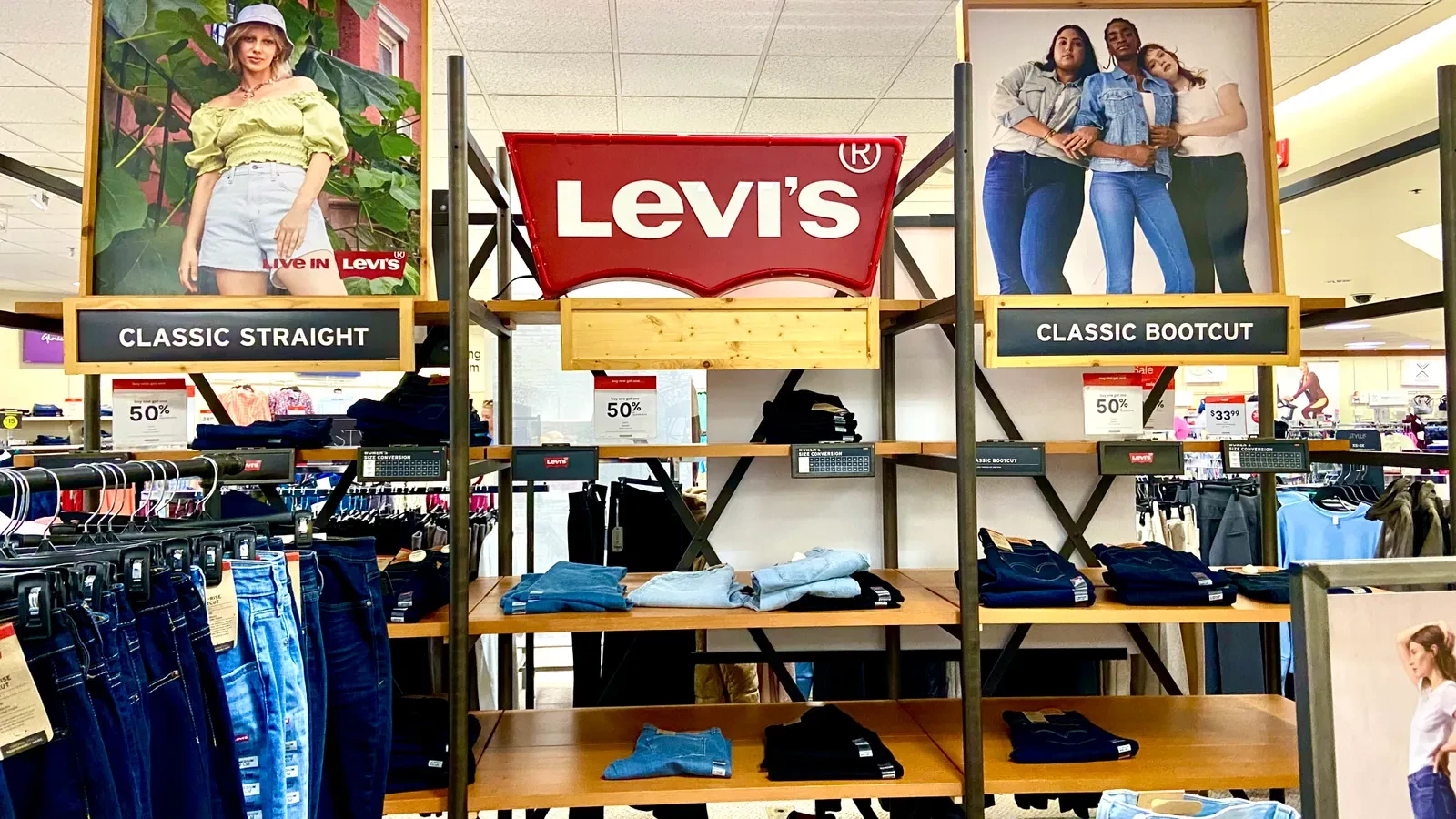
Denim giant Levi Strauss & Co. is leaning heavily on a timely influx of trade reimbursements and an aggressive marketing pivot to steady its operations following an unexpectedly challenging third quarter. The iconic apparel maker recently encountered its first net revenue miss in two years, according to data from Wells Fargo, driven largely by weaker-than-anticipated direct-to-consumer (DTC) sales across key markets in the United States and Europe. While the company’s wholesale channel performed admirably—outperforming DTC in both regions—the unexpected friction in its proprietary retail channels put pressure on overall financial metrics.
To safeguard its profitability and margins during the downturn, Levi’s benefited significantly from trade and tariff reimbursements. Chief Financial Officer Harmit Singh revealed during a recent earnings call with analysts that the denim maker took in approximately $80 million in tariff refunds during the third quarter, capturing nearly the entirety of the expected payout.
Rather than letting the funds sit on the balance sheet or solely absorbing them into baseline earnings, leadership has opted to aggressively reinvest the capital back into the core business. Singh noted that Levi’s is plowing roughly three-quarters of the total refund amount into strategic operational enhancements. Specifically, the capital is being deployed to fund incremental marketing initiatives designed to stimulate consumer demand, strengthen supply chain capabilities to improve long-term competitiveness, and provide a sharper, more compelling value proposition for shoppers heading into crucial holiday promotional periods.
Of that refunded capital, approximately $25 million was already spent during the third quarter, while another $35 million is earmarked for deployment in the fourth quarter. "Our view is, the tariff refunds were timely," Singh told analysts, emphasizing how crucial the cash injection has been in maintaining momentum while navigating broader macroeconomic and retail headwinds.
The financial relief comes at a critical juncture for the brand, highlighting the contrasting dynamics between its wholesale and direct-to-consumer segments. Research consistently shows that DTC margins frequently face heavier pressures than wholesale margins due to the substantial operational overhead required to run proprietary stores and e-commerce platforms. In contrast, wholesale operations rely heavily on retail partners who shoulder much of the direct expense, labor, and localized marketing efforts required to move inventory. Consequently, when DTC traffic slows down, the financial impact can be more pronounced for brands attempting to cultivate direct consumer relationships.

Compounding the DTC softness in the third quarter were specific missteps and seasonal anomalies that disrupted typical consumer purchasing patterns. According to Chief Executive Officer Michelle Gass, traffic and overall demand for the crucial back-to-school shopping season fell short of internal expectations. A primary contributor to this shortfall was a strategic miscalculation regarding fashion trends. The brand leaned heavily into loose-fitting denim assortments at a precise moment when a significant segment of American consumers abruptly shifted their preferences toward low-rise styles.
The misalignment between inventory and consumer desire created temporary friction in domestic retail stores. However, Gass praised the agility of her product and design teams in addressing the issue swiftly. "The good news is the team got after it very quickly, and we sharpened our focus," Gass said during the earnings discussion. She was quick to clarify that while the market experienced a pivot toward low-rise alternatives, loose-fitting styles are far from obsolete, noting that they remain an integral part of the business and continue to serve as a major volume driver for the brand globally.
Beyond domestic trend shifts, international weather patterns also played an unexpected role in dampening quarterly performance. In Europe, a brutally hot summer severely disrupted foot traffic and consumer appetite for traditional denim shopping across physical retail locations, dragging down DTC sales figures during the peak of the season.

However, as weather conditions began to moderate and temperatures cooled across the continent, customer behavior rebounded sharply. Gass pointed out that European retail trends have since staged a robust recovery. "When the temperature started cooling and weather moderated, we saw the trends come back," she explained. "In Europe right now, DTC quarter-to-date, the trends are very robust, very positive and robust. So you should feel good about that. The other thing worth mentioning in Europe is that we had an incredible wholesale business. So suffice it to say, like I said, the brand is very healthy there."
Thanks in part to the rapid deployment of the tariff refund capital into targeted marketing campaigns, Levi’s direct-to-consumer sales have already begun showing signs of a strong recovery globally, helping to heal the wounds of the Q3 slump. With the supply chain investments taking root, a recalibrated product assortment that balances loose and low-rise fits, and substantial financial backing from the recent trade reimbursements, Levi’s management is positioning the brand to navigate upcoming retail hurdles and capitalize on consumer demand through the remainder of the fiscal year.