
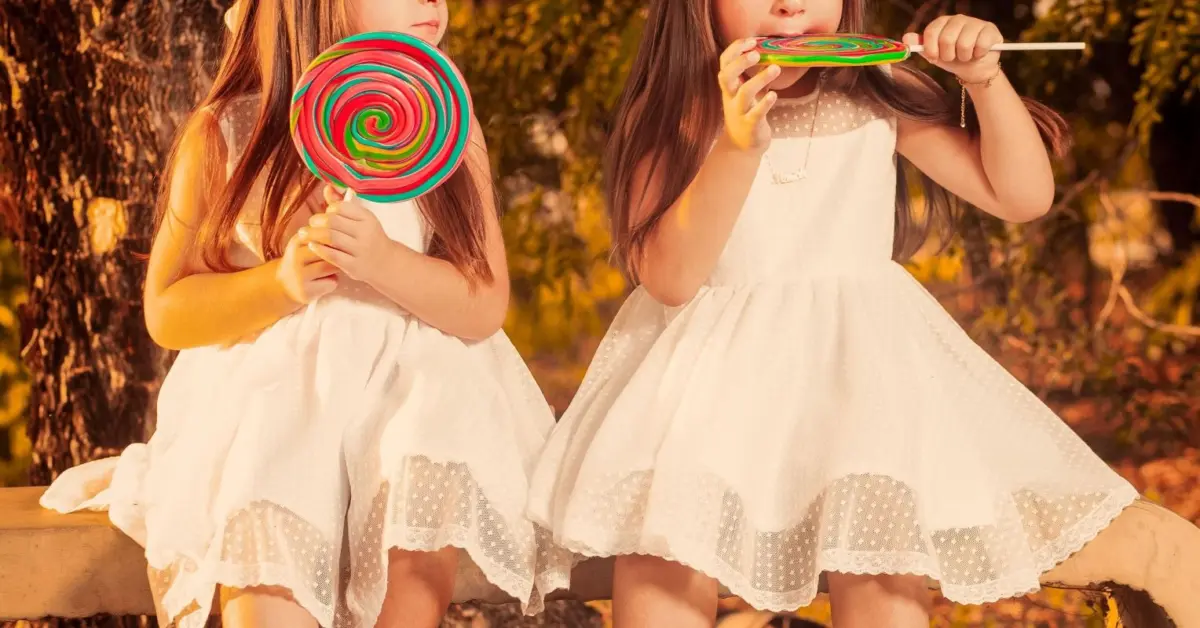
The experience of growing up as a twin has long been romanticized by the public as an unbreakable bond, a magical relationship featuring an inherent best friend. Yet, for those living it, early twinship is often a deeply intense and surprisingly stressful dynamic—not just for the twins themselves, but for their entire family. Historically, issues related to emotional and cognitive development in twins were viewed through a casual lens, rarely deemed in need of specialized attention. The primary exception was the common curiosity surrounding "twin language," while the profound ripple effects that twins invariably have on their non-twin siblings were largely ignored or given only passing thought.
Examining the closeness of twinship reveals a complex identity problem that demands systematic understanding and careful guidance. At the heart of many behavioral challenges is deep separation anxiety. When young twins are separated—perhaps after a routine dispute over a newly received toy—the emotional fallout can be immediate and severe. For as long as they are kept apart, the distress often manifests in persistent crying, leaving caregivers at their wit’s end until the conflict is resolved and the pair can be safely reunited.
In earlier decades, research into twin development was remarkably scarce. Reflecting on her upbringing, one twin recalls that the only formal advice given to her mother by a hospital nurse was to keep the infants separated. While well-intentioned, this directive proved nearly impossible to follow. Infants, babies, toddlers, and young children naturally gravitate toward one side-by-side existence, much like they experienced in the womb.
Without adequate guidance, parents often found themselves navigating uncharted waters with little support. This lack of direction could sometimes lead to perilous household mishaps. Recalling an infamous childhood adventure from when they were just three years old, the twin sisters remembered exploring the kitchen cupboards and consuming red furniture polish, mistaking it for fruit punch. Quick action averted tragedy as an ambulance rushed them to the hospital, where doctors successfully pumped their stomachs—a harrowing event that the sisters later looked back on with dark humor as a favorite family story.
As the years progressed, however, the scientific and psychological study of twin development expanded significantly. Researchers began to uncover the underlying reasons for twin behaviors and formulated more effective, evidence-based approaches to raising multiples. Central to these modern insights is the critical importance of fostering individual development. Experts now emphasize that cultivating authentic, personal relationships between each family member and each twin individually—independent of how alike the twins might appear—is essential for healthy psychological growth.
The Burden of Constant Comparison and the "Look-Alike Trap"
For generations, twins have endured relentless public fascination regarding their physical similarities. Strangers are perpetually drawn to asking whether they are identical, pointing out resemblances, and treating them as a single unit rather than distinct individuals. In the author’s childhood, this phenomenon was so pronounced that their older brother carried a sign attached to their double stroller reading, "Yes, they are twins," simply to preempt the endless barrage of inquiries from curious onlookers. While contemporary parents are often more direct in shielding their children from such intrusive public curiosity, the cultural obsession with matching outfits and synchronized identities remains a persistent hurdle.
This external pressure historically bled into the domestic sphere, creating distinct challenges for non-twin siblings. The presence of twins often dominated household dynamics, inadvertently diminishing the self-worth of other children in the family. Furthermore, family members frequently fell into the trap of letting twins—and their siblings—manage complex interpersonal conflicts independently, an approach modern child-rearing experts strongly advise against. Today, parenting multiples is recognized as a specialized undertaking that requires dedicated parental guidance and a nuanced understanding of family systems.
Competition, Comparison, and the Insistence on Equality
For better or worse, questions regarding superiority—such as which twin is smarter, faster, or favored—are deeply woven into the fabric of twinship. The relentless pressure to match one’s sibling step-for-step can manifest in unusual ways. In one household, this manifested when an older brother took to measuring food portions on a scale to ensure absolute parity between the twins. Who received more food, attention, or possessions frequently felt like a matter of supreme importance.
This "equality insanity" typically surfaces when parents lack the strategies needed to manage fierce sibling competition and comparison. Without intervention, these dynamics quickly escalate into frequent fighting and general unhappiness for the entire household.
The struggle over personal property proves particularly tenacious. The intensity displayed when one twin receives even slightly fewer toys or cookies than the other can be astonishing. Observers are often struck by the fierce determination twins exhibit across all age groups, demanding that every resource be distributed with mathematical precision.
This behavior frequently extends well beyond childhood. Into adulthood, many twins grapple with lingering desires to replicate their sibling’s milestones, desiring the exact same style of house, car, or vacation. Twins who remain excessively enmeshed often experience acute distress at the prospect of "missing out" on whatever their sibling possesses. Conversely, more fortunate individuals come to realize that they are fundamentally separate people with distinct needs, a mindset that effectively prevents bitterness, possessiveness, and endless conflict.
Sibling Dynamics and the Journey Toward Individuality
Initially, brothers and sisters outside the twin pairing often experience confusion, jealousy, and frustration when young twins enter the domestic landscape. They watch in bewilderment as the twins engage in fierce internal battles while simultaneously exhibiting an inability to tolerate separation, crying inconsolably until the other is within sight. At the same time, young twins often appropriate whatever they desire from their non-twin siblings without remorse, as teaching them that others possess separate identities and boundaries is a developmental milestone that takes considerable time.
The immense public attention lavished on twins can inadvertently overshadow their non-twin siblings, while internal competition and ongoing comparisons often breed secret resentment between the twins themselves. Many individuals report wishing they were not part of a twin pair simply to escape the constant juxtaposition. Being approached primarily through the lens of one’s sibling can feel deeply invalidating, prompting internal questions of why observers show no curiosity about one’s individual pursuits and achievements.
To combat these challenges, experts and experienced individuals advocate for actively dismantling the "look-alike trap." Striving to present oneself as a distinct individual significantly improves relationships with all siblings. Learning to navigate social environments independently, without the immediate presence of a twin, helps eliminate the humiliating "Which one are you?" inquiries that can plague multiples at any age.
Modern parenting approaches emphasize several deliberate strategies to foster individuality and ease the social burdens often placed on twins. Dressing children in distinct outfits allows them to establish separate visual identities from an early age. Acknowledging each child as a unique person by highlighting their individual preferences, likes, and dislikes reinforces their personal autonomy. Carving out dedicated, one-on-one time for each child to engage in separate activities helps build independent parent-child bonds.
Furthermore, child development specialists advise parents to avoid labeling their twins as rigid opposites—such as designating one as the "shy twin" and the other as the "outgoing twin"—and to remain vigilant against showing perceived favoritism. Openly discussing within the family how the dynamics of twinship differ from single-child households helps create a supportive environment where every sibling feels valued for who they are.