
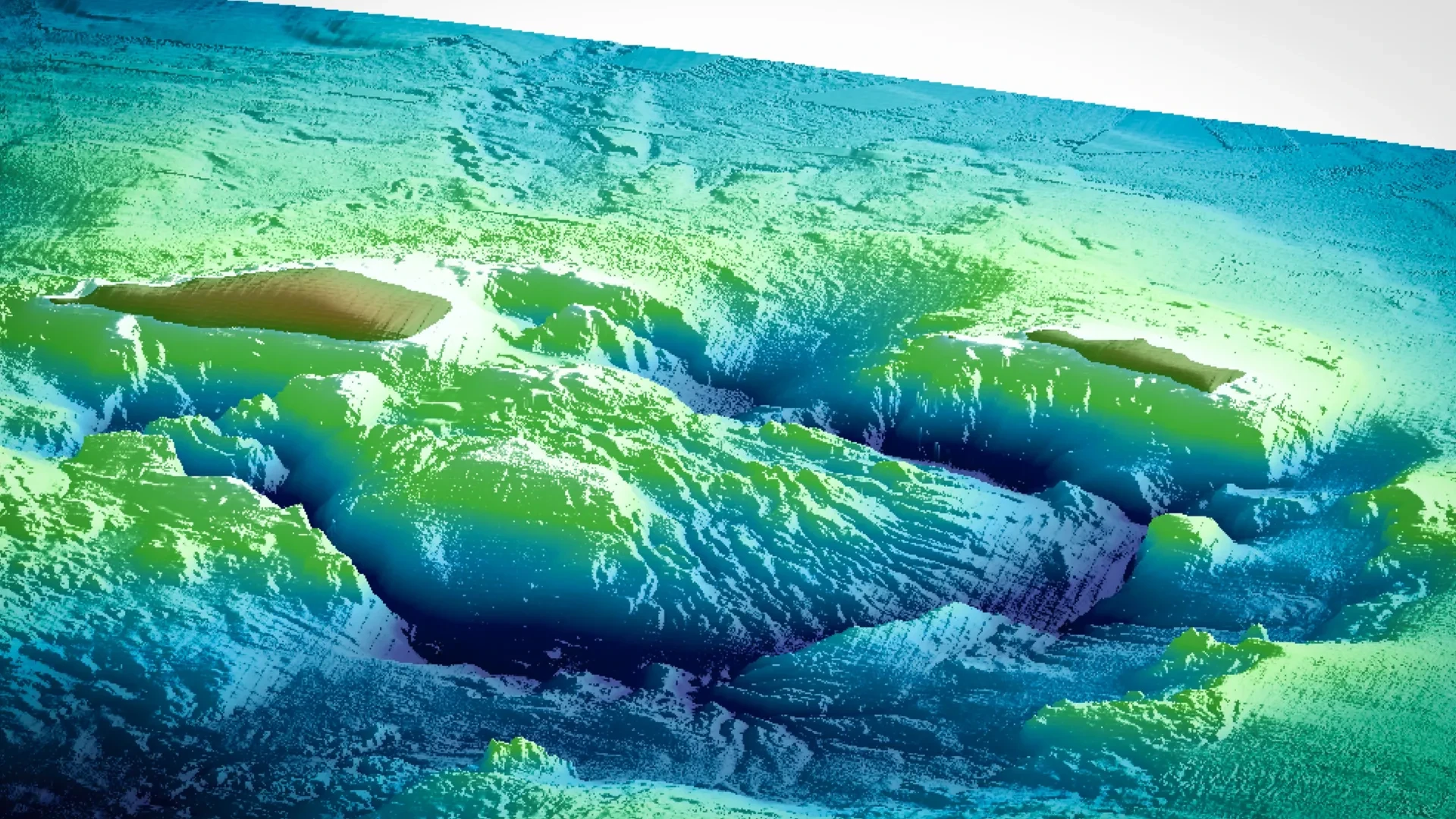
Thousands of years after producing one of the most cataclysmic volcanic eruptions in recent geological history, one of Earth’s most powerful supervolcanoes is quietly stirring back to life underground. Researchers at Kobe University have uncovered compelling new evidence that fresh, molten magma is steadily accumulating beneath Japan’s Kikai caldera, an immense volcanic structure that unleashed a devastating eruption approximately 7,300 years ago.
The breakthrough discovery offers scientists a rare and detailed look at how giant volcanic systems manage to rebuild their vast subterranean magma supplies long after massive explosions have emptied them. Beyond shedding light on Japan’s geological history, the findings provide vital clues regarding the behavior of other notorious supervolcanoes around the globe—including Yellowstone in the United States and Toba in Indonesia. By decoding the mechanisms behind magma replenishment, researchers hope to significantly improve their ability to recognize early warning signs of future eruptions and better understand the long-term life cycles of these sleeping giants.
How Supervolcanoes Store Enormous Amounts of Magma
Some volcanic eruptions are so immense that they fundamentally alter the geography of the planet. The staggering volume of magma released during these rare events is difficult to comprehend; a single major supervolcano eruption can eject enough molten rock to bury all of New York City’s Central Park beneath a glowing layer roughly 12 kilometers, or 7.5 miles, thick.
When such colossal volumes of magma rapidly escape from deep underground, the solid rock structure directly above the emptied reservoir can no longer support its own weight. It subsequently collapses inward, leaving behind a broad, relatively shallow depression known as a caldera. These dramatic geological features are universally associated with the most catastrophic and powerful eruptions in Earth’s deep history.
Famous examples of these giant caldera systems include Yellowstone in Wyoming, Lake Toba in Sumatra, and Japan’s Kikai caldera, the majority of which lies completely hidden beneath the open ocean. Kikai last experienced a giant, civilization-altering eruption approximately 7,300 years ago. That event produced the largest known volcanic eruption of the Holocene, the current geological epoch that began roughly 11,700 years ago and continues to the present day.
Although geologists and volcanologists have long known that giant caldera volcanoes are capable of erupting more than once over geological timescales, they have historically possessed an incomplete understanding of how the enormous quantities of magma required for these events manage to accumulate underground. This massive gap in scientific knowledge makes it exceptionally difficult to anticipate when another major supervolcano eruption might eventually occur.
"We must understand how such large quantities of magma can accumulate to understand how giant caldera eruptions occur," points out Kobe University geophysicist Nobukazu Seama, highlighting the fundamental challenge facing modern volcanology.
Scientists Discover a Massive Magma Reservoir Beneath Japan
At first glance, Kikai’s remote underwater location might seem like an insurmountable obstacle to conducting detailed geological research. However, oceanographers and geophysicists have found that the surrounding seafloor actually provides a unique and significant advantage, allowing scientists to carry out extensive, unobstructed geophysical surveys directly across the complex volcanic structure.
"The underwater location allows us to implement systematic, large-scale surveys," Seama explains, emphasizing the benefits of marine-based geological exploration.
To thoroughly investigate what lies hidden beneath the waves at Kikai, researchers from Kobe University joined forces with specialists from the Japan Agency for Marine-Earth Science and Technology, commonly known as JAMSTEC. To pierce the ocean floor and map the subterranean architecture, the research team deployed powerful airgun arrays. These specialized marine instruments generated controlled seismic pulses that traveled downward, penetrating the Earth’s crust beneath the ocean floor.
To capture the echoes and vibrations of these pulses, scientists utilized specialized instruments called ocean bottom seismometers. These sensitive devices carefully recorded how the seismic waves moved through the dense underground rock formations. Because seismic waves travel at markedly different speeds through solid rock versus regions containing pockets of molten or partially molten material, scientists can analyze their behavior to map out subterranean structures that are otherwise impossible to observe directly.
The resulting data, which was published in the academic journal Communications Earth & Environment, revealed a substantial region containing a high proportion of magma located directly beneath the exact site of Kikai’s catastrophic eruption 7,300 years ago.
By meticulously examining the seismic measurements, the research team was able to determine the approximate physical size, volume, and geometry of this hidden underground reservoir. Its precise position and extensive geographic footprint strongly indicate that it occupies the very same magma storage system that fueled the ancient, landscape-altering eruption millennia ago.
"Due to its extent and location it is clear that this is in fact the same magma reservoir as in the previous eruption," Seama notes.
Fresh Magma Is Recharging the Ancient Supervolcano
Perhaps the most intriguing and scientifically significant finding of the study is that the magma currently residing beneath Kikai does not appear to be merely leftover, stagnant material from its cataclysmic eruption thousands of years ago.
Previous geological investigations had already revealed that a new lava dome has been actively developing near the center of the caldera over approximately the past 3,900 years. A lava dome forms when relatively thick, viscous lava slowly squeezes out and accumulates around a volcanic vent, rather than flowing freely across the surrounding landscape as fluid basaltic lava might do.
Furthermore, detailed chemical analyses showed that volcanic material sourced from this growing dome, alongside other more recent geological activity, differs noticeably in its chemical composition from the material that was violently ejected during Kikai’s giant Holocene eruption.
That chemical discrepancy provides a vital clue for researchers attempting to unravel the volcano’s internal plumbing. It strongly suggests that the magma now stored deep beneath the volcano was supplied by fresh injections of molten rock rising from deeper within the Earth’s crust or mantle, rather than simply remaining unchanged and dormant since the previous major eruption.
"This means that the magma that is now present in the magma reservoir under the lava dome is likely newly injected magma," Seama summarizes.
When taken together, the advanced seismic observations and the supporting chemical evidence help researchers develop a much clearer, data-driven picture of how a giant volcanic system can gradually rebuild its underground magma supply long after a massive eruption has cleared the shelves.
Crucially, scientists emphasize that this ongoing replenishment process does not mean that another catastrophic supervolcano eruption is imminent. Instead, the findings reveal the slow, complex mechanics of how a magma reservoir can be steadily recharged over thousands of years—an essential baseline process that scientists must fully grasp before they can reliably assess the long-term behavior and potential hazards of supervolcanoes worldwide.
What the Discovery Could Reveal About Yellowstone
The implications of this groundbreaking research extend far beyond the waters surrounding Japan. Researchers believe that the specific magma replenishment process identified beneath Kikai may help explain a major geological mystery: why other enormous caldera systems around the world, including Yellowstone in the United States and Toba in Indonesia, also contain massive, active magma reservoirs located relatively close to the Earth’s surface.
"This magma re-injection model is consistent with the existence of large shallow magma reservoirs beneath other giant calderas like Yellowstone and Toba," Seama explains.
The newly proposed model suggests that following a giant eruption, fresh batches of magma can gradually enter, blend with, and replenish an existing underground reservoir over extended periods. Understanding the exact mechanics of how this happens could reveal vital repeating patterns in the long-term cycles of magma accumulation, subsurface volcanic activity, and major eruptions.
Armed with these insights, researchers are now looking toward the future. They hope to further refine and improve the seismic imaging techniques utilized at Kikai so they can investigate the delicate movement, migration, and storage of magma in even greater detail.
"We want to refine the methods that have proved to be so useful in this study to more deeply understand the re-injection processes. Our ultimate goal is to become better able to monitor the crucial indicators of future giant eruptions," Seama concludes.
By uncovering the hidden mechanisms of how fresh magma accumulates beneath a volcano responsible for one of Earth’s most extraordinary geological chapters, the research brings the scientific community one step closer to understanding the vast underground forces that ultimately make such colossal events possible.