
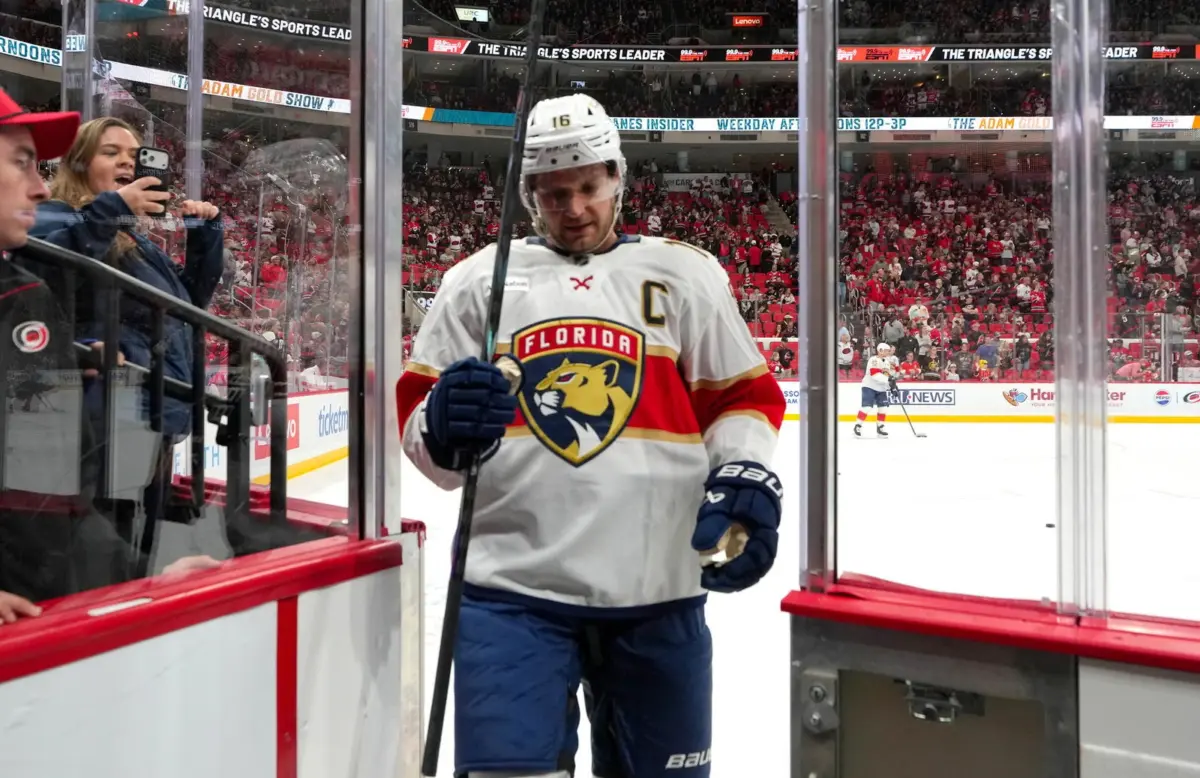
Nearly two weeks into the 2026–27 NHL regular season, the initial wave of excitement has given way to a closer analysis of team performances and individual player outputs. While a handful of teams have exploded out of the gate, several of the league’s marquee stars are enduring uncharacteristic cold stretches that are becoming increasingly difficult to ignore.
It is still early in the 82-game campaign, and hockey observers know that panic in October is rarely a productive exercise. Elite players possess the talent, vision, and track records necessary to snap out of slumps at a moment’s notice. However, if offensive production does not begin to trend upward soon, these high-profile names risk generating headlines for all the wrong reasons. A slow start can quickly compound into mounting pressure, forcing coaches to alter line combinations and placing an undue burden on depth players.
A closer examination of the opening weeks reveals four notable NHL stars who are capable of playing at a much higher level and whose slow starts are beginning to shape the early-season narratives of their respective franchises.
Brady Tkachuk, LW, Florida Panthers
The offseason blockbuster move that brought Brady Tkachuk to the Florida Panthers was heavily anticipated across the hockey world, particularly because it reunited him with his brother, Matthew Tkachuk. As the former captain of the Ottawa Senators, Brady was expected to bring an immediate injection of elite grit, leadership, and scoring touch to the defending contenders. Yet, his transition to Sunrise has hit a surprising roadblock.
Through his first five games with the Panthers, Tkachuk has registered zero points, carrying a minus-three rating and nine penalty minutes. To put this dry spell into perspective, his history in Canada suggests a stark contrast: back in Ottawa, Tkachuk consistently recorded at least two points within the first three games of each of his eight previous NHL seasons.
What makes his current drought even more perplexing is his utilization. Tkachuk is logging significant minutes, averaging 17:24 of ice time per night, and occupies a coveted spot on the Panthers’ first-unit power play. Despite these opportunities, the left winger has managed only 12 shots on goal.
The situation in Florida has only heightened the urgency for Tkachuk to find his game. Recent injuries to key forwards Brad Marchand and Aleksander Barkov mean the Panthers require his contributions more than ever. They need him to provide his trademark net-front presence, heavy physical play, and secondary scoring to weather the injury storm.
While the beginning of an NHL season frequently sparks premature panic among fan bases, Tkachuk’s underlying traits—such as his ability to finish checks, draw penalties, and create space for his linemates—offer positive signs that a breakout is coming. Even so, the pressing question remains: how long will his offensive struggles keep him entirely off the scoresheet?
Porter Martone, RW, Philadelphia Flyers
Entering his sophomore season in the NHL, 19-year-old Porter Martone carried considerable momentum into the fall. Martone made his jump to the league at the tail end of last regular season, appearing in nine games and making a strong impression by recording 10 points on four goals and six assists. He carried that confidence straight into the post-season, suiting up for every game of Philadelphia’s playoff run, registering five points across 10 contests, and finishing with a steady plus-three rating.

Given that promising introduction to professional hockey, it has been somewhat alarming to watch Martone begin the 2026–27 regular season without recording a point through his first five games. He did manage to break the ice by scoring his first goal of the season for the Philadelphia Flyers on Saturday against the Boston Bruins in their sixth game of the year. Still, a single tally does little to mask the reality that his overall production is falling significantly short of the expectations built during his impressive late-season and playoff stint a year ago.
Without a full 82-game NHL season under his belt, writing off a teenager after a handful of games would be short-sighted. One major variable contributing to his slow start is a noticeable reduction in playing time. Martone’s average ice time has dropped from 17:02 per game in 2025–26 down to just 13:19 this season, directly limiting his opportunities to generate shot volume.
Furthermore, the psychological environment around him has shifted. Having played fewer than 10 regular-season games last year, the spotlight and pressure were relatively modest. This season, however, the stakes are higher. In the Flyers’ season opener, Martone found himself temporarily benched in the first period following a messy line change that directly resulted in an opposing goal. Expectations for the young winger remain elevated, and he will need to close the gap between potential and production to secure a permanent, prominent role on Philadelphia’s roster.
Robert Thomas, C, St. Louis Blues
As the captain and primary offensive engine of the St. Louis Blues, Robert Thomas is relied upon to dictate the pace of the game and create scoring chances shift in and shift out. Yet, despite logging heavy minutes—averaging 19:46 of ice time through his first five games—Thomas has struggled to find the back of the net, accumulating zero goals and just a single assist. That lone helper finally came during the Blues’ victory over the Columbus Blue Jackets on Saturday.
Last season, Thomas was a picture of reliability, posting 64 points in 64 games. Through his first four games of the current campaign, however, he has managed a meager five shots on goal alongside his zero points. As the team’s spiritual and tactical leader on the ice, his limited impact has coincided with growing concern as the Blues dropped three of their first five contests, eager to avoid falling behind in a competitive Western Conference.
Interestingly, Thomas has walked this road before. During the previous season, he endured a similarly sluggish start, notching just one goal and one assist across his opening five outings. Injuries played a significant role in disrupting that phase of his year, but once he regained full health, his remarkable consistency anchored the Blues’ offensive charge. St. Louis fans and coaching staff will be hoping for a similar trajectory this time around, knowing that a prolonged slump from their top center could derail their early-season aspirations.
Mark Scheifele, C, Winnipeg Jets
Unlike some of his struggling peers across the league, Mark Scheifele has not been entirely shut out of the score sheet, collecting three points in his first five games. However, the veteran center has yet to score his first goal of the 2026–27 campaign. As the offensive catalyst for the Winnipeg Jets, Scheifele carries immense expectations, and a zero-goal start is notable for a player of his caliber.
While a lack of goal-scoring through the first week or two of a season is rarely cause for long-term panic, Scheifele’s limited shot volume is a metric worth monitoring closely. He has registered just seven shots on goal across his first five outings. Regularly centering Winnipeg’s top line and commanding an average of 21:18 of ice time, Scheifele is expected to generate a much higher frequency of scoring chances, particularly coming off a career-best 103-point campaign last year.
Fortunately for the Jets, the team has managed to insulate itself against his quiet start. Winnipeg sits near the top of the Central Division with a solid 3-1-1 record, proving that depth and strong goaltending can bridge the gap while a superstar finds his rhythm. Furthermore, Scheifele’s three early assists indicate that his playmaking vision and overall offensive involvement are still active, suggesting he is working through a minor finishing drought rather than experiencing a systemic offensive collapse.