
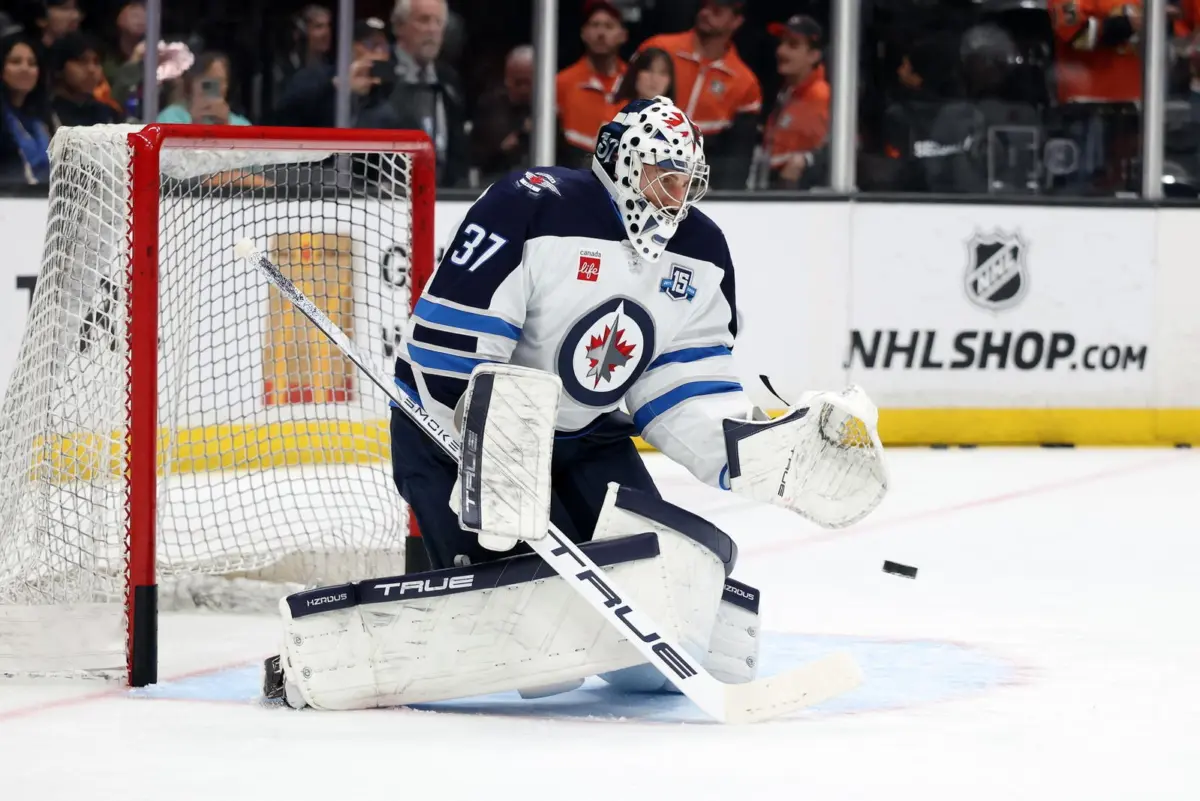
As the National Hockey League season moves past its second week, the modern era of player empowerment faces a stern and uncompromising test. Across the league, front offices are grappling with unprecedented demands from franchise cornerstones, leading to high-stakes stand-offs that show no signs of immediate resolution. Two distinct yet equally complicated situations have dominated early-season headlines: superstar goaltender Connor Hellebuyck’s ongoing trade demand and subsequent indefinite suspension in Winnipeg, and elite center Dylan Larkin’s desire to leave Motown, which has put the Detroit Red Wings in a delicate balancing act.
Despite the growing trend of players attempting to take control of their career trajectories, leadership groups in both markets are pushing back. Jets general manager Kevin Cheveldayoff and Red Wings interim general manager Shawn Horcoff find themselves at the center of a complex chess match. While players argue they are well within their rights to seek environments that suit their professional and personal ambitions as athletes, spouses, and fathers, front offices are asserting an equally valid principle: NHL organizations are obligated to act in the best long-term interests of their franchises, fan bases, and ownership groups.
The Anatomy of the Winnipeg Standoff: Hellebuyck, Cap Space, and Trade Realities
The situation in Manitoba has escalated rapidly since the summer, culminating in a complete fracture of the relationship between Connor Hellebuyck and the Winnipeg Jets. Following his trade demand, the elite goaltender refused to report to training camp, prompting the Jets to place him on an indefinite suspension.
As the calendar turns deeper into the fall, no significant movement has occurred to bridge the gap. For Cheveldayoff, the calculus of trading a world-class goaltender is fraught with logistical roadblocks that extend far beyond simply finding an interested buyer. The primary hurdle in any Hellebuyck trade lies in the stringent mechanics of the NHL salary cap. Interested clubs must navigate a labyrinth of financial constraints, requiring them to possess both the necessary cap space to absorb a premier player’s salary under their financial umbrella and the elite trade assets required to satisfy Winnipeg’s valuation.
Furthermore, the nature of the goaltending position complicates potential deals. If a contending team has the financial capability to acquire Hellebuyck, they often do so by attempting to ship a veteran goaltender back to Winnipeg to offset cap space and maintain depth. From the Jets’ perspective, however, accepting a veteran netminder who does not align with their competitive timeline or organizational vision can serve as an absolute deal-killer.
Cheveldayoff has made it clear that the organization will not be rushed into a sub-optimal transaction. In a market where teams ultimately dictate player value through leverage and contract control, the Jets are holding out for a return package that accurately reflects Hellebuyck’s status as one of the premier goaltenders in the sport.
Detroit’s Delicate Balance: Larkin’s Request and the Long-Term Vision
While Hellebuyck’s standoff has kept him entirely away from the ice, the dynamic in Detroit presents a different kind of challenge for the organization. Dylan Larkin, the star center, former captain, and proud Michigan native, formally requested a trade away from the Red Wings. Unlike the situation in Winnipeg, however, Larkin chose to report to training camp and has remained active in the Red Wings’ lineup, even contributing offensively in the early weeks of the season.

Despite his on-ice participation, Larkin’s trade request has not been rescinded, and there are no clear indications that his foundational desire to leave the organization has shifted. For interim GM Shawn Horcoff, this creates a deeply nuanced environment. Horcoff is tasked with managing a locker room where a prominent leader wants out, while simultaneously evaluating potential trade proposals that ensure the franchise’s future stability.
Horcoff may not necessarily require immediate roster help or NHL-ready contributors in a potential return package for Larkin. Instead, the interim general manager must adopt a macro-level perspective, ensuring that any trade executed defensibly addresses both the immediate optics and the multi-year trajectory of the franchise. Yielding simply to make a player and their representation happy by trading Larkin to a preferred destination without securing maximum value is a risk Horcoff cannot afford to take. The stakes demand patience, caution, and an unwavering commitment to the organization’s overarching plan.
Accountability to Ownership and Fans
At the core of both the Winnipeg and Detroit stand-offs lies a fundamental truth of professional sports management: general managers are ultimately beholden to two primary constituencies—team ownership and the fan base.
While cultivating positive, collaborative relationships with players remains an essential pillar of modern sports management, it must ultimately take a secondary priority to a GM’s ability to look team owners and paying consumers in the eye. Leadership must be able to justify their decisions by demonstrating, without reservation, that every move made was strictly in the best interest of the team’s competitive future.
If fulfilling that responsibility requires exercising patience and weathering the storm of prolonged trade negotiations, both Cheveldayoff and Horcoff appear prepared to absorb the friction. Jets and Red Wings fans alike expect leadership groups that are willing to make difficult, unpopular choices in pursuit of building a legitimate Stanley Cup contender. Navigating these turbulent waters requires an intricate understanding of asset management, market timing, and organizational fortitude.
Players may voice their frustrations with these roadblocks, just as general managers frequently voice their own grievances regarding the widespread implementation of no-trade and no-move clauses across the league. Yet, these mechanisms are the byproduct of a collectively bargained system established by the NHL and the NHL Players’ Association. Because the rules of engagement are clearly defined by the collective bargaining agreement, high-profile stand-offs over player movement are destined to remain a recurring reality of the modern hockey landscape.
As the season progresses, the pressure will continue to mount on both fronts. Whether Cheveldayoff and Horcoff can eventually find trade partners that meet their exacting standards remains one of the defining storylines of the NHL year. For now, the front offices in Winnipeg and Detroit are holding the line, proving that even in an era defined by player empowerment, the power of the organizational ledger still holds immense sway.