
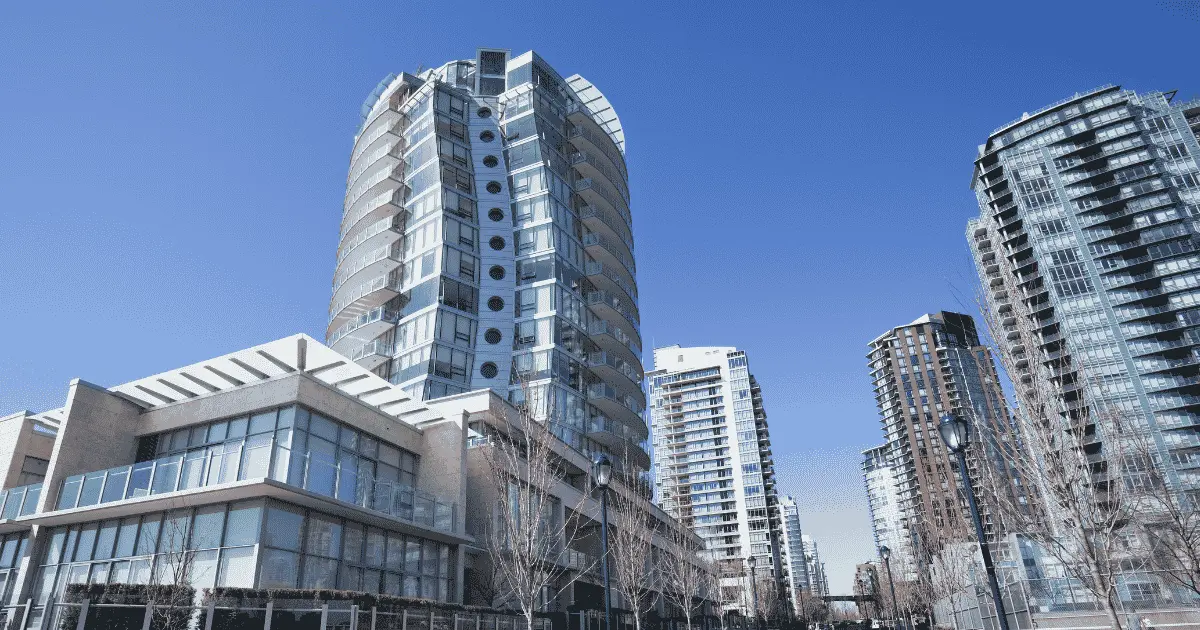
Canada’s housing market is telling a tale of two vastly different realities. While renters across the country face a severe crunch for affordable living spaces, high-end and luxury rental units are experiencing an unprecedented surplus. According to a comprehensive new report from real estate analytics firm CoStar, high-end rentals in Canada currently feature a vacancy rate of nearly 17 per cent, standing in stark contrast to the tight three per cent vacancy rate plaguing more affordable housing sectors.
The findings highlight a deep disconnect within the nation’s residential real estate landscape. CoStar, which evaluates rental properties using its own specialized rating system, reveals that out of approximately 26,600 five-star units across the country, a striking 4,500 are currently sitting empty. This translates to an alarming vacancy rate of 16.9 per cent for the most luxurious tier of rental housing.
To differentiate these properties, CoStar classifies four- and five-star buildings based on specific architectural and qualitative markers. These high-end developments are typically set apart by top-tier interior finishes, extensive lifestyle and wellness amenity offerings, and an attractive, architecturally significant facade designed to appeal to affluent tenants. However, this premium tier is seeing a massive buildup of vacant units.
When expanding the scope to include both four- and five-star buildings, the numbers remain notably high. Out of a total of 222,190 units across Canada in these categories, 25,500 are vacant, pushing the vacancy rate for this combined luxury segment to 11.5 per cent.
This environment contrasts sharply with the rest of the market. CoStar’s data shows that three-star buildings maintain a much healthier vacancy rate of four per cent. Meanwhile, one- and two-star buildings—representing the most basic and typically most affordable rental stock—boast a tight vacancy rate of just 2.7 per cent, underscoring where the true demand from everyday renters lies.
Two Distinct Narratives
The starkly contrasting metrics point to a fundamental split in the marketplace. Mario Lefebvre, CoStar’s chief economist for Canada, recently pointed out in an interview with Real Estate Magazine that these differing vacancy rates illustrate two entirely separate narratives unfolding simultaneously within the Canadian rental sector.
Lefebvre places the blame for the bloated luxury vacancy rates squarely on the shoulders of developers. According to his analysis, builders have flooded the market with high-end stock largely as a defensive reaction against skyrocketing construction costs.
Construction expenses surged dramatically during the COVID-19 pandemic and have maintained an upward trajectory ever since, climbing by an estimated 60 to 70 per cent. At the same time, average household incomes have failed to keep pace with these inflated development costs. This massive disparity has made it economically unviable for developers to build genuinely affordable housing while still hoping to recoup their initial investments.
Faced with these harsh economic realities, developers recalculated their strategies. Lefebvre noted that developers essentially looked at the math, realized they could not make the numbers work for lower-priced builds under prevailing conditions, and consciously decided to pivot toward the higher end of the market.
By utilizing premium materials, incorporating luxurious amenities, and ultimately charging significantly higher monthly rents, developers hoped to offset their heavy financial outlays. However, the market conditions that existed when these projects were first greenlit earlier in the decade look entirely different from the current economic landscape.
Initial projections during the early planning stages were remarkably optimistic. Since then, however, the broader Canadian economy has experienced a notable slowdown. Factors such as lower immigration levels, persistent inflation, and economic strains—including the looming pressure of U.S. tariffs—have cooled consumer spending power and rental demand.
CoStar’s report indicates that tenant absorption simply failed to keep pace with the massive wave of new high-end deliveries coming to market. As a result, the vacancy rate for luxury units has climbed steeply, jumping from roughly seven per cent in 2022 to the double-digit figures recorded today.
Industry analysts emphasize that this dynamic shifts the conversation around Canada’s housing shortage. When market commentators and policymakers discuss a critical shortage of available homes, the data suggests they are specifically referring to a shortage of affordable housing options. In reality, the market suffers from no shortage of luxury homes; rather, an overabundance of high-end units sits empty while prospective tenants are priced out.
A Slow Return to Equilibrium
Looking ahead, economists suggest that the market will eventually find its way back to a state of equilibrium, though the process is expected to be gradual. Lefebvre explains that this rebalancing will likely occur as rental rates slowly begin to soften, making the existing high-end inventory marginally more accessible to a broader segment of the population.
Simultaneously, the frantic pace of new construction has begun to slow down. This deceleration in new supply will give underlying demand time to catch up with the excess inventory currently choking the luxury segment. Even with these market corrections, however, industry experts caution that working through the existing backlog of high-end supply will take a few years.
CoStar’s report forecasts a steady increase in tenant absorption beginning late in 2026. This upward trend is expected to be catalyzed by decreasing rents, tightening supply, and potential marketing incentives from landlords—such as offering a couple of months of free rent to entice hesitant tenants. Despite these projected improvements, the firm anticipates that vacancy rates within the high-end rental segment will likely remain stubbornly above 10 per cent through the end of 2028.
Not Expensive by Design
While CoStar’s metrics paint a picture of severe oversupply at the luxury end, other housing authorities report different figures, though they generally agree on the overarching trend of rising vacancies in newer, pricier units.
The Canada Mortgage and Housing Corporation (CMHC) calculates vacancy rates for premium rentals using a different methodology, placing the numbers significantly lower than CoStar. According to CMHC data released in October 2025, the vacancy rate for the highest rental quartile in Canada sat at 5.2 per cent. At that time, the national average rent across all properties was hovering just above $1,950 a month.
Although a 5.2 per cent vacancy rate for expensive rentals is lower than CoStar’s estimates, it still represents a substantial increase compared to historical norms. That figure is nearly double the typical pre-pandemic vacancy rate for high-end rentals, which sat at a tight 2.8 per cent back in October 2019.
Tania Bourassa-Ochoa, deputy chief economist at CMHC, noted that vacancies have been noticeably elevated across newer builds over the last few years. She attributes this trend primarily to the sheer volume of recent construction, which has temporarily heightened competition among property managers and landlords trying to secure tenants.
Bourassa-Ochoa points out that newly constructed buildings naturally command higher price points—often to the point of being entirely out of reach for a significant portion of the Canadian population. Crucially, however, she emphasizes that these units are not necessarily expensive by design, as if developers deliberately set out exclusively to cater to an ultra-wealthy elite. Instead, spiraling development and land costs have forced builders to charge elevated prices simply to cover their baseline expenses.
The combination of steep pricing and shifting macroeconomic conditions has fundamentally altered consumer behavior in the rental market. As Bourassa-Ochoa observes, the overall demand for rental housing has slowed down quite significantly over recent reporting periods.
Rather than vanishing entirely, that pent-up housing demand remains present in the market, with prospective renters waiting patiently for improved economic conditions and the emergence of more attainable, budget-friendly options.