
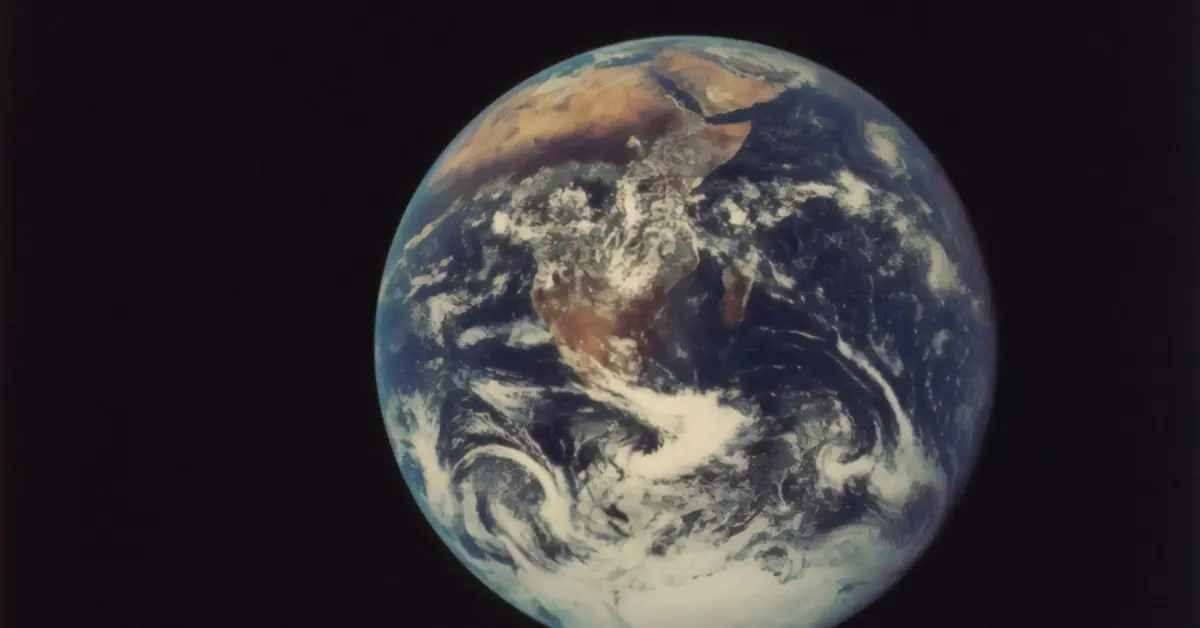
When observing Earth from a distant vantage point, a viewer might perceive a species remarkably akin to a sprawling, highly complex ant colony. From this macro perspective, humanity appears as a singular collective, building infrastructure, working cooperatively, and laying the foundations for homes where individuals hope to live safely on the one haven we call Earth. Spinning silently on its axis in a cold, heedless universe, this planet seems to bind its inhabitants together in a shared mandate: the mutual protection of one another across the lands and oceans we jointly occupy.
Yet, a rapid shift in perspective reveals a starkly different reality. Zooming back in to ground level exposes a world fractured by violence directed at people strictly because of where they live. It reveals the systematic destruction of homes, schools, and communities—the grim spectacle of human beings killing other human beings.
It is all a matter of perspective.
For the vast majority of human history, people lived in remarkably small groups, functioning primarily as families, clans, and tribes. The abstract need for a sense of global belonging may have held little currency for populations whose entire lives unfolded within walking distance of their birthplaces. Before the advent of industrialization, human societies exerted a relatively limited impact on their planetary home and its broader biological community. Nevertheless, a deep sense of belonging to the immediate environment was likely robust for people who faced daily exposure to both the providence and the cruel indifference of their natural surroundings. In those eras, the Earth acted simultaneously as an ultimate protector and an existential threat; living disconnected from the rhythms and realities of the natural world simply was not an option.
Looking back across the historical record, however, humanity reveals a long, troubled lineage of belonging disruption, displacement, and dispossession. Modern society’s ongoing struggles with belonging are by no means unprecedented phenomena. Time and again, belonging tightly to one specific group has carried the implicit, and often destructive, belief that another group must be opposed or dismantled.
In her book chapter titled "Global Belonging: From Conflict and Exclusion to Untapped Potential," researcher K.-A. Allen examines this paradoxical tension at the heart of human sociology. She observes that conflicts and violence of this nature can frequently arise from individuals who possess an intensely strong sense of in-group belonging, rather than merely from those who lack belonging altogether, as one might casually assume.
Feeling Ourselves as Part of the Earth
Scholars and researchers who study the psychological architecture of belonging cannot simply assume that strengthening the bonds within any given group will inherently make people’s lives better, safer, or happier. Academic inquiry into belonging has traditionally focused on dyads and triads, or on localized groups and formal organizations. But what happens if researchers expand that lens to consider our ultimate collective home—the Earth itself? Does the mere fact of sharing a planet translate into a shared feeling that we all belong to it?
Global belonging is defined as the profound experience of seeing oneself as an integral, connected part of the Earth. It is the internal realization that the planet is somewhere we fundamentally belong. Cultivating a genuine sense of belonging to the Earth should naturally encourage active stewardship of the planet and genuine care for our fellow human beings. Furthermore, it should help engender a persistent concern for the safety and belonging of others, even during moments and in places where our own personal security remains completely unthreatened.
Crucially, feeling a part of the Earth does not require the displacement of traditional attachments to a nation, culture, or local community. These localized and cultural attachments remain deeply important to human identity. Yet, the physical atmosphere of our planet does not discriminate based on the geographical origin of carbon dioxide emissions. At a fundamental, existential level, humanity must urgently strengthen its sense of global belonging, regardless of what political actors or social forces preaching fracture and disruption might attempt to normalize. Our collective survival depends upon it.
The Overview Effect
To truly grasp the mechanics of this planetary connection, one must zoom out once again, this time far enough to observe the Earth in its entirety against the black void of space. Astronauts frequently report experiencing a profound psychological shift, feeling vastly more connected to the Earth and its inhabitants after viewing our world from an orbital perspective. These transformative connections offer a vital framework for imagining the planet as a place where all of humanity belongs.
Allen’s research explores this specific psychological evolution. This cognitive shift, originally termed the "Overview Effect" by writer Frank White in 1987 based on his extensive interviews with astronauts, describes the sudden, overwhelming awareness that emerges from viewing Earth as a single, shared home. This unique experience is consistently linked to measurable changes in personal values, heightened environmental concerns and pro-environmental behaviors, and an expanded capacity to identify with humanity as a whole alongside the planet itself.
At present, behavioral researchers do not yet fully know whether this specific type of planetary belonging can be deliberately encouraged in everyday life, nor whether it creates an enduring, long-term sense of global identity. Moving forward, researchers will need to rigorously examine whether cultivating global belonging actively influences the real-world choices people make, particularly during times of acute war, geopolitical conflict, and widespread human suffering.
Our deeply rooted attachments to family, culture, and country can safely coexist with the sober understanding that those who exist outside of these immediate constructs also belong to our shared humanity. Exclusionary nationalism, for instance, far too often operates at the direct cost of ignoring how others can and should belong in the exact same physical and social spaces.
Humanity does not need everyone to agree on every issue or share identical political beliefs. From a cosmic vantage point, we might still resemble a collective, cohesive ant colony, yet zooming back in to ground level exposes millions of individuals whose daily experience of global belonging is not merely threatened, but systematically annihilated. What could the world look like if humanity cared enough for its own species to stop destroying our collective home and the people living within it? And would that not ultimately be the kind of world that the vast majority of people would want to inhabit?