
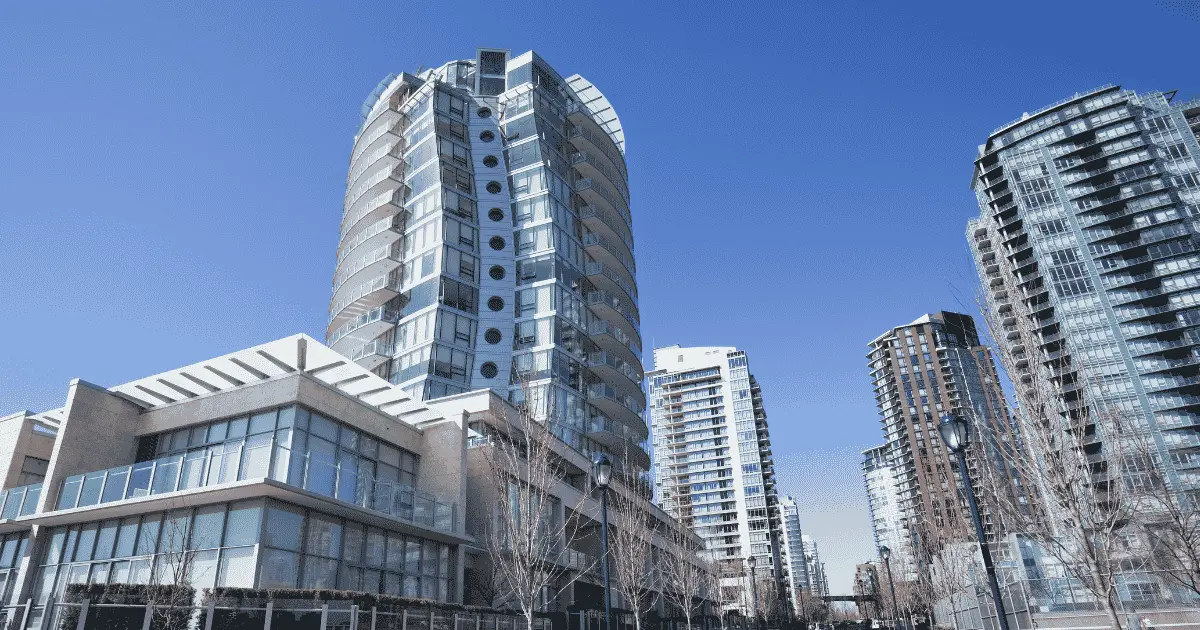
Canada’s rental housing market is experiencing a profound and unprecedented divergence, with a new comprehensive report revealing that high-end and luxury units are sitting empty in the double digits, even as affordable housing remains desperately scarce for the average renter.
According to recent data from real estate analytics firm CoStar, high-end rental units across Canada are currently facing a vacancy rate of nearly 17 per cent. This stark figure stands in dramatic contrast to the health of the lower-end rental market, where affordable units maintain a tight vacancy rate hovering close to just three per cent.
The CoStar report provides a granular look at how different tiers of the rental stock are performing. The analytics firm classifies buildings using its own proprietary rating system. When examining the absolute peak of the market—designated as five-star units—CoStar reports that out of 26,600 such units across the country, a staggering 4,500 are currently unoccupied. This translates to an alarming vacancy rate of 16.9 per cent for the most expensive rental accommodations available.
What sets these four- and five-star buildings apart from standard multi-residential properties are their high-end finishes, extensive suite of building amenities, and architecturally significant, attractive facades designed to appeal to affluent renters. However, this heavy concentration of luxury inventory is failing to find tenants. When expanding the metric to include both four- and five-star buildings combined, CoStar data shows that 25,500 units are vacant out of a total stock of 222,190 in Canada, resulting in an overall upper-tier vacancy rate of 11.5 per cent.
By comparison, the middle and lower tiers of the market are telling an entirely different story. Three-star buildings are recording a much healthier vacancy rate of four per cent, while one- and two-star buildings—traditionally the most affordable options in the housing ecosystem—boast a tight vacancy rate of just 2.7 per cent.
Two distinct narratives
Mario Lefebvre, CoStar’s chief economist for Canada, pointed out in a recent interview with Real Estate Magazine that these drastically contrasting vacancy rates point to two entirely distinct narratives playing out simultaneously within the broader Canadian rental landscape. On one side of the ledger, higher-end properties are struggling to find occupants; on the other, lower-end rentals are caught in a severe crunch.
Lefebvre places the primary blame for the ballooning vacancy rates among high-end rentals squarely on the shoulders of developers. Driven by punishing economic pressures, builders have flooded the market with luxury stock over recent years.
According to Lefebvre, construction costs rose dramatically during the COVID-19 pandemic and have continued their upward trajectory ever since, surging by an estimated 60 to 70 per cent. At the same time, household incomes have failed to keep pace with these escalating development expenditures. This wide gap has made it economically unviable for developers to build standard, affordable housing while still hoping to recoup their soaring construction costs.
Faced with these financial realities, developers had to recalculate their business models to survive. Lefebvre explained that developers essentially started doing the math themselves, realizing that to stay afloat, they had to pivot toward the higher end of the market. The fundamental problem, however, is that they built and built in that specific segment, and now the Canadian market is saddled with double-digit vacancies at the upper tier.
CoStar’s analysis notes that developers calculated they could absorb the higher costs of construction by incorporating luxury materials and premium amenities, thereby commanding higher rents to offset their expenses.
However, the macroeconomic conditions when these projects were first greenlit earlier in the decade look vastly different from the economic reality of today. Initial projections made by developers were characterized by strong optimism, but the market has since cooled significantly. A combination of lower immigration numbers and broader strains on the Canadian economy—including the looming threat of U.S. tariffs and persistent inflation—has fundamentally altered consumer behavior.
The CoStar report indicates that absorption rates simply could not keep pace with the massive wave of new high-end completions entering the market. As a result, vacancy rates for luxury units have climbed steeply, jumping from roughly seven per cent in 2022 to the double-digit highs seen today. This dynamic underscores a critical truth about Canada’s housing crisis: when public discourse centers on a severe shortage of available homes, the reality on the ground points specifically to a shortage of affordable homes, as there is actually an overabundance of luxury inventory currently sitting vacant.
A slow return to equilibrium
Looking ahead, Lefebvre suggests that the market will experience a gradual return to equilibrium. This rebalancing is expected to happen as rents slowly decrease, which should make the expensive inventory slightly more accessible to a broader segment of the population. Simultaneously, the overall pace of new construction has slowed down, giving organic market demand the necessary time to catch up with the existing supply. Even with these adjustments, Lefebvre warns that it will still take a few years to completely work through the excess luxury supply currently plaguing the market.
CoStar’s predictive modeling forecasts a steady increase in absorption beginning around the end of 2026. This recovery is anticipated to be driven by a combination of retreating rental prices, tightening supply, and increased reliance on landlord concessions—such as offering prospective tenants a few months of free rent to incentivize moving in. Nevertheless, even with these market corrections, the report projects that vacancy rates in the high-end segment will stubbornly remain above the 10 per cent threshold through the end of 2028.
Not expensive by design
While CoStar’s figures paint a picture of severe luxury overbuilding, other housing authorities measure the upper tier of the market through a slightly different lens. The Canada Mortgage and Housing Corporation (CMHC) reports significantly lower vacancy rates for higher-cost rentals compared to the metrics provided by CoStar.
According to CMHC data released as of October 2025, the vacancy rate for the highest quartile of rents in Canada sat at 5.2 per cent, a tier where the national average rent exceeds $1,950 a month.
While a 5.2 per cent vacancy rate indicates more breathing room than the tight conditions found at the bottom of the market, it is still nearly double the typical pre-pandemic vacancy rate for more expensive rentals, which stood at a sparse 2.8 per cent back in October 2019.
Tania Bourassa-Ochoa, deputy chief economist at CMHC, explained to Real Estate Magazine that vacancies have climbed notably higher for newly constructed builds over the past few years. This uptick is primarily driven by the sheer volume of recent construction, which has temporarily elevated competition among landlords for available tenants.
Bourassa-Ochoa noted that newly constructed units are inherently more expensive, often to the point of being entirely out of reach for a significant portion of Canadians. However, she emphasizes that these units are not necessarily expensive by design—meaning developers are not always intentionally targeting a strictly ultra-luxury demographic out of greed. Rather, development costs have risen to such extreme heights that builders are forced to charge high prices simply to break even, resulting in price points that many everyday Canadians cannot afford.
The demand for rental housing has slowed down quite significantly over the recent monitoring periods, according to Bourassa-Ochoa. She points out that while the underlying demand for housing has not vanished entirely, prospective renters are largely holding back, waiting for more favorable economic conditions and the emergence of genuinely affordable housing options.