
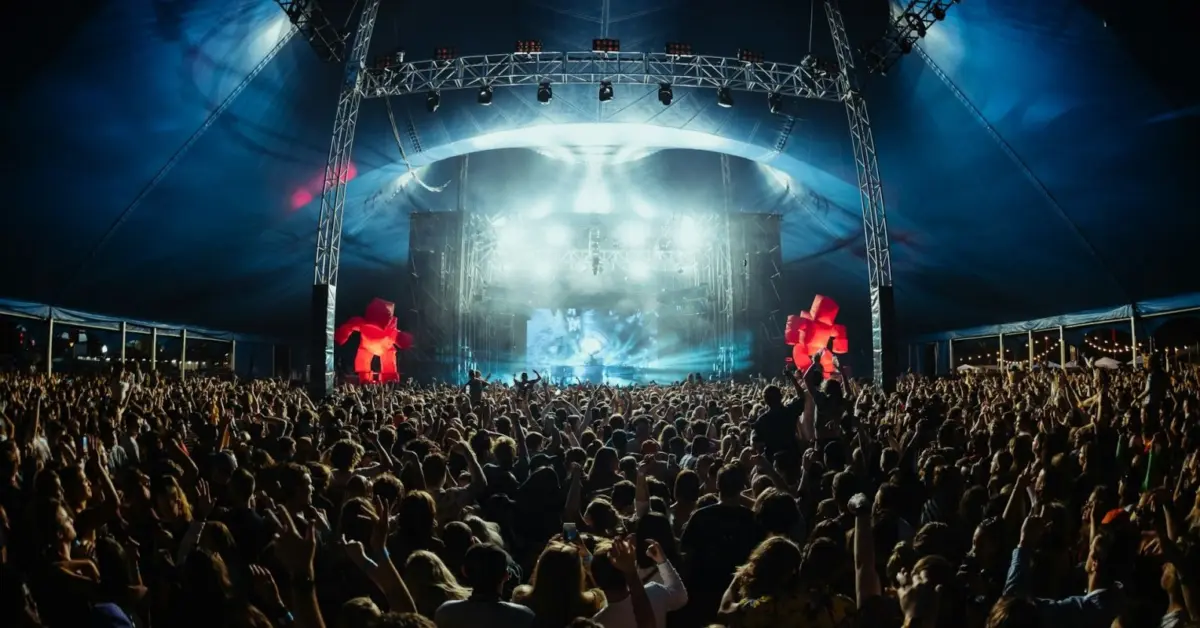
As the crowd surged toward the stadium gates, anticipation filled the warm evening air. For many in attendance, it was a first experience at a major outdoor concert venue, bringing with it a sense of uncertainty regarding how the wide-open surroundings would interact with the acoustics of a live performance. Fortunately, preparation had been made. Recognizing the realities of living with pre-existing hearing loss, there was a firm understanding that no musical performance, no matter how anticipated, could ever be worth sacrificing the precious hearing that remained.
Navigating the perimeter of the venue, the distant sounds of the opening act carried across the grounds at what initially registered as a reasonable, manageable volume. However, that illusion of acoustic safety vanished the moment the crowd rounded a corner and approached the designated seating section. Without warning, a wall of sound struck with physical force. It was a sudden, concussive blast of audio that prompted an immediate physical reaction—stepping backward as if physically shoved and instinctively diving behind a nearby concrete barrier to retrieve and deploy protective gear. Once secured snugly in place, the headphones remained fixed for the duration of the evening, shielding sensitive ears from the relentless sonic onslaught.
Yet, a scan of the surrounding crowd revealed a startling reality. Among the thousands of enthusiastic fans packed into the venue, virtually no one else was wearing any form of hearing protection. This glaring absence raises a troubling question that public health advocates and audiologists have long wrestled with: why do so many people routinely ignore the obvious and documented risks to their hearing in loud entertainment environments?
The Risk Is Real and Measurable
The scale of the danger quickly became apparent during the performance. Monitoring tools on a personal smartwatch registered a continuous decibel reading that hovered relentlessly between 90 and 100 decibels throughout the show. In the world of live entertainment, such levels are common, and many contemporary concerts routinely exceed even those high thresholds. According data from the National Institute on Deafness and Other Communication Disorders (NIDCD), exposure to sound levels reaching 100 decibels can begin to cause measurable damage to human hearing in as little as 14 minutes.
Once that damage occurs, modern medicine offers no recourse for reversal. Medical science has yet to discover a reliable method to repair or regenerate the delicate hair cells residing within the inner ear, which are easily fractured, crushed, or destroyed by prolonged exposure to excessive acoustic energy.
Despite the permanent nature of noise-induced hearing loss, effective defenses are readily available and scientifically proven. Evidence from a randomized clinical trial conducted at an Amsterdam music festival, where ambient sound levels averaged 100 dBA, demonstrated the stark difference protection makes. Following the event, 42 percent of unprotected ears exhibited signs of temporary threshold shifts—indicating temporary hearing loss—compared to only eight percent of ears protected by specialized earplugs. Furthermore, acute post-concert symptoms such as tinnitus, commonly experienced as a persistent ringing in the ears, proved to be far less prevalent among those who wore protective earplugs during the performances.
Why We Skip the Earplugs
Given that acoustic protection is widely accessible, highly effective, and relatively inexpensive, the persistent reluctance to use it points to complex psychological and social factors rather than mere lack of information.
Chief among these barriers is denial. Particularly among younger audiences, the concept of long-term hearing degradation feels abstract, distant, and entirely unrelated to the immediate enjoyment of the present moment. If the music sounds crisp, the bass is physically engaging, and the ears are not immediately throbbing with pain, it is easy for concertgoers to assume that no harm is being done. The cumulative and irreversible consequences of repeated acoustic trauma often remain hidden for years, failing to manifest until middle age or beyond, long after the concert memories have faded.
Compounding this psychological denial is the overwhelming weight of social norms. Human behavior is heavily influenced by immediate peer groups and surrounding crowds. When attendees look around and see an entire venue behaving as though sound levels are entirely benign, wearing earplugs can create an uncomfortable sense of self-consciousness. Standing out from the crowd feels awkward, making it significantly easier for individuals to conform to the unprotected behavior of the majority, even when they know better.
Beyond social pressure and denial, there is a persistent misconception regarding the quality of the live audio experience. Many music fans harbor a lingering anxiety that inserting earplugs will unduly muffle the intricate frequencies of the music they paid hard-earned money to experience. Concerns regarding physical comfort and aesthetics—worries that protective devices might look strange or feel awkward—further contribute to the widespread avoidance of basic auditory safety measures.
How to Make Hearing Protection the Norm
Navigating the realities of a live music venue presents unique challenges. Actively demanding that event organizers turn down the volume is rarely an option, and physically relocating to a safer distance from massive speaker arrays is frequently impractical in packed festival grounds or sold-out stadiums. These logistical constraints place the burden of safety squarely on the individual attendee, making personal hearing protection an indispensable tool for anyone attending modern musical events. Yet, bridging the gap between intellectual awareness of the risk and the actual physical act of putting protection in place remains a persistent hurdle for public health advocates.
Live music remains one of the most powerful and culturally significant expressions of human joy. Safeguarding one’s auditory health is an essential component of ensuring that this passion can be sustained over a lifetime, allowing fans to enjoy performances for decades to come. For those stepping into loud venues where protection is rare, a simple shift in perspective can make a profound difference. By choosing to wear protective gear even when standing alone in a crowd, individuals can help normalize the practice, potentially making it easier for fellow concertgoers to prioritize their own long-term health and well-being.