
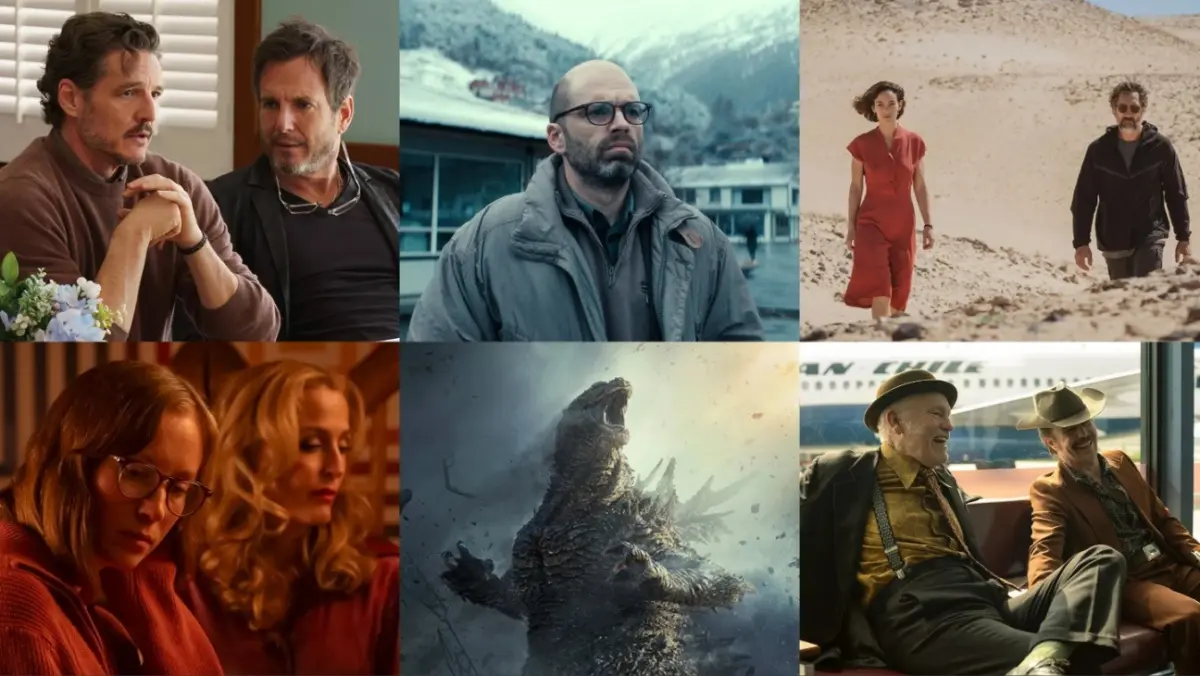
The Tokyo International Film Festival has officially revealed its comprehensive competition lineup and full schedule for its upcoming 39th edition, firmly cementing its status as Asia’s largest and most influential cinematic event. Running from October 26 to November 4, the festival’s latest iteration promises a dynamic and diverse showcase of international filmmaking talent, balancing high-profile gala presentations, a fiercely contested main competition, innovative animation selections, and a celebrated historical retrospective.
As has become tradition for the prestigious festival, the programming acts as a bridge between established international auteurs, celebrated Hollywood talent, and exciting new voices from across Asia and beyond. The festival organizers have carefully curated a slate that highlights both the rich heritage of Japanese cinema and the vibrant, ever-evolving landscape of global independent and mainstream filmmaking.
Opening, Closing and Centerpiece Screenings
The 39th edition of the Tokyo International Film Festival will officially commence on October 26 with the world premiere of Sukiyaki, a compelling new music drama directed by Zeze Takahisa, representing home soil for the opening night gala. Bringing the festival to a dramatic close on November 4 will be Colony, a pulse-pounding zombie action-horror film directed by acclaimed South Korean filmmaker Yeon Sang-ho, whose distinct visual style and tense narrative pacing are expected to deliver an unforgettable finale.
Positioned squarely between these high-profile opening and closing bookends is the festival’s official centerpiece screening: Takashi Yamazaki’s highly anticipated Godzilla Minus Zero. The choice of Yamazaki’s film underscores the enduring cultural significance of Japan’s most famous cinematic monster, particularly following recent critical and commercial successes in the franchise that have captured the global imagination.
Gala Screenings and International Star Power
Surrounding the central events is an expansive roster of gala screenings featuring prominent filmmakers from around the globe. Hollywood and Western cinema are well-represented in this tier, featuring Tony Gilroy’s gripping new project Behemoth!, Jane Schoenbrun’s atmospheric Teenage Sex and Death at Camp Miasma, and Martin McDonagh’s darkly intriguing Wild Horse Nine. American cinema presence continues with Michael Showalter’s Verity and Wayne Wang’s adaptation Diary of a Mad Old Man.
European cinema commands significant space in the gala section as well, highlighted by Cristian Mungiu’s multi-national production Fjord, which spans Romania, France, Norway, Sweden, Denmark, and Finland. Spain contributes Rodrigo Sorogoyen’s tense drama The Beloved.
At the same time, the gala lineup offers a robust showcase of Asian and co-produced works. Japanese directors feature prominently with Hiroshi Ando’s A Bouquet of Light for You, Kazuya Shiraishi’s crime-investigation feature Bye Bye Love: Detective Is in the Bar, Yukiko Sode’s intimate character study All the Lovers in the Night, Ryutaro Nakagawa’s Your Story – Kimi No Hanashi, and Yoshiro Nagikawa’s The Tiger and Her Wings The Movie. Cross-border and regional collaborations are also celebrated, including Sabu’s Taiwan-Japan co-production Arrested Memory, Gavin Lin’s Taiwanese feature Sunshine Women’s Choir.
Main Competition Lineup
At the heart of the festival is the main competition, where 15 feature films will vie for the prestigious Tokyo Grand Prix and the Governor of Tokyo Award. This year’s competition selection heavily emphasizes world premieres, providing an international platform for groundbreaking new works.
Among the highly anticipated world premieres competing for top honors are Akira Ikeda’s The Canary’s Lullaby, Qiu Jiongjiong’s expansive Fuxi: Four Tales of Feasting, Akira Yamamoto’s The Intertwining, Wang Jiangyong’s tense drama The Night That Binds Us, Garin Nugroho’s evocative Indonesian entry Red Before Dawn, Milcho Manchevski’s multi-nationally backed Sister Brother Manhole Cover, and Yukiko Mishima’s Two Cigarettes, Three Nights.
The competition also features a slate of prominent Asian premieres, bringing acclaimed international titles to Tokyo audiences for the first time in the region. These include Rubaiyat Hossain’s The Difficult Bride, Lisandro Alonso’s Double Freedom, Samuele Rossi’s Even If Hell Came, Teodora Ana Mihai’s Heysel 85, Sun Xun’s visually inventive Magic Atlas, Sérgio Graciano’s Memories of Prison, Bahman Ghobadi’s Trees Are Watching, and Jelena Maksimović’s Until the Day Ends.
While the competition represents a broad geographical spread ranging from Europe and the Middle East to Asia and the Americas, discussions surrounding gender representation in the lineup note that four female filmmakers—Rubaiyat Hossain, Teodora Ana Mihai, Yukiko Mishima, and Jelena Maksimović—are represented among the main contenders. Additionally, host nation Japan leads the individual country breakdown with three entries in the main competition.
Animation Selection and Special Sections
Animation has historically enjoyed a strong and dedicated following at the Tokyo International Film Festival, and the 2026 edition continues this legacy with an impressive array of new anime and international animated features. The program includes fresh projects from Japanese animation talents such as Masanao Kawajiri and Shingo Natsume, alongside Japanese premieres for international works like Joel Crawford and Januel Mercado’s Forgotten Island, Brenda Lígia and Edu Felistoque’s Amadeo and the Hypothetical New World, Louis Clichy’s Iron Boy, and the collaborative Brazilian project Son of a Bitch, directed by Érica Maradona, Otto Guerra, Tania Anaya, and Sávio Leite.
Beyond the main competition and animation tracks, the festival structure embraces a variety of curated sidebars designed to explore different facets of regional and global filmmaking. These include the Asian Future Selection, the Nippon Cinema Now Selection highlighting contemporary domestic trends, a Women’s Empowerment Selection, and the Crosscut Asia+ Selection, which focuses on collaborative and boundary-pushing cinema from Southeast Asia and neighboring territories.
Kenji Mizoguchi Retrospective
In a major cultural highlight for cinephiles and film historians alike, the 39th edition will host a comprehensive retrospective dedicated to the works of Japanese master filmmaker Kenji Mizoguchi. Commemorating the 70th anniversary of Mizoguchi’s death, the special program is presented through TIFF/NFAJ Classics, a collaborative initiative between the National Film Archive of Japan and the Tokyo International Film Festival.
The retrospective will present 13 masterworks across 12 distinct programs, complete with English subtitles. A primary focus of the retrospective is to showcase films that have undergone recent digital restoration, allowing modern audiences to experience Mizoguchi’s legendary visual mastery and profound humanism in pristine quality. The retrospective lineup includes enduring classics such as Osaka Elegy (1936), Sisters of Gion (1936), The Story of the Last Chrysanthemums (1939), The 47 Ronin (Parts One and Two, 1941–42), The Water Magician (1933), Gion Bayashi (1953), Ugetsu (1953), Sansho the Bailiff (1954), A Story from Chikamatsu (1954), Yang Kwei Fei (1955), New Tales of the Taira Clan (1955), and Street of Shame (1956).