
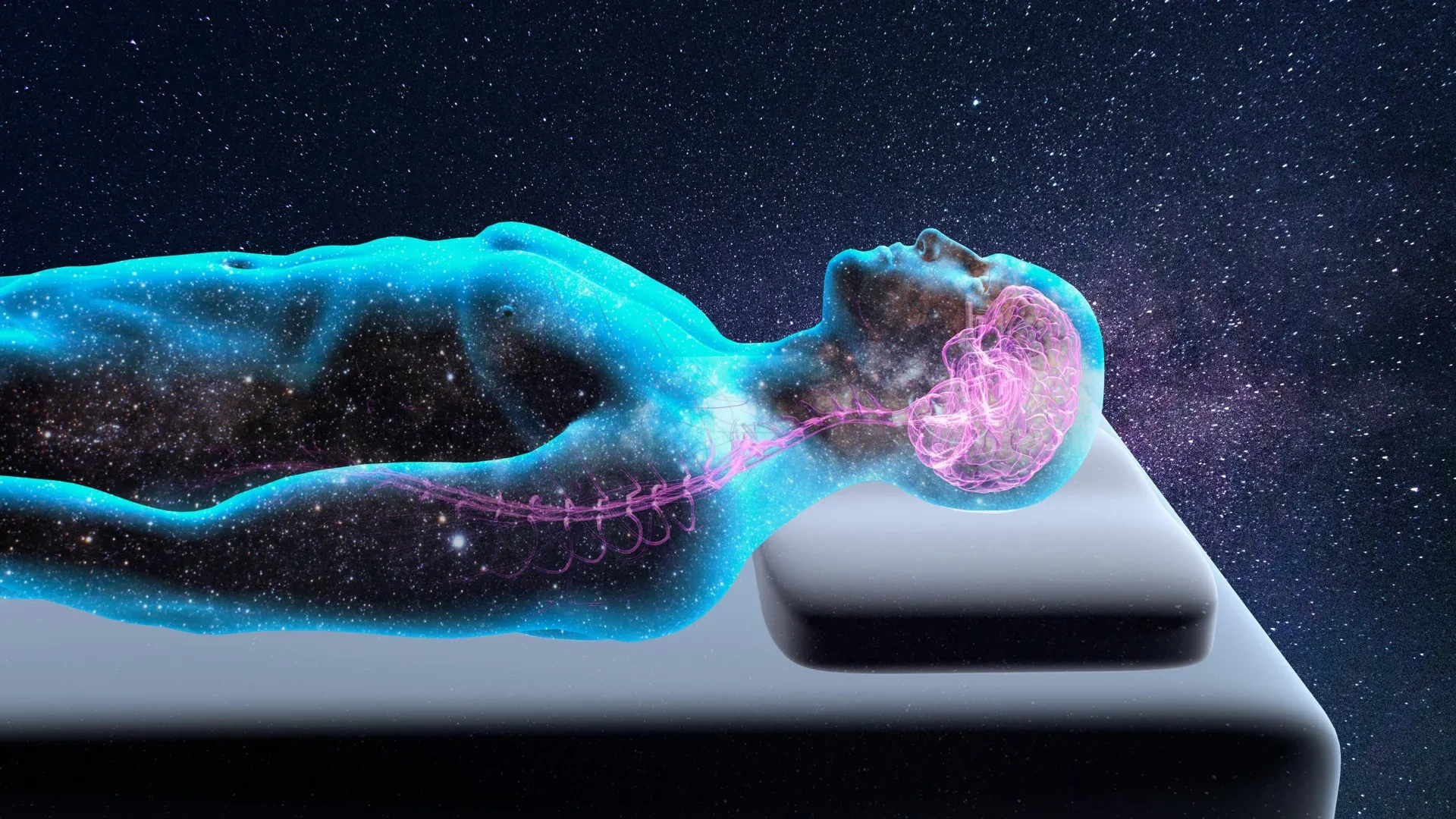
A comprehensive new scientific study has shed profound new light on the intricate relationship between human sleep architecture and long-term health, revealing that greater amounts of both REM (rapid eye movement) and deep sleep are significantly associated with a lower risk of dozens of medical conditions. Published on September 17th in the open-access journal PLOS Medicine, the research was spearheaded by Shengzhi Sun and colleagues at Capital Medical University in China, offering some of the most robust objective evidence to date regarding how the microscopic stages of nightly rest influence our systemic vulnerability to disease.
While humanity has long recognized the restorative powers of a good night’s rest, measuring real-world sleep patterns and connecting them directly to specific health outcomes has historically been fraught with methodological challenges. Self-reported sleep assessments—the cornerstone of many historical surveys—frequently suffer from poor correlation with objective biological measurements, making it exceptionally difficult to capture the true nuances of how people sleep in their natural environments. This new research bypasses those limitations by leveraging cutting-edge wrist-worn accelerometer technology and advanced deep-learning algorithms to decode the hidden architecture of human sleep on a massive scale.
The findings arrive at a critical time when public health officials are increasingly prioritizing sleep literacy and hygiene. In China, for instance, sleep quantity and quality have been elevated to a top priority of the National Health Commission, becoming a major focal point for national wellbeing. According to the most recent 2026 China Sleep Health White Paper, the average surveyed Chinese citizen sleeps 6.97 hours per night. However, beneath that seemingly adequate average lie troubling disparities: roughly 23 percent of individuals sleep less than six hours per night, and only 26 percent of respondents maintain a consistent, predictable sleep schedule. Furthermore, data indicates that disturbances to sleep have steadily increased over time. Given these widespread trends, understanding precisely how aberrant or restorative sleep patterns translate into biological risk is of paramount relevance to citizens worldwide.
To overcome the historic hurdle of inaccurate self-reporting, the researchers behind the PLOS Medicine study turned to a formidable repository of objective data: the UK Biobank. They analyzed detailed information from 95,559 participants who wore specialized wrist accelerometers continuously for seven straight days and nights. This continuous monitoring allowed researchers to move far beyond simple bedtime and wake-time estimations. Utilizing a sophisticated deep-learning algorithm, the scientific team meticulously calculated granular sleep metrics, including specific sleep stages such as REM, deep, and light sleep, alongside total sleep duration, wakefulness after sleep onset, and the degree of night-to-night sleep irregularity.
Following this intensive phase of data collection, the participants were followed for a median duration of 8.9 years. Comprehensive electronic health records were made available to test for statistical associations between their objective sleep profiles and more than 1,000 distinct disease outcomes. This phenome-wide association analysis allowed the researchers to cast a wide net across the spectrum of human pathology, yielding a treasure trove of insights into how sleep protects—or fails to protect—the human body.
The results of the analysis revealed striking correlations between specific sleep stages and the prevention of chronic illness. Greater amounts of REM sleep—measured per interquartile range of 47.6 minutes—were associated with a notably lower risk of 83 distinct diseases. Among these were several severe and debilitating conditions, including heart failure, which showed a hazard ratio of 0.74, and dementia, which demonstrated a hazard ratio of 0.54. Perhaps most striking was the association with Parkinson’s disease, which exhibited a hazard ratio of 0.20 among those who enjoyed robust amounts of REM sleep.
Simultaneously, greater deep sleep was linked to a lower risk of seven vital conditions, most notably type 2 diabetes and major depressive disorder. On the other side of the spectrum, detrimental sleep characteristics proved to be formidable risk factors. Greater sleep irregularity and heightened wakefulness after sleep onset were each independently linked to a higher risk of several conditions, including generalized anxiety and various substance use disorders.
When examining total sleep duration, the researchers uncovered a distinct non-linear relationship with disease risk across many conditions. The lowest overall risk was consistently concentrated within a sweet spot of six to eight hours of sleep per night. Individuals who fell short of this window, particularly those sleeping less than 5 hours per night, faced the most elevated clinical vulnerability, exhibiting an increased risk for no fewer than 37 different medical conditions. However, the study’s authors are careful to note an important methodological caveat: because this is an observational study, it cannot definitively establish that specific sleep patterns directly cause or prevent disease risk, pointing instead to powerful and consistent statistical correlations.
Reflecting on the broader implications of their work, the authors emphasized the protective nature of moderate, consistent rest. The findings provide critical additional evidence supporting the role of a six-to-eight-hour sleep duration as a vital health safeguard for middle-aged and older adults. This protective effect, the researchers suggest, is likely attributable to more favorable distributions of sleep stages, such as optimal proportions of REM and deep sleep cycles. Maintaining a sleep duration within this optimal window can effectively reduce the risk of multiple diseases, offering fresh and actionable insights for public health promotion and preventive clinical practice.
Delving deeper into the statistical architecture of their findings, the authors highlighted the sheer volume of connections uncovered by their methodology. A phenome-wide association analysis successfully identified 156 significant associations between various sleep patterns and incident diseases even after applying the rigorous statistical thresholds of Bonferroni correction. Furthermore, sleep duration exhibited statistically significant non-linear associations with 86 different disease phenotypes. Notably, the minimum-risk duration for the vast majority of these conditions—precisely 69 phenotypes—was concentrated strictly within the six-to-eight-hour window, reinforcing the biological plausibility of this optimal sleep bracket.
The execution and independence of this extensive research effort were made possible through the backing of several prestigious scientific funding bodies. The work received critical financial support from the National Science Fund for Distinguished Young Scholars, the Key Program of the National Natural Science Foundation of China, the Beijing Outstanding Young Scientist Program, and the Young Beijing Scholars Project through the Chinese Institutes for Medical Research in Beijing. The institutions and funding agencies played no role in the design of the study, the collection and analysis of data, the decision to publish, or the ultimate preparation of the manuscript, preserving the academic integrity and objectivity of the published findings as they enter the global scientific discourse.