
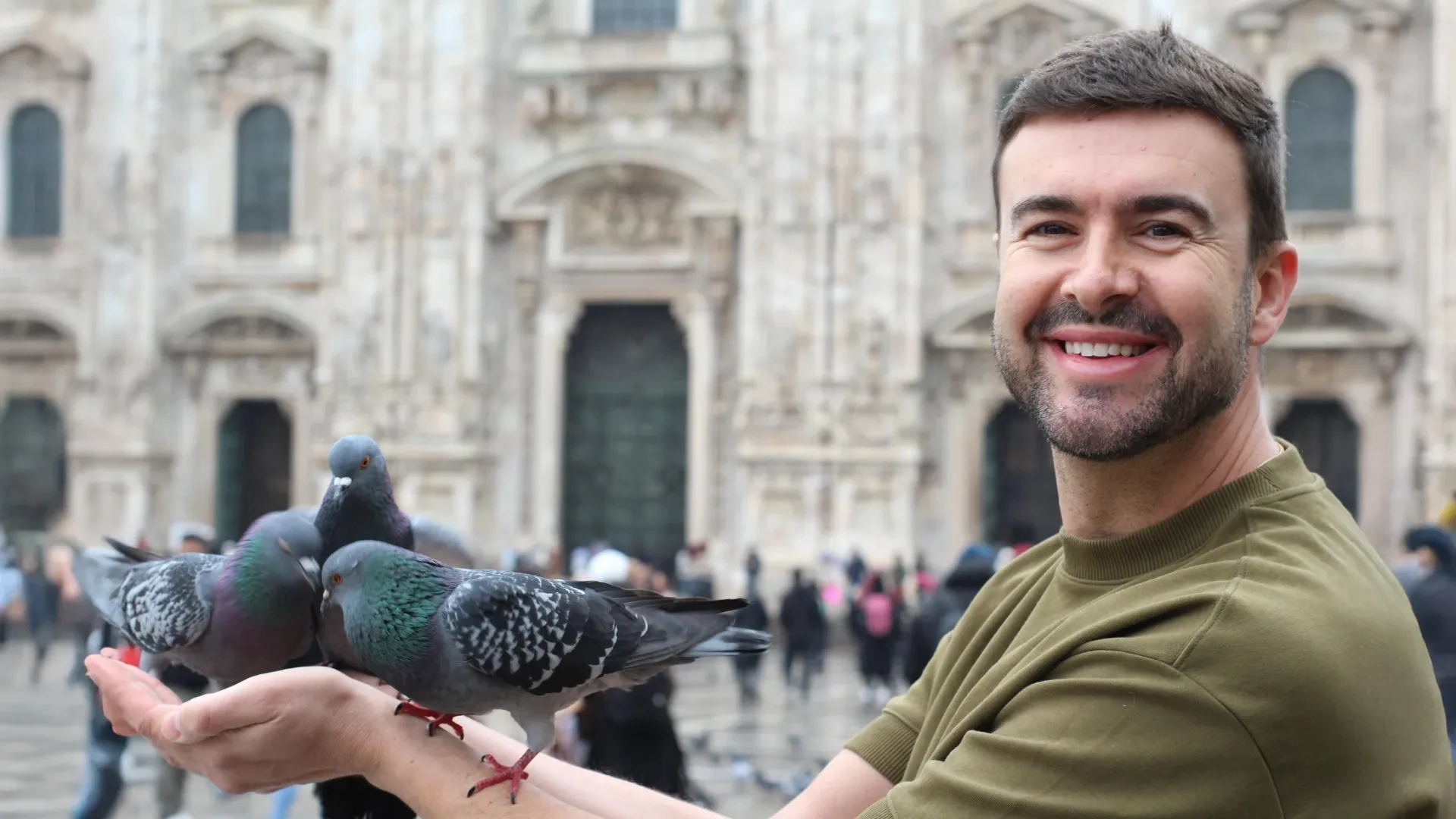
Birds making their homes in the concrete jungles of modern cities appear to harbor a distinct behavioral dichotomy when encountering human beings, reacting differently depending on whether a man or a woman approaches them. Yet, despite the robustness of the data gathered by an international research team, scientists are currently struggling to provide a comprehensive explanation for why this phenomenon occurs.
In a sweeping cross-continental study, researchers discovered that common urban-dwelling birds—including great tits, house sparrows, and blackbirds—consistently choose to take flight sooner when approached by women than when approached by men. This surprising behavioral disparity has opened up an entirely new line of inquiry regarding how avian species perceive, evaluate, and navigate the complex human landscapes that surround them on a daily basis.
The multi-country study was meticulously conducted across five European nations: Czechia, France, Germany, Poland, and Spain. To ensure accuracy and eliminate confounding variables, the research teams deployed male and female participants who were carefully matched for height and standardized clothing. These participants walked in a direct, unvarying line toward birds foraging or resting in city parks, urban courtyards, and other green spaces embedded within the urban fabric.
By recording the exact distance at which a bird would finally take flight—a standard behavioral metric in ornithology known as the "flight initiation distance"—the researchers were able to quantify the animals’ reactions. The measurements revealed a consistent, numerical pattern across all tested environments: on average, male participants were able to approach about one meter closer to the birds than female participants before the animals panicked and flew away.
The findings, which have been published in the British Ecological Society journal People and Nature, demonstrated this exact behavioral pattern universally across the five participating countries. Furthermore, the difference did not manifest in just a few isolated species or skittish varieties; it appeared reliably across all 37 bird species examined during the course of the research. This included species known for being easily startled, such as magpies, as well as more urban-habituated birds like pigeons, which typically allow humans to approach much more closely than their rural counterparts.
Why Are Birds More Afraid of Women?
The sheer consistency of the data leads the researchers to believe that urban birds possess the cognitive capacity to clearly distinguish between male and female humans. However, the team has yet to determine which specific characteristics, traits, or sensory inputs the birds are actually recognizing, nor do they understand why the animals appear significantly more cautious or wary when a woman is the one approaching.
Professor Daniel Blumstein of the University of California, Los Angeles, who played a key role in conducting the research, admitted that while the statistical results are exceptionally solid, the underlying biological mechanism remains a mystery.
"I fully believe our results, that urban birds react differently based on the sex of the person approaching them, but I can’t explain them right now," Professor Blumstein noted. He added that the team utilized advanced methodological frameworks to validate their findings. "We used bleeding-edge comparative analysis techniques that showed our findings were consistent across cities and species, but we simply don’t have a conclusive explanation yet."
For Dr. Yanina Benedetti of the Czech University of Life Sciences Prague, another core member of the international research team, the discovery fundamentally challenged long-held assumptions about how wildlife interacts with human observers in scientific fieldwork.
"As a woman in the field, I was surprised that birds reacted to us differently," Dr. Benedetti reflected. She emphasized that the implications of the study extend far beyond simple ornithological curiosity, touching on broader themes within urban ecology and methodology. "This study highlights how animals in cities ‘see’ humans, which has implications for urban ecology and equality in science. Many behavioral studies assume that a human observer is neutral, but this wasn’t the case for urban birds in our study."
What Are Birds Detecting in Humans?
In the wake of these unexpected findings, scientists have begun brainstorming several potential hypotheses to account for the discrepancy in flight initiation distance. Among the leading ideas, researchers suggest that birds might be responding to subtle chemical signals, such as human pheromones, or noticing anatomical variations in body shape and skeletal structure. Another prominent theory involves differences in gait—specifically, the biomechanical variations in how men and women walk, which could create distinct visual or acoustic patterns that avian eyes and ears are capable of picking up.
For the time being, however, these ideas remain entirely speculative. Additional controlled experiments and targeted behavioral trials will be required to isolate these variables and identify the actual cause driving the birds’ reactions.
Dr. Federico Morelli of the University of Turin, a co-author of the study, pointed out that the presence of such an intriguing, unanswered question is precisely what makes the discovery so compelling from a scientific perspective.
"This is maybe the most interesting part of our study," Dr. Morelli said. "We have identified a phenomenon, but we really don’t know why. However, what our results do highlight is the birds’ sophisticated ability to evaluate their environment."
The implications of the research suggest that urban birds may be acutely sensitive to human characteristics and environmental micro-cues that people themselves rarely notice or consciously register. Pinpointing the exact signals that trigger this differential flight response could ultimately help researchers gain a much deeper understanding of how wildlife assesses potential threats in ecosystems that are heavily shared with human populations.
Dr. Benedetti elaborated on the path forward, suggesting that future investigations will need to move past broad demographic categories. "Urban birds clearly react to subtle cues that humans do not easily notice," she explained. "Follow-up studies could focus on individual factors such as movement patterns, scent cues, or physical traits, testing them separately rather than grouping them under observer sex. This approach would help identify the specific cues birds detect."
More Research Is Needed to Explain the Bird Behavior
Although the investigation was built upon a robust foundation of 2,701 individual observations across multiple urban centers, the researchers are quick to emphasize that their findings remain preliminary. Further studies will be essential to establish whether the observed difference between birds’ responses to men and women consistently appears in other geographical settings, different cultural contexts, and wider animal populations beyond the scope of this initial European survey.
For now, the discovery points to an intriguing and largely unexplored possibility regarding the cognitive lives of our feathered neighbors. As cities continue to expand and wildlife adapts to the pressures of human cohabitation, birds sharing our urban environments may be paying attention to subtle, hidden differences between people that science has only just begun to uncover.