
KYIV, Ukraine — In a major diplomatic effort to resolve one of the most significant conflicts in modern European history, U.S. envoys Steve Witkoff and Jared Kushner held what they described as "encouraging" talks in Kyiv on Sunday. The high-profile visit represents the first official trip to Ukraine by the two American representatives, signaling a renewed and concentrated push by Washington to bring an end to more than four-and-a-half years of Russia’s full-scale invasion.
The arrival of the American delegation in the Ukrainian capital follows a tense, three-hour closed-door meeting with Russian President Vladimir Putin in Moscow on Saturday. The rapid sequence of meetings in both capitals comes at a critical juncture for U.S. foreign policy. Washington’s previous efforts to mediate an end to the fighting in Eastern Europe had notably lost momentum over the past six months, during which the administration of President Donald Trump remained heavily focused on the war in Iran.
The diplomatic mission is unfolding against a backdrop of grueling warfare on the ground. The conflict has settled into a grinding war of attrition along a sprawling 1,250-kilometer (775-mile) front line, where both Ukrainian and Russian forces have struggled to make significant territorial progress. Meanwhile, the skies above Ukraine have become increasingly dangerous. Russia has recently integrated fast-flying, jet-powered drones into its aerial arsenal, and the recurring, ominous wail of air-raid sirens has integrated itself into the fabric of daily life for the residents of Kyiv.
Following two intensive rounds of discussions with the U.S. officials, Ukrainian President Volodymyr Zelenskyy emphasized that Ukraine’s primary objective remains the establishment of a "just, fair peace." According to Zelenskyy, any potential peace agreement must be robust enough to ensure that Moscow is "never" given another "opportunity to resume aggression against Ukraine."
The Ukrainian president expressed his gratitude to the American negotiators for making the journey to Kyiv. Given the complete closure of Ukrainian airspace to civilian flights, Witkoff and Kushner traveled to the capital by train—a lengthy and secure overland route that has become the standard pathway for visiting foreign dignitaries. Zelenskyy noted that the diplomatic efforts would quickly expand, with a subsequent round of talks scheduled for later Sunday set to include the national security advisers of several key European allies, specifically Britain, France, and Germany.
Speaking to reporters after the sessions, Witkoff expressed optimism about the trajectory of the discussions. "We’ve had very meaningful discussion, substantive, important, and we’re very encouraged," he said.

Kushner, who serves as a key envoy and is President Trump’s son-in-law, emphasized that the American administration is looking beyond a simple ceasefire. Kushner noted that President Trump views it as a priority "not just to figure out how do we end the current war," but to establish the foundational geopolitical and security conditions necessary to foster a truly durable, long-term peace in the region.
The immediate focus of the diplomatic engagement, however, is also highly practical. According to a senior Ukrainian official who spoke on the condition of anonymity because they were not authorized to discuss the sensitive negotiations publicly, a substantial portion of the dialogue centered on short-term survival. Specifically, the official noted that much of the discussion was focused on "how to get through the winter and what can be done before then," reflecting deep concerns over the integrity of Ukraine’s energy infrastructure under the threat of sustained Russian bombardment.
No Breakthroughs in Moscow Talks
The Kyiv meetings followed a highly anticipated session in Moscow on Saturday, where Witkoff and Kushner spent more than three hours in closed-door discussions with Russian President Vladimir Putin. Despite the length of the meeting, it concluded without the announcement of any major breakthroughs or policy shifts.
Yuri Ushakov, a senior foreign policy adviser to President Putin, later described the discussions between the Russian leader and the American envoys as constructive, frank, and useful. However, Ushakov declined to provide specific details regarding any concrete outcomes or potential frameworks for a ceasefire.
While the Kremlin offered what Ushakov described as a "comprehensive assessment" of the current battlefield situation in Ukraine, he clarified that the dialogue was not strictly confined to the ongoing war. According to Ushakov, the representatives also looked toward future bilateral relations.
"Economic issues and potentially large, mutually beneficial joint projects for Russia and America were discussed in considerable detail," Ushakov stated, indicating that the Kremlin is keeping an eye on the eventual normalization of economic ties with Washington.

The weekend meetings mark the latest chapter in Kushner and Witkoff’s quiet channel of communication with the Russian leadership. Their last known visit to Moscow occurred in January, when they also held face-to-face talks with Putin inside the Kremlin.
Russia and Ukraine Continue to Exchange Fire
The high-stakes diplomatic maneuvering took place amid a complex security arrangement. Both Putin and Zelenskyy had agreed to implement a localized pause on military strikes targeting each other’s respective capital cities—Moscow and Kyiv—while the peace talks were actively underway.
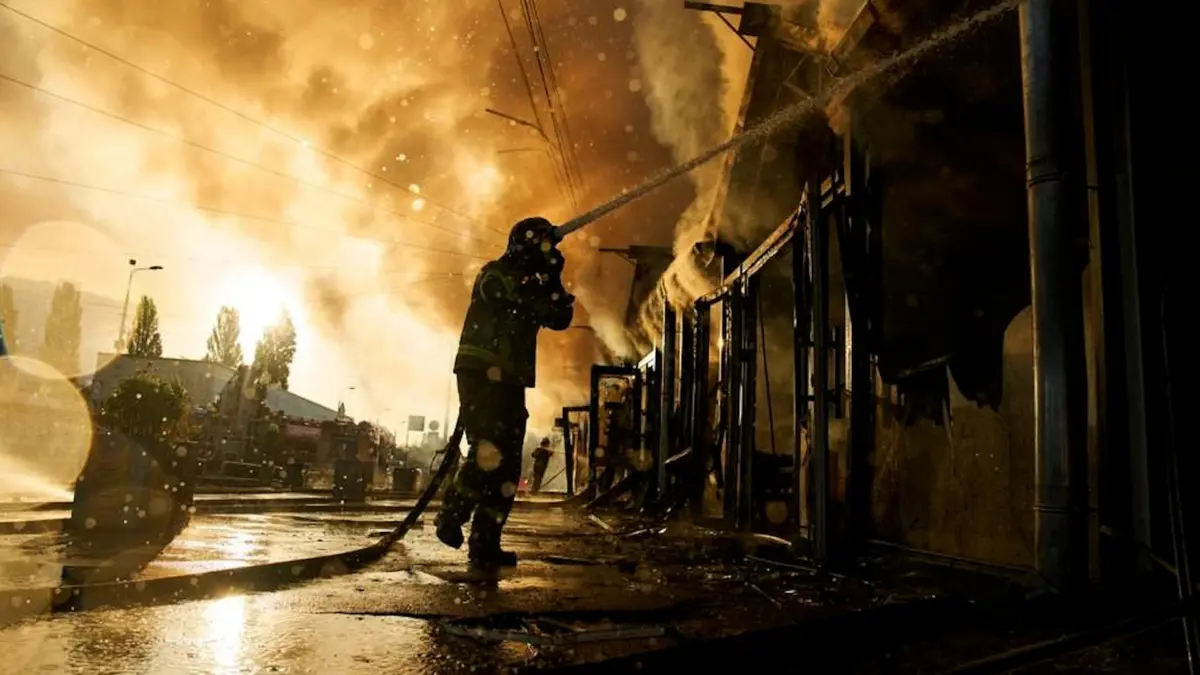
However, this temporary understanding did not extend to the rest of the combat theater. Throughout Saturday night and into Sunday morning, both nations traded heavy aerial fire, resulting in casualties and widespread damage across several regions.
In Ukraine, Russian air assaults struck multiple provinces, killing at least one person and wounding ten others overnight, according to reports from Ukraine’s State Emergency Service.
The attacks were particularly destructive in the southern city of Zaporizhzhia, where Russian drone strikes killed a 74-year-old man and left three other residents wounded. In the western Khmelnytskyi region, a drone strike directly impacted an apartment building, causing structural damage and wounding seven people.
Ukraine’s air force reported on Sunday morning that its air defense systems had been heavily engaged overnight. Ukrainian forces successfully intercepted and destroyed 82 of the 108 drones launched by Russian forces across the country, in addition to shooting down six missiles.

Concurrently, Ukrainian forces launched their own large-scale retaliatory drone operations. In Russia’s Belgorod border region, local authorities reported that a Ukrainian drone struck a civilian vehicle, killing one man and leaving a woman with serious injuries.
The scale of the Ukrainian counter-offensive was reflected in statements from the Russian Ministry of Defence. On Sunday, the ministry announced that its air defense systems had intercepted and shot down a total of 258 Ukrainian drones overnight. According to Russian officials, these intercepts occurred over 14 different Russian regions, as well as over the skies of the Russian-occupied Crimean Peninsula and the waters of the Black and Azov Seas.
Mixed Hopes on the Ground
In Kyiv, the high-level diplomatic visits did little to disrupt the solemn, daily rituals of a society deeply scarred by nearly five years of intense warfare. On Sunday morning, dozens of citizens gathered in the capital to observe the nationwide 9 a.m. moment of silence—a daily commemoration held in cities and towns across Ukraine to honor the soldiers who have lost their lives in defense of the country.
Among those in attendance was 67-year-old Nataliia Lipei, whose son, Viktor, was killed in action in December 2022. Despite managing a chronic health condition, Lipei has made a point of traveling from city to city to participate in these memorials. For her, the news of the talks in Moscow and Kyiv brought a glimmer of hope that the devastating human toll of the war might finally come to an end.
"I hope these steps and these meetings will definitely produce results, because there has been so much bloodshed and so many deaths here that we have to stop all of this," Lipei said.
Yet, others in the crowd viewed the sudden flurry of diplomatic activity with deep-seated skepticism. Oleksandr Pastukhov, a 27-year-old video editor who also took part in the morning commemoration, questioned whether the arrival of the American envoys would translate into any meaningful change on the front lines.

"We’ve already seen delegations like this come here before," Pastukhov remarked, pointing to previous failed diplomatic initiatives. "We’ve seen this so-called ceasefire for three days, which ended after just a couple of hours, and now we’re supposed to naively think that two people will come and change something."
The international community also watched the diplomatic developments closely. From the Vatican, Pope Leo XIV used his traditional Sunday address to renew his global appeal for peace in Ukraine, expressing his hope that the weekend’s negotiations would yield tangible progress.
"I hope that the efforts undertaken in recent days to resume negotiations will bear concrete fruit and make way for diplomacy," the Pope told the gathered crowd of faithful in St. Peter’s Square.