
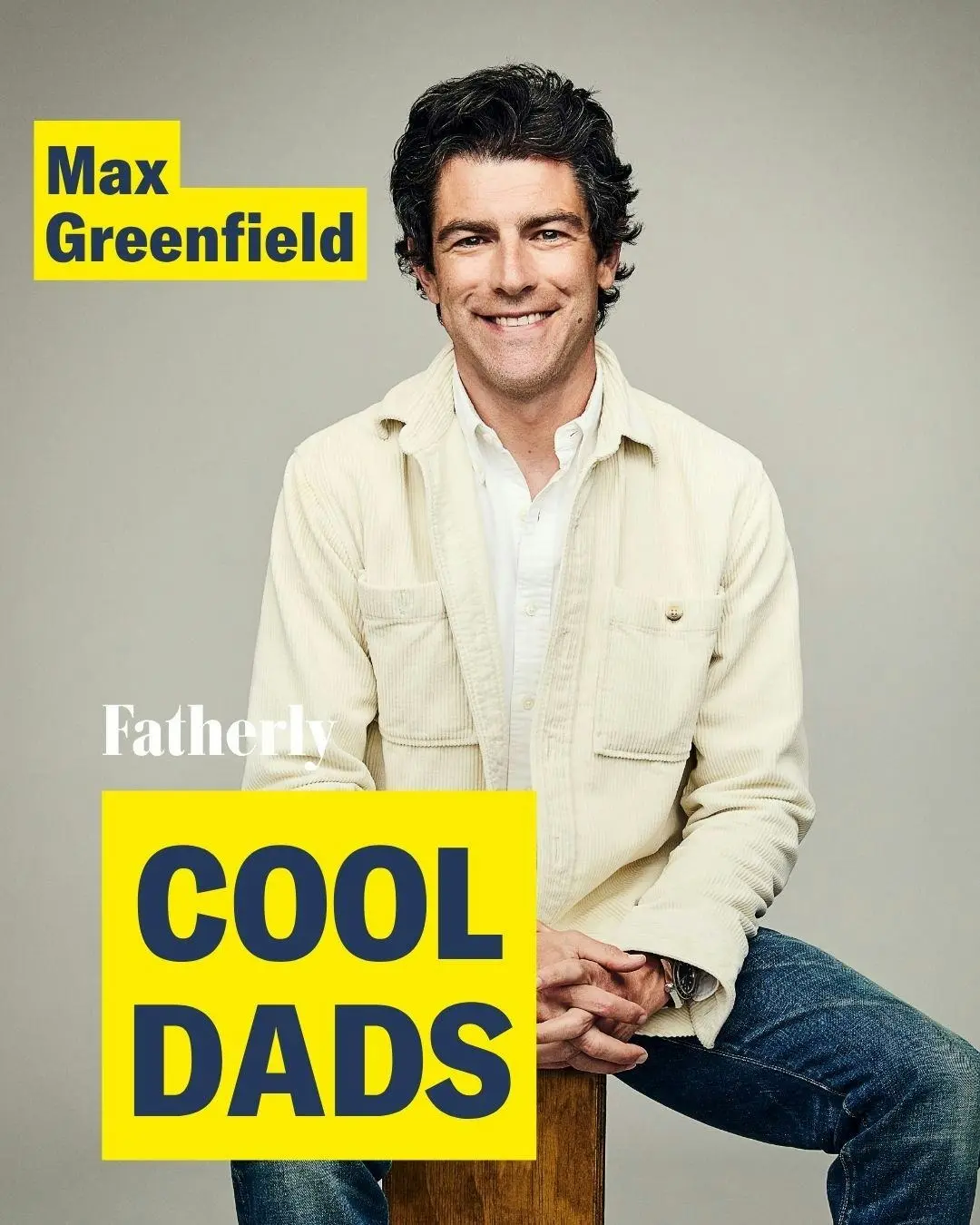
The first thing audiences might observe about the father figure in Netflix’s upcoming teen drama Don’t Say Good Luck is that his impeccably styled hair looks completely effortless. However, that immaculate presentation is merely the starting point for the deep well of aspirational cues radiating from the character, brilliantly brought to life by actor Max Greenfield. In this deeply moving, emotionally resonant family drama that expertly balances moments of levity with heartbreaking stakes, Greenfield’s character finds himself navigating a complex maze of modern responsibilities. He must juggle demanding work commitments, the high-energy demands of elementary-aged twins, the profound emotional turbulence of a teenager, and the devastating blow of his wife’s recent cancer diagnosis.
While the overwhelming weight of life’s unexpected hardships occasionally leaves him feeling off-kilter, this modern father never simply bumbles his way through the crisis. Instead, in scene after scene, he continually discovers grounded, meaningful ways to show up as an entirely emotionally available parent and dedicated partner, offering a refreshing and deeply empathetic portrayal of fatherhood on screen.
Reflecting on the role, Greenfield admits that tapping into the emotional core of the character proved surprisingly natural. Speaking candidly about the project, he explains that a significant portion of his own lived experience bled directly into the performance, making the material feel intensely personal from the very first day of production. Greenfield notes that he felt an immediate and profound sense of closeness to the narrative and the daily work being executed on set, which served as his primary motivation for signing on to the project in the first place.
That immediate resonance likely stems from the striking parallels between his personal life and the world depicted in the film. Greenfield’s own daughter is currently navigating her teenage years as a high schooler, shares mutual friends with the film’s young lead actress, Sunny Sandler, and has experience participating in high school theatrical productions. This shared ecosystem of teenage life created an instant, organic familiarity with the environment the filmmakers were trying to capture.
The creative journey behind Don’t Say Good Luck involved a deeply collaborative process, particularly when shaping the pivotal emotional beats between the father and his teenage daughter. One particularly powerful sequence late in the film takes place inside a car, where the characters exchange a raw, stripped-down acknowledgment of their shared pain. When Sunny’s character asks her father if he is okay, he turns the question back to her, leading to a quiet, devastating mutual admission that neither of them is doing alright.
This emotionally charged scene was the result of extensive, thoughtful collaboration between Greenfield and the film’s creative team, including director and co-writer Julia Hart, along with co-writers Laura Hankin and Jordan Horowitz. The filmmakers fostered an exceptionally open environment, regularly welcoming Greenfield’s creative input as they refined drafts of the scene to ensure it struck the exact right emotional chord. The collective goal was to honor the complex buildup of the narrative without offering an unrealistic, neatly tied-up resolution to an unimaginable situation. Shooting that specific sequence proved to be an intensely heavy and memorable experience for everyone involved on set.
Beyond the heavy dramatic stakes, Greenfield’s character also operates a local bagel shop within the narrative, a detail that naturally invites conversations about real-world culinary preferences. When asked about his personal bagel order, Greenfield embraces his Los Angeles roots with a touch of humor, offering up two distinct choices depending on the mood. His first choice is a classic everything bagel loaded with cream cheese, fresh onion, tomato, and lox—a timeless combination that he insists can never miss. His second option leans toward a lighter profile, featuring either a light cream cheese spread or quality hummus paired with fresh, crisp vegetables, dressed simply with the right seasoning and a touch of olive oil and pepper.
Greenfield also shared a recent culinary adventure involving one of Los Angeles’s most talked-about spots, Courage Bagels, where the line routinely stretches down the block. Initially deterred by the legendary wait times, he and his daughter eventually decided to brave the queue together. Upon finally trying their signature garden-style creation, Greenfield admitted the heavily hyped experience completely lived up to its lofty reputation.
Central to both the film’s narrative and Greenfield’s real-world parenting philosophy is the delicate art of disclosure—knowing precisely what information to share with children, when to shield them from harsh realities, and when attempts at protection ultimately backfire. Reflecting on his own approach, Greenfield emphasizes the importance of creating a safe, open domestic environment where his children feel entirely comfortable bringing difficult topics to him organically. By allowing conversations to unfold gradually at his children’s own pace and responding thoughtfully to their specific questions, he has observed that his kids develop a remarkable comfort level with information that adults often fear might prove too confusing or frightening.
This philosophy has evolved significantly as Greenfield’s children have grown. Transitioning from the daily demands of parenting toddlers and elementary school students to raising a 16-year-old and an 11-year-old has fundamentally shifted his perspective on control and responsibility. He acknowledges that he makes considerably more mistakes now that the boundary between setting boundaries and letting go grows thinner by the day. Like many parents facing the daunting realities of adolescence, Greenfield has had to confront the temptation to operate from a place of fear-based parenting—clinging to control purely to soothe his own anxieties about an unpredictable world.
That realization hit particularly close to home as his teenage daughter recently earned her driver’s license and began navigating the roads independently. Faced with the surreal reality of watching his teenager drive off to volleyball practice, Greenfield realized that this represents a entirely different category of parenthood—one defined by tangible, real-world fear rather than abstract worries about the future. Sitting in the passenger seat while his daughter learned to drive provided a stark education in confronting genuine anxiety. For Greenfield, recognizing the difference between the everyday worries of modern life and the acute, visceral fear of watching a child drive off into traffic has offered a grounding perspective on what truly matters in the journey of raising a family.