
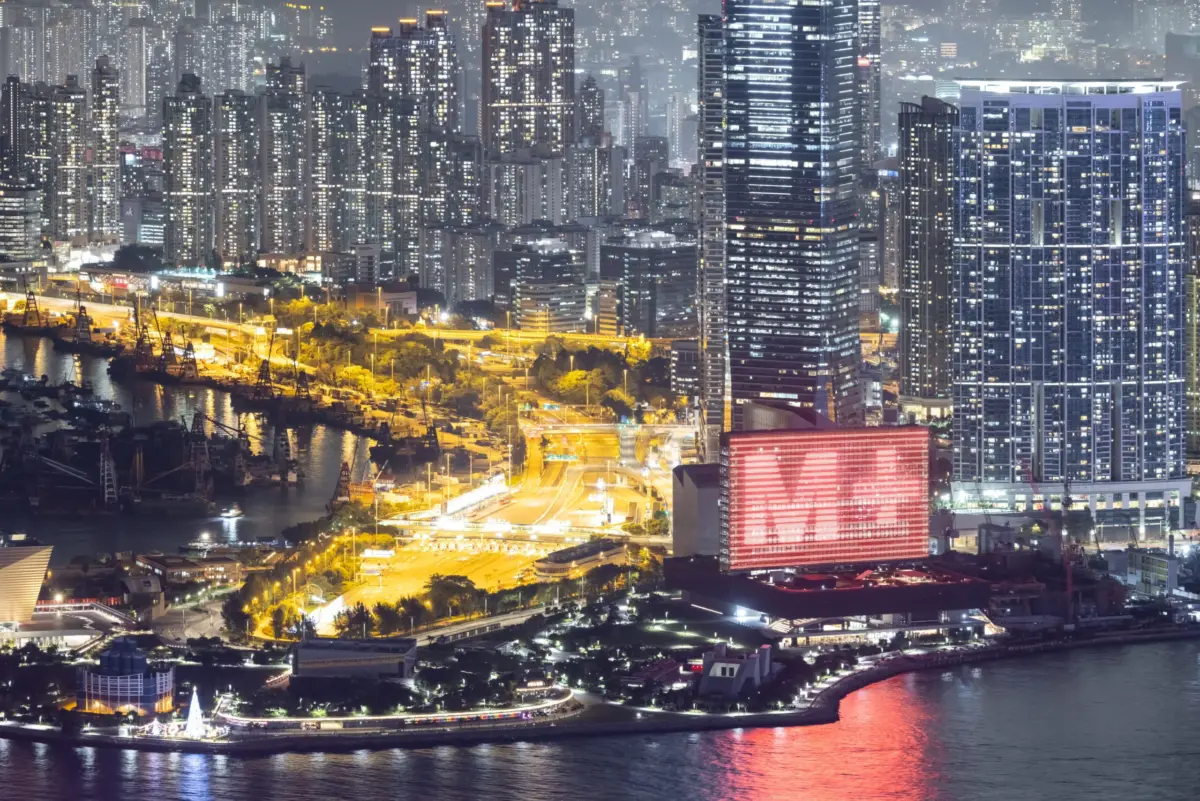
In recent years, Hong Kong’s art, design, and architecture scene has experienced a remarkable cultural renaissance, sparked in part by the late 2021 opening of the M+ museum, designed by renowned architectural firm Herzog & de Meuron. Art Basel Hong Kong, which launched in 2013, continues to grow with each return, anchoring a vibrant ecosystem of satellite events such as Art Central and the Edible Art Fair. This wave of landmark architectural additions shows no sign of slowing down. The city is currently anticipating the unveiling of the WestK Performing Arts Centre, designed by UNStudio, which will join the recently completed Zaha Hadid-designed tower known as The Henderson. This sleek high-rise now houses Christie’s Hong Kong headquarters as well as Peridot, a lime-green, eye-popping cocktail lounge.

Yet, beyond the gleaming glass facades and high-efficiency financial infrastructure lies a much richer, more textured urban fabric. Interior designer and Hong Kong native Vincent Lim, who returned to the city in 2015 after spending a decade in New York, notes that while the common impression of Hong Kong is that of a hyper-efficient financial capital composed entirely of modern skyscrapers, the city that locals love is far more complex. Spend even a couple of days exploring the metropolis, and it becomes immediately apparent that these glass towers are intimately interspersed with traditional street stalls, wet markets, family-run businesses, and vintage cha chaan tengs—the colonial-era cafes that still serve traditional milk tea, toast, and pork chop rice. According to Lim, this intricate layering of the old and the new is precisely what makes Hong Kong so special.

Laura Cheung, founder of the decorative furnishings brand Lala Curio, shares this sentiment, emphasizing that design-lovers find a distinct allure in the atmospheric little alleyways and decades-old shops framed by vintage neon signs. Cheung points out that there are very few major metropolitan centers where, right in the prime commercial hub, one can still find multi-generational family-run antique shops and fruit stalls shaded by red and blue canvas awnings, sitting just steps away from a hidden door leading into the chicest speakeasy lounge. She describes this captivating juxtaposition as a unique harmony where a humble wonton noodle shop rests comfortably beside a sleek, ultra-modern building.

To properly navigate this city of contradictions, a group of five prominent Hong Kong design insiders—Pak Man Lee, founder of the contemporary design gallery Nuovo; husband-and-wife team Vincent Lim and Elaine Lu of Lim + Lu; Frank Leung, founder of architecture firm Via; and luxury interiors brand founder Laura Cheung—have pooled their personal recommendations on where to stay, eat, shop, and wander.

Hotels
For those visiting the city, the experts recommend a selection of accommodations that balance world-class hospitality with exceptional architectural pedigree. Elaine Lu points to the Rosewood Hong Kong for its extraordinary attention to detail in both design and hospitality, noting that its restaurants and spectacular harbor views offer a warm and genuine experience. Vincent Lim highlights The Upper House, designed by André Fu, describing how its restrained palette and thoughtful detailing create a remarkable sense of calm and residential serenity right in the heart of one of the world’s busiest urban environments.

Laura Cheung shares her enduring affection for The Peninsula Hong Kong, an institution she grew up visiting, where colonial heritage, timeless architecture, and sweeping Victoria Harbour views capture the romance of the city like nowhere else. Frank Leung draws attention to the Kimpton Tsim Sha Tsui, a waterfront addition to the local hospitality landscape that he helped design, which celebrates Hong Kong’s artistic spirit through a curated collection of works by local photographers and ceramicists, complemented by a sunset-ready rooftop pool. Finally, Pak Man Lee singles out the Mandarin Oriental as Hong Kong’s ultimate grande dame, praising its enduring heritage, impeccable service, and sense of occasion ahead of its anticipated renovation.

Where to Eat in Hong Kong
The culinary landscape of Hong Kong is as textured as its architecture, ranging from refined contemporary dining to down-to-earth local institutions. Frank Leung recommends Yardbird, an izakaya-style eatery in Sheung Wan run by chef Matt Abergel, which serves what many consider to be the best yakitori in the city alongside fun, collectible merchandise. Elaine Lu highlights Roganic for its contemporary, highly seasonal dining approach, as well as Yung Kee, a legendary institution famous for its roast goose where generations of local families have celebrated milestone occasions.

For a more casual, local experience, Leung points to Ju Xing Home in Prince Edward, a favorite after-work hangout for many local chefs known for its outstanding seafood dishes and boiled hand-cut beef. Lu also recommends the Chiuchownese Noodle Shop in Sai Ying Pun for simple, comforting soup noodles that always reward a return visit.

Best Hong Kong Cafes
The city’s cafe culture offers a direct window into its history. Elaine Lu recommends the Mido Café in Yau Ma Tei, opened in the 1950s, where stained-glass windows, mosaic floors, and timber booths remain intact to create a living time capsule of mid-century Hong Kong. For Vincent Lim, no visit is complete without a pineapple bun from the Cheung Hing Coffee Shop in Happy Valley, a neighborhood favorite they return to whenever possible. Laura Cheung frequently gravitates toward Café Causette inside the Mandarin Oriental for effortless elegance, while Frank Leung praises Halfway Coffee for its vintage cups, salvaged furniture, and a newly opened branch on the Peak that features hand-sculpted counters and glorious sunset views.

Where to Drink in Hong Kong
When evening falls, Hong Kong’s drinking establishments offer everything from precise Japanese mixology to relaxed neighborhood hospitality. Pak Man Lee recommends b.a.r. Executive Bar in Causeway Bay, a hidden, appointment-only Japanese-style establishment with no signage and some of the most precise drinks in Asia. Frank Leung highlights Paragon, opened by chef David Lai, which features a curated vinyl collection, a stellar beef sando, and seating that includes the iconic 1964 Karuselli Chair by Yrjo Kukkapuro. Meanwhile, Laura Cheung enjoys Bar Leone for its lively, unpretentious atmosphere, exceptional cocktails, and beautifully executed Italian fare.

Best Neighborhoods for Wandering
To truly understand Hong Kong, the experts suggest losing oneself in its distinct neighborhoods. Pak Man Lee points to Tsim Sha Tsui East for nostalgic 1990s energy, housing hidden gems like the atrium of the Royal Garden hotel and the Kowloon outpost of the Tai Ping Koon Restaurant. Lee also highlights Ap Lei Chau and Wong Chuk Hang as the city’s Southside art district, where serious contemporary galleries are stacked floor by floor inside industrial freight lifts, alongside warehouse shopping at Horizon Plaza.

In Sheung Wan, Vincent Lim recommends beginning at the atmospheric Man Mo Temple before wandering Hollywood Road to observe weathered tong lau buildings sitting alongside contemporary architecture. Elaine Lu highlights Sham Shui Po as a major source of inspiration for designers, where a working district known for textiles and hardware now hosts independent cafes and creative studios along Tai Nan Street. Laura Cheung suggests exploring the Star Street Precinct, a hidden village-like corner featuring independent boutiques, art galleries, and nearby dining options.

Where to Shop in Hong Kong
For unique retail finds, Pak Man Lee directs visitors to Crack and Anecdote and Select 18 for vintage design objects and Chinese antiques, the HK Tram Store for retro toys, and Yuet Tung China Works in Kowloon Bay for hand-painted neo-vintage ceramics established in 1928. Frank Leung recommends the Pedder Arcade on the fifth floor of the Pedder Building for fine menswear, tailoring, and rare books curated by Mark Cho. Elaine Lu points to G.O.D. Goods of Desire for contemporary homewares playing off everyday local iconography, and Vincent Lim highlights Yat Pit for fashion that reinterprets Chinese heritage, alongside Hak Dei for timeless household objects. Laura Cheung rounds out the shopping recommendations with boutique resort wear at Beaureguards, bespoke decorative surfaces at her own Lala Curio flagship inside The Peninsula, and curated artisan homewares at Permanent Resident.

Best Museums and Galleries in Hong Kong
In addition to the landmark M+ museum by Herzog & de Meuron, the city’s cultural calendar is anchored by collectible design galleries like Pak Man Lee’s Nuovo in Central, alongside prominent institutions such as Alisan Fine Arts, Hanart TZ Gallery, Kiang Malingue, Ora-Ora, Touch Gallery, and Grotto Fine Art.

More Travel Tips and Things to Do in Hong Kong
To make the most of a visit, the experts offer a few final pieces of advice: never judge a building by its street level, as the best venues often require taking a freight lift upstairs. Laura Cheung recommends taking the historic Star Ferry across Victoria Harbour around sunset, while Frank Leung suggests exploring nearby nature trails such as the Wilson Trail on Hong Kong Island or the Lo Fu Tau Trail on Lantau Island. Pak Man Lee advises booking a visit to the serene, Tang-style Tsz Shan Monastery in Tai Po, and Vincent Lim highlights the Asia Society Hong Kong Center as a masterclass in adaptive reuse nestled within lush greenery just minutes from Central. Finally, Pak Man Lee recommends experiencing old Hong Kong at its finest with a visit to the Shun Kee Typhoon Shelter, a seafood restaurant operated from a boat in Causeway Bay.