
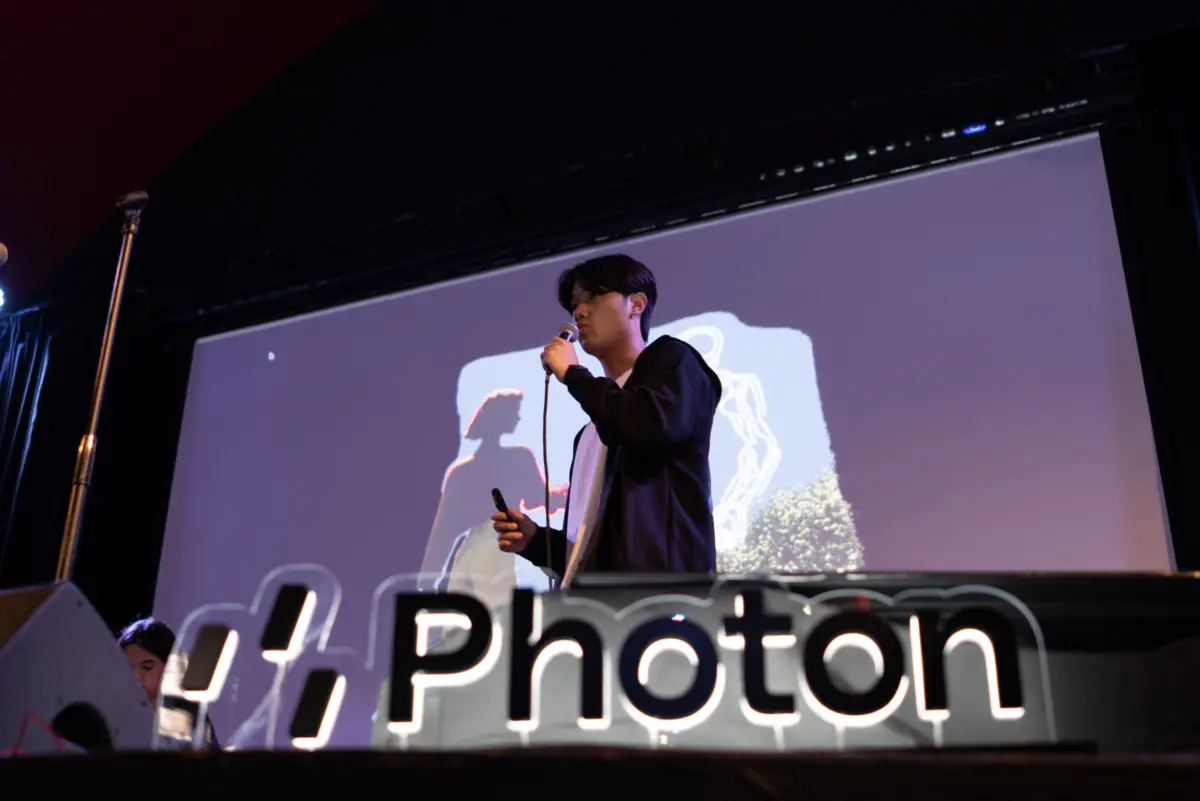
The artificial intelligence startup Photon is so thoroughly convinced that autonomous agents will eventually render traditional mobile applications obsolete that it recently decided to throw a funeral for the latter. Yes, a literal funeral, complete with a church venue, formal speeches, and an actual coffin holding discarded app icons.
While the theatrical ceremony held in San Francisco on September 17 was undeniably tongue-in-cheek, it underscored a serious business thesis: that users are increasingly fatigued by the friction of discovering, downloading, and managing standalone apps. Photon helps developers build sophisticated AI agents that operate seamlessly over ubiquitous messaging channels like iMessage and WhatsApp. Capitalizing on this shifting paradigm, the company has now successfully closed a $4.5 million seed funding round to accelerate product development.
The fresh capital injection follows a period of rapid momentum for the startup. According to Photon, the company has signed up more than 40,000 developers to its platform and experienced a tenfold surge in revenue over the span of just four months.

The San Francisco gathering doubled as a developer day for the young startup, featuring panels from industry heavyweights such as Vercel, Stripe, and OpenAI. Despite the playful imagery of a coffin filled with software icons, Photon co-founder and CEO Daniel Tian views the transition away from the traditional app store model as an unstoppable trajectory.
“Honestly, it’s going to take a while, but I think, directionally, it’s inevitable,” Tian said, discussing the long-term shift from graphical user interfaces housed inside dedicated apps to conversational, agent-driven experiences embedded within messaging platforms.
The foundational thesis behind Photon stems from a common friction point in the modern software ecosystem: digital fatigue and high customer acquisition costs. Users increasingly balk at the prospect of installing yet another standalone app for a singular task. Instead, consumer preference is gravitating toward conversational agents that live inside the messaging services people already check dozens of times a day, such as Apple’s iMessage, Meta’s WhatsApp, and Telegram.
While tech giants are racing to capture consumer attention—such as Meta with its Muse application soaring to the top of official app stores—Tian believes there is a massive, underserved market in empowering independent developers. Photon is targeting this segment by providing a comprehensive suite of developer tools designed to bridge traditional applications with messaging architectures.

The startup’s product ecosystem includes a unified API, an extensible channel framework, a command-line interface, and an advanced observability suite. Together, these components allow developers to build, deploy, and monitor agent experiences that function fluidly across iMessage, WhatsApp, Telegram, SMS, RCS, email, and voice channels.
The origins of Photon trace back to the formative experiences of its co-founders, Daniel Tian and CTO Ryan Zhu. While studying and competing in various hackathons, the duo repeatedly encountered the same frustrating bottleneck when building consumer apps: getting users to discover and download them. By building an experimental agent that operated natively inside iMessage, they realized they could bypass app store gatekeepers entirely and reach users through Apple’s built-in messaging service.
Tian initially built a simple bot designed to text his friends back on his behalf over iMessage. When Tian and Zhu open-sourced the underlying technology on GitHub, thousands of developers rapidly adopted it. Encouraged by the viral response, the founders committed entirely to the project. Tian dropped out of the University of Pennsylvania’s Management and Technology program, while Zhu left high school early, later serving as a visiting student at the Massachusetts Institute of Technology’s Media Lab.
Even as the company scales its commercial operations, the open-source version of Photon continues to form the bedrock of its ecosystem, accounting for roughly 98% of its total usage.

In April, the co-founders launched a managed, hosted platform designed to monetize the product through structured subscription tiers. This enterprise-ready iteration offers 99.95% uptime—a reliability metric far exceeding what developers could achieve running the open-source software locally on a Mac for a hobby project. Furthermore, the managed platform is SOC 2 Type II and HIPAA-compliant, immediately unlocking critical use cases in highly regulated industries such as healthcare.
Photon’s managed platform has quickly attracted over 40,000 developer sign-ups, converting a growing share into paying customers. While any usage beyond a modest threshold of 10 users requires transitioning to one of the platform’s three paid tiers, the company has kept specific revenue figures private. However, leadership notes that alongside the tenfold revenue increase, the startup maintains a remarkably low customer churn rate of under 3% and a fivefold expansion in messaging volume over the preceding month alone.
The startup’s client roster reflects a diverse cross-section of industries embracing conversational AI. Customers utilizing Photon include Corgi Insurance, social introductions app Boardy, Gen Z dating platform Ditto, business banking platform Rho, finance AI assistant Fliptexts, and AI email client Slashy, among others building agents for fintech and vertical consumer applications.
Photon has also woven itself deeply into the broader developer infrastructure ecosystem. Key technology integration partners include Vercel, which utilizes Photon for tools like Eve and ChatSDK, and Nous Research, whose Hermes agent relies on Photon as its default iMessage connectivity layer. Photon also serves as the underlying layer for Tencent’s QClaw and NanoClaw projects. Furthermore, the platform features native infrastructure and framework integrations with LangChain, Mastra, Convex, Render, Railway, and Telnyx.

Vercel’s participation in Photon’s latest funding round underscores these deep technological ties. The seed financing round was co-led by Gradient and A*, with additional investments from Vercel, HongShan, Z Fellows, Llama Ventures, Karman, and a cohort of angel investors.
Combining both the hosted enterprise platform and the widespread open-source distribution, Tian estimates that Photon’s underlying technology now reaches millions of end users globally.
Looking ahead, Tian envisions the company evolving beyond human-to-agent interactions into an expansive ecosystem focused on agent-to-agent communication. As autonomous software agents become more prevalent, the challenge will shift from helping humans talk to bots to helping disparate bots coordinate with one another on behalf of users.
“I think, in the future, agents will be able to find you the agent that can do the right things—so it’s going to be the A-to-A communication layer,” Tian explained. For example, a user conversing with an AI assistant to plan a vacation could see their primary assistant automatically coordinate with specialized downstream agents, such as dedicated flight-booking or hotel-reservation agents. Observing the convergence of this multi-layered interaction space, Tian noted that watching the development of the agent-to-agent-to-person dynamic has been a powerful validation of the startup’s long-term vision.