
Securing initial customers as an early-stage startup remains one of the most grueling and high-stakes challenges in the broader business landscape. Even when young companies manage to generate initial interest, capture early momentum, or land a handful of trial users, there is never any guarantee those customers will stick around for the long haul.
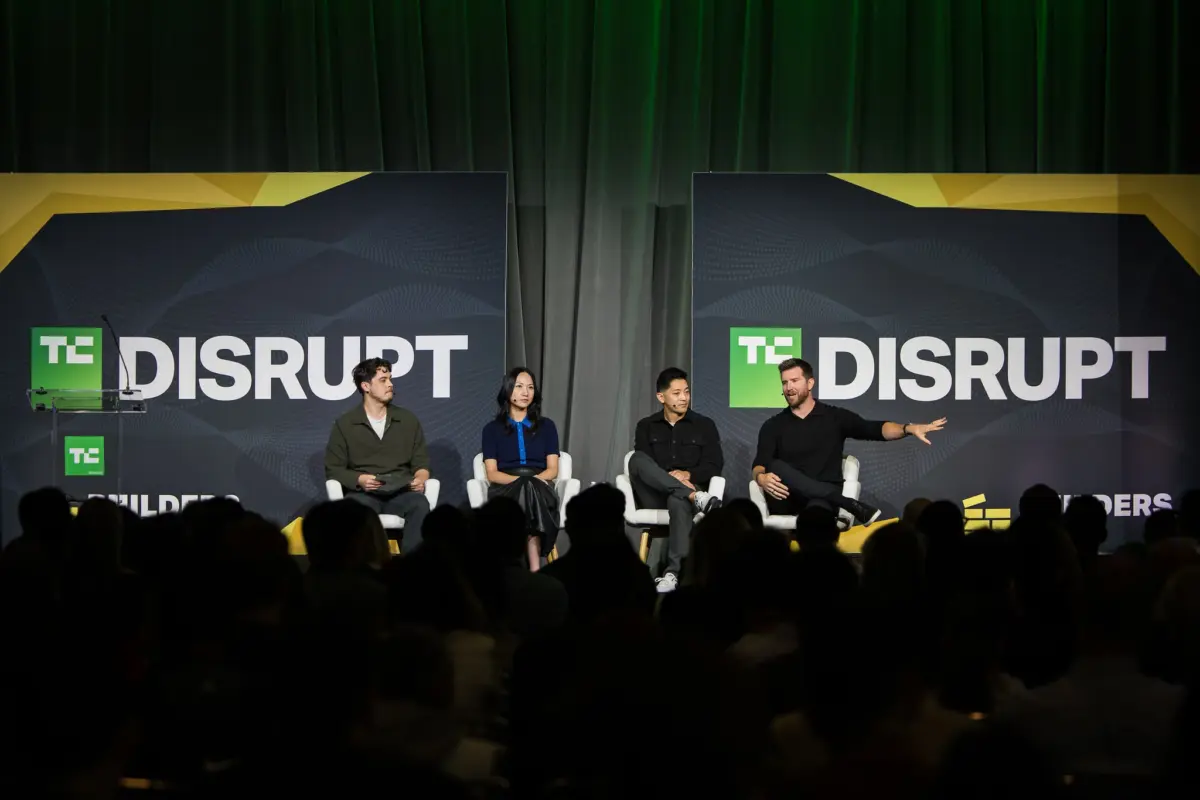
At TechCrunch Disrupt last week, a panel of seasoned founders and investors tackled this perennial hurdle head-on. Elia Wallen, the founder and CEO of travel startup Engine; Grant Lee, the founder and CEO of AI presentation software Gamma; and Crystal Huang, a general partner at Google Ventures, took the stage to share hard-earned lessons and actionable insights on how startups can effectively attract and retain customers in a rapidly shifting market.
The discussion arrived at a fascinating crossroads for the startup ecosystem. In the current era, young artificial intelligence companies like Cluely and Instinct are successfully building massive audiences not merely through their software products, but through their founders’ colorful, highly visible online presences. For many modern entrepreneurs, social media can easily seem like a magical silver bullet for reaching early customers, driving rapid top-of-funnel awareness, and scaling a user base overnight.
However, founders who want to elevate their business strategy with modern digital marketing have to approach it with calculated precision, according to Lee.
Gamma, which specializes in AI-powered presentation software, managed to scale its business exponentially by deploying a meticulously designed social media strategy. The company leveraged influencers through its dedicated Ambassadors program—affectionately known within the company as the "Gambassador" initiative. Gamma adopted this strategic blueprint long before influencer-based marketing became a tried-and-true playbook for smaller B2B and enterprise tech companies. Ultimately, the strategy helped fuel the company’s explosive growth, eventually driving Gamma to a multi-billion-dollar valuation and substantial annual recurring revenue.
Yet, Lee cautioned that simply handing influencers a platform and telling them to promote a brand online does not automatically translate to meaningful sales or sustainable growth. There is significantly more strategy required beneath the surface.
"If you have a product that can serve many different segments or use cases, then you want to basically have creators that can target each one of those," Lee explained during the panel discussion. "If you have folks that are in consulting versus people that do all their marketing and create all the decks for their CMO, there’s all these different segments you might want to go after."
Lee noted a common pitfall among modern startup founders: treating creator marketing or influencer campaigns as a sort of "set it and forget it" mechanism. Many entrepreneurs assume that once a contract is signed and a post goes live, the marketing engine will run itself.
"I think you’re better served by really spending a lot of time with these creators, because if they’re not able to understand how to articulate the value of your product, it doesn’t matter how much money you spend, it’s just going to fall flat," Lee added.
While social media and creator-driven campaigns have proven transformative for companies like Gamma, the overall effectiveness of these digital channels depends heavily on the specific nature, industry, and target audience of the business. In many sectors, traditional, boots-on-the-ground ways of reaching customers can be just as effective—if not more so—than a viral online moment.
Elia Wallen understands this dynamic intimately. His company, Engine, which manages lodging and travel bookings tailored specifically for midsize businesses, bootstrapped its way to an impressive $150 million in bookings before ever taking on outside venture capital funding. Notably, during those critical formative years, Engine operated with virtually no visible social media strategy at all. For Wallen, time-tested traditional sales tactics can yield far higher returns and deeper customer relationships than a passing video trend on TikTok.
"We did events and we smiled and dialed," Wallen recalled. "We still have a lot of people picking up the phone. A lot of people who didn’t grow up with that or don’t understand it think that it’s outdated or it doesn’t work, but it does. It’s a hard thing. There are a lot of companies that just refuse to do it or don’t know how to do it well. But they’re missing out on a very big offline client base."
Driving his point home regarding the enduring power of direct communication, Wallen offered a concise summary: "The phone still works."
Wallen also shared a colorful, in-person engagement tactic that his company deployed during its scrappy early days to stand out in crowded environments. In an effort to capture attention and drive foot traffic, Engine hired a professional magician named David to perform sleight-of-hand tricks for prospective clients at industry events, actively encouraging onlookers to visit the company’s booth. The anecdote served as a vivid reminder that old-fashioned personal engagement, creativity, and face-to-face interaction can work just as effectively as the latest digital growth hacking trends.
Once a startup successfully clears the hurdle of acquiring its initial wave of users, the focus must immediately pivot toward retention and understanding user behavior. Crystal Huang, who has managed scores of early-stage startups and shepherded them toward long-term market success from her vantage point at Google Ventures, emphasized that immense value can be unlocked simply by analyzing how newly acquired customers actually interact with the product.
"Can you look into usage data and figure out if it’s recurring, if it’s increasing, if they are referring their friends?" Huang asked the audience. "It can come across in early usage and retention information as well. And then also, do you see some super fans, right, who even want to work at the company, promote the company, be attached to the brand?"
Building on this theme of customer advocacy, Huang stressed that sustainable growth relies heavily on cultivating true believers within the user base.
"You need to have ways to create evangelists who are really passionate about the product," Huang concluded.