
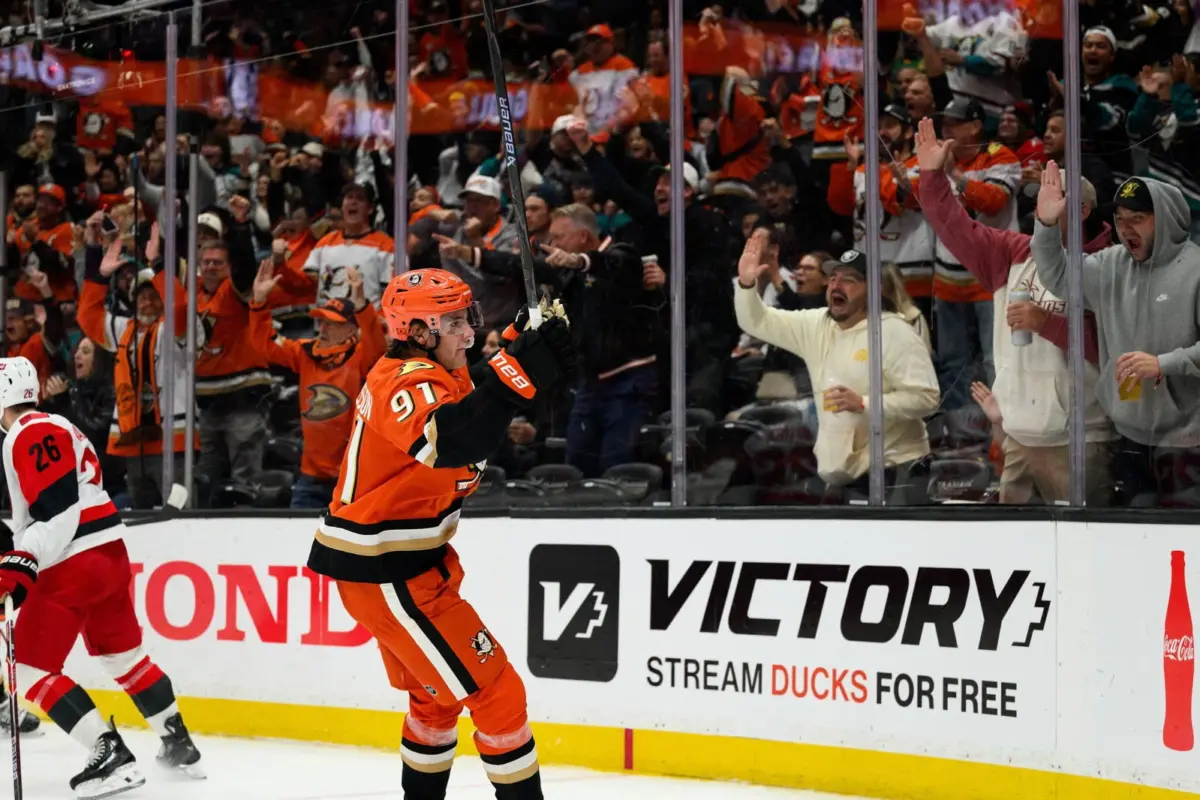
The Anaheim Ducks have sent shockwaves across the hockey world by naming 34-year-old veteran Mikael Granlund as the new captain of the franchise. The decision immediately raised eyebrows and sparked fierce debate throughout the NHL community, primarily because it bypassed 21-year-old franchise centerpiece Leo Carlsson. The timing and nature of the announcement have led many analysts and fans to question whether the choice was a deliberate punitive message sent to Carlsson in the wake of his dramatic contract negotiations and the offer sheet he accepted from the Philadelphia Flyers.
However, a closer examination of how this situation unfolded suggests that if blame or accountability is to be assigned, it belongs squarely with Anaheim management and general manager Pat Verbeek, rather than a young star simply navigating his rights within the bounds of the collective bargaining agreement.
The controversy stems from a whirlwind offseason for the Ducks, which included matching a lucrative offer sheet lobbed by Philadelphia to retain Carlsson. By being forced to match the offer, the Ducks found themselves backed into a tight corner, suddenly locked into a massive contract extension for their young star that they seemingly were not fully prepared to accommodate. The financial fallout was swift and severe. The unexpected cap commitment created a tighter fiscal situation for the franchise, complicated subsequent deals—such as a major extension for Cutter Gauthier—and ultimately contributed to roster casualties, including the departure of veteran forward Chris Kreider.
The theory that the captaincy snub was intentional was recently brought forward by Bryan Hayes on TSN’s OverDrive. Hayes suggested that handing the ‘C’ to Granlund instead of the player many view as the undisputed future of the franchise was not merely a routine leadership appointment. Instead, it bore the hallmarks of a calculated statement from a front office still smarting from how Carlsson’s contract negotiations played out. The central question being debated across hockey circles is whether Carlsson would be sporting the captain’s ‘C’ right now had that Philadelphia offer sheet never materialized.
Yet, shifting the narrative to blame Carlsson for the ensuing cap crunch ignores the realities of modern NHL business and player rights. During discussions on OverDrive and across various hockey platforms, a strong counter-argument emerged: the real accountability for this mess rests with Verbeek and the front office, not the player.
While Carlsson naturally prioritized his own professional and financial future over the immediate flexibility of the team, doing so is well within the rights of any player in the league. In fact, actions like the one Carlsson took are often viewed with a different perspective by players across the NHL. By standing his ground, Carlsson inadvertently helped set a new benchmark for upcoming restricted free-agent deals, with several peers reportedly reaching out to thank him for establishing a stronger economic standard.

From an objective standpoint, Verbeek should have anticipated this scenario developing. His stubbornness and reluctance to secure his prized 2023 second-overall pick to a market-appropriate long-term extension proactively ultimately cost the franchise millions of dollars and created unnecessary organizational friction. Reports surfaced indicating that Carlsson was initially open to taking less than maximum value to remain in Anaheim on a team-friendly pact. When the front office dug its heels in and attempted to squeeze out a bargain deal, it left a vulnerable window for Philadelphia to swoop in with an aggressive offer sheet.
If the Ducks’ front office is indeed using the captaincy as a mechanism to punish a young star for leveraging his rights, it projects a deeply unfavorable image for the organization. Leadership appointments should be about unifying a locker room, establishing a cultural standard, and honoring the player best equipped to lead the team forward on the ice. Punishing a player for a front-office miscalculation places the burden of executive failure squarely on the shoulders of the roster’s most important asset.
At the same time, the timing and context of the decision place Mikael Granlund in an unfair position at the center of the debate. Granlund’s resume speaks for itself; he brings immense veteran savvy and was recently recognized for his leadership qualities by captaining Team Finland at the 2026 Winter Olympics. However, the optics surrounding his appointment in Anaheim risk painting him as a mere backup plan or an out-of-the-box emergency option rather than a universally celebrated leader.
Entering only his second season with the Ducks, Granlund is still relatively new to the franchise ecosystem. While that might raise valid questions about his tenure relative to a homegrown pillar like Carlsson, the organization clearly values his steady, respected voice behind closed doors. Granlund is a consummate professional who commands respect throughout the locker room, and his presence will undoubtedly provide stability during a transitional phase for the team.
This dynamic points toward another plausible reality: the captaincy choice in Anaheim may simply be a transitional bridge. Carlsson continues to look every bit the part of a future captain, both through his elite on-ice production and the mature way he carries himself in the public eye. It is entirely possible that the Ducks’ leadership simply wanted a veteran placeholder for a year or two to shoulder the media scrutiny and insulate their young star while he continues to mature, paving the way for an eventual and natural handoff of the ‘C’ in the near future.