
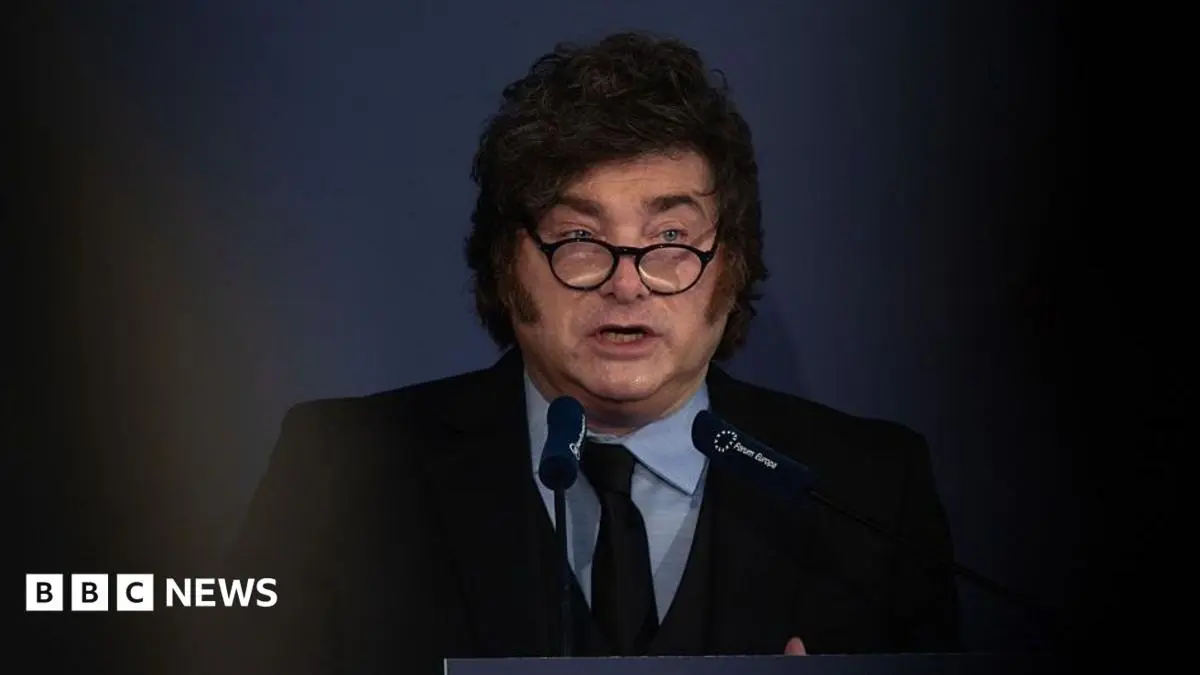
A federal judge in Argentina has officially dropped a high-profile criminal investigation into President Javier Milei and his sister, Karina Milei, regarding their alleged involvement in a contentious cryptocurrency incident that caused severe financial losses for retail investors. The decision brings a legal close to a judicial inquiry that had captivated the nation and drawn intense scrutiny to the president’s social media conduct and financial messaging.
The dismissal was handed down by Federal Judge Marcelo Martinez de Giorgi in response to a formal request submitted by prosecutors overseeing the case, according to official court records. The judicial resolution effectively terminates the federal investigation into whether the head of state and his key political adviser engaged in criminal wrongdoing or fraudulent activity when publicizing a newly created digital asset on social media platforms.
In his formal ruling dismissing the case, Judge Martinez de Giorgi concluded that the evidence presented did not support criminal charges against the president or his sister. The magistrate determined that the reported events did not fall under any legal category defined within the criminal code. Furthermore, the judge emphasized in court documentation that no criminally relevant deception had been proven during the course of the preliminary proceedings, concluding that the elements necessary to substantiate a criminal fraud charge were absent.
The judicial probe originated from the tumultuous launch and rapid collapse of a newly introduced cryptocurrency known as $Libra in February 2025. The controversy erupted after President Milei utilized his personal account on X, the social media network formerly known as Twitter, to broadcast a message regarding the token. In the original public post, the president suggested that $Libra was designed as a novel financial tool that would help fund small businesses and emerging start-ups across the country, framing the initiative as a beneficial market mechanism for economic growth.
Accompanying his promotional comments on X, the Argentine president included a direct web link directing his millions of social media followers to a platform where they could purchase the newly minted digital token. Given Milei’s global profile, massive online following, and background as an economist, the public endorsement immediately catalyzed a speculative surge in the market. Almost instantly following the publication of the president’s post, the trading value of $Libra experienced an exponential increase, as eager buyers flooded digital exchanges to acquire the token in anticipation of further gains.
However, the rapid upward momentum proved short-lived and was followed by an equally swift market catastrophe. Within just a few hours of publishing the original message, President Milei deleted the post from his official X profile without immediate explanation. Almost immediately following the removal of the endorsement, the market value of $Libra experienced a severe and dramatic crash, nosediving to near-zero levels. The catastrophic devaluation left the overwhelming majority of retail investors who had bought into the token during the price surge facing devastating financial losses.
The dramatic collapse of $Libra and the rapid deletion of the president’s endorsement triggered widespread outcry among affected investors and financial commentators, leading to immediate public accusations of fraud. Online critics and disgruntled buyers accused the president of participating in what is commonly referred to in the cryptocurrency industry as a "rug pull." In digital asset markets, a rug pull describes a deceptive practice where developers or high-profile promoters hype up a new token to drive up its market value and attract buyer capital, only to suddenly abandon the project, halt trading activity, or extract liquidity, leaving subsequent investors holding worthless digital assets.
The fallout quickly expanded beyond the financial sphere, morphing into a severe political crisis within Argentina’s legislative branch. Members of the political opposition in Congress voiced outrage over the incident, arguing that a sitting president sharing links to speculative and unverified digital assets posed severe ethical and legal concerns. In response to the collapse and the widespread investor losses, opposition lawmakers announced plans to initiate impeachment proceedings against President Milei, arguing that his promotional actions amounted to improper conduct unbecoming of the nation’s chief executive.
The criminal complaint filed in federal court named not only President Milei but also his sister, Karina Milei, who serves as a vital official within his administration and acts as one of his closest political strategists. The inclusion of Karina Milei in the legal proceedings heightened the political stakes surrounding the case, as prosecutors were asked to evaluate whether the executive office or close associates had played a coordinated role in promoting the speculative token or benefiting from the resulting market volatility.
Throughout the scandal, President Milei consistently denied any criminal intent or deliberate effort to deceive the public, maintaining that he had acted in good faith at all times. In an extended broadcast interview with the local television news channel Todo Noticias, the president sought to distance himself from accusations that he had operated as an active promoter of the underlying financial vehicle. During the television appearance, Milei explicitly defended his actions, stating, "I didn’t promote it, I merely shared it," asserting that his social media post was intended simply to disseminate information rather than serve as a formal investment recommendation.
Addressing the reasons behind his decision to delete the post shortly after its publication, the president explained that he had initially been unaware of the complete background and structural details of the digital asset project. Milei defended his prompt removal of the X post by explaining that at the time he shared the link, he did not know the details of the project and that after learning more about its nature, he decided not to continue promoting it. He insisted that removing the post was a responsible corrective measure taken once he recognized the potential issues surrounding the token.
Milei also addressed the financial losses suffered by those who had purchased $Libra during its brief valuation spike. In public television statements, the president argued that individuals who chose to buy into the cryptocurrency had done so voluntarily and were fully cognizant of the inherent risks associated with high-volatility financial markets. He maintained that adult investors bear personal responsibility for their speculative financial decisions, emphasizing that participation in digital asset markets carries explicit risks that participants freely choose to accept.
As public pressure mounted during the initial days following the market crash, the official presidential office issued formal statements clarifying the administration’s institutional stance on the matter. Executive spokespersons emphasized that President Milei had no personal or official involvement in the underlying development, technical architecture, or management of the $Libra cryptocurrency. The presidential office stressed that neither the president nor the state apparatus was connected to the private creators or developers behind the token’s launch.
To address transparency concerns and internal oversight, the presidential office announced at the time that the case would be submitted to Argentina’s Anti-Corruption Office. The executive branch stated that the oversight body would conduct an independent administrative evaluation to determine whether the president’s social media activity and public sharing of the asset had breached ethical standards or constituted improper behavior for a public official.
The decision by Judge Martinez de Giorgi to dismiss the case at the request of federal prosecutors brings a definitive conclusion to the criminal investigation, relieving the president and his sister of potential criminal liabilities associated with the $Libra collapse. In concluding that no criminally relevant deception was established, the court accepted the prosecution’s assessment that the factual circumstances, while financially damaging to retail participants, did not constitute a punishable offense under national criminal law.
At the time of the judicial ruling’s public release, President Milei had not yet issued a direct public statement or formal response reacting to the news that the criminal investigation against him and his sister had been formally dropped by the court.