
The ongoing debate surrounding player-empowerment mechanisms in the National Hockey League has officially reached a boiling point. The contentious issue of no-trade clauses (NTCs) and no-move clauses (NMCs)—and the extent to which modern players can dictate their destinations—has sparked a high-stakes war of words between league management and player representation.
What began as a critique from the executive suite has quickly snowballed into a fierce defense of collectively bargained labor rights, drawing public remarks from NHL Commissioner Gary Bettman, former NHL defenseman and current NHL Players’ Association assistant executive director Ron Hainsey, and, most recently, NHLPA executive director Marty Walsh. With the current collective bargaining agreement set to run through the end of the decade, the hockey world is left to ponder a pressing question: Will NMCs and NTCs eventually be rooted out of the league, or are they here to stay for the foreseeable future?
The Commissioner Strikes First
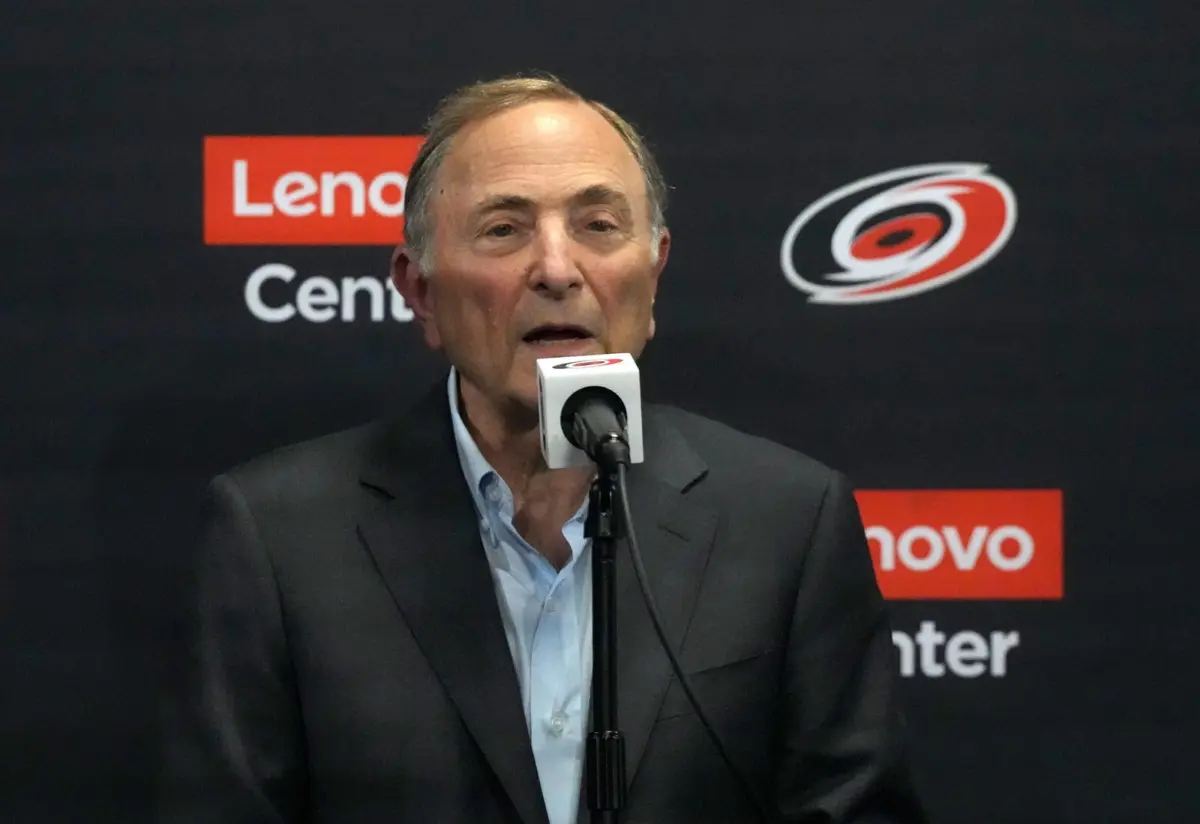
The public discourse was ignited in early October when NHL Commissioner Gary Bettman addressed the media and openly questioned the proliferation of player movement restrictions. In Bettman’s view, the modern landscape—where stars and mid-tier players alike routinely command significant leverage over their employment status—has strayed far from the original intent behind such clauses.
"This notion now where, (a) you can select where you want to go, to and (b) you can demand a trade… That was never the original intention," Bettman said in early October. The commissioner signaled that while a single off-season does not automatically constitute a systemic crisis, the league is keeping a close eye on the trend. "If this becomes a problem — I don’t think one off-season a problem makes — but if this becomes a problem, it’s something we’re going to have to discuss with the players’ association."
For years, team architects have utilized NTCs and NMCs as incentives to lure free agents or convince star players to sign long-term extensions below maximum market value, often trading future roster flexibility for immediate cap management or stability. However, as more players secure broad protection from unwanted relocations—sometimes restricting trades to a handful of approved teams, or completely blocking any movement without prior written consent—front offices have increasingly found their hands tied when attempting to reshape underperforming rosters.
The NHLPA Fires Back: Defending Bargained-In-Good-Faith Rights
It did not take long for the NHL Players Association to mobilize in defense of its membership. Assistant executive director Ron Hainsey delivered a swift and resolute response to Bettman’s remarks, characterizing the commissioner’s critique as a direct challenge to the fundamental rights established under the collective bargaining agreement.
"His conversation about no-move and no-trade clauses, we do take as an attack on players’ CBA-negotiated rights," Hainsey stated plainly. "It’s a player’s right to negotiate salary, salary structure, term, as well as a no-move or no-trade with their club if they’re able to do so and bargain in good faith. It’s pretty simple if you’ve negotiated a no-trade. Whether it’s 10 teams or 15 or 32, the club isn’t able to trade you to those teams without your consent. Our position is that the clauses are acting as they were intended to work."
Following Hainsey’s fiery defense, NHLPA executive director Marty Walsh weighed in during the week, offering a slightly more measured yet fundamentally aligned perspective. Walsh backed Hainsey’s core assertions while defending the players’ hard-earned right to have a meaningful voice in where they live and play professional hockey.

While Walsh’s tone carried a more conciliatory cadence than that of his assistant executive director, the underlying message remained identical: players bargained in absolute good faith to include these mechanisms in the league’s labor agreement. Furthermore, the union maintains that nothing occurring in the wake of the ratification of the most recent collective bargaining agreement has violated the shared understandings established by the league and the players’ association during negotiations.
Examining the Power Dynamics at the Negotiating Table
From an analytical standpoint, the NHLPA currently holds the upper hand in this ongoing debate. No union member or player agent holds a weapon to the heads of NHL general managers when lucrative contracts containing NMCs and NTCs are finalized. General managers enter these negotiations voluntarily, balancing the risks of future roster inflexibility against the immediate rewards of securing elite talent or retaining foundational core players.
Commissioner Bettman is entirely within his administrative rights to revisit the topic when the league and the union eventually sit down to negotiate a subsequent collective bargaining agreement ahead of its expiration. Yet, if league ownership genuinely hopes to strip away or heavily restrict these player rights, the NHLPA will not simply surrender them out of goodwill. To achieve such a structural shift, the league would need to offer significant concessions at the negotiating table in return.
Looking back at the historical evolution of professional hockey, players fought tirelessly to escape the era of indentured servitude and absolute owner control, where athletes were treated essentially as property without individual agency or freedom of movement. A return to that level of all-encompassing managerial authority is a non-starter. Modern athletes simply will not accept a system that strips away their hard-won bargaining power.
Looking Ahead: The Ball Remains in the Owners’ Court
It is the natural order of labor relations for a league commissioner to identify perceived loopholes or pressure points in an existing CBA and attempt to address them during the next round of collective bargaining. Conversely, it is the fundamental duty of union leadership like Marty Walsh and Ron Hainsey to ensure that any ground surrendered by players in one area is met with equal and opposite value returned by ownership in another.
Public sentiment among fans and media analysts may frequently turn against no-trade and no-move clauses, especially when a team’s roster construction freezes up or a star player requests a departure on their own terms. Despite this external friction, these clauses are firmly entrenched and are going nowhere for the remainder of the current collective bargaining cycle, and quite possibly beyond.
Ultimately, until the rules of the CBA are fundamentally rewritten—which cannot happen unilaterally—the responsibility for curbing the proliferation of these clauses rests squarely with NHL general managers and team owners. No outside force compels a front office to hand out no-trade or no-move protections like candy during contract negotiations. Until GMs and owners exercise internal restraint and stop offering these clauses as standard incentives, players will continue to demand them, and their prevalence across the league will only continue to grow.