
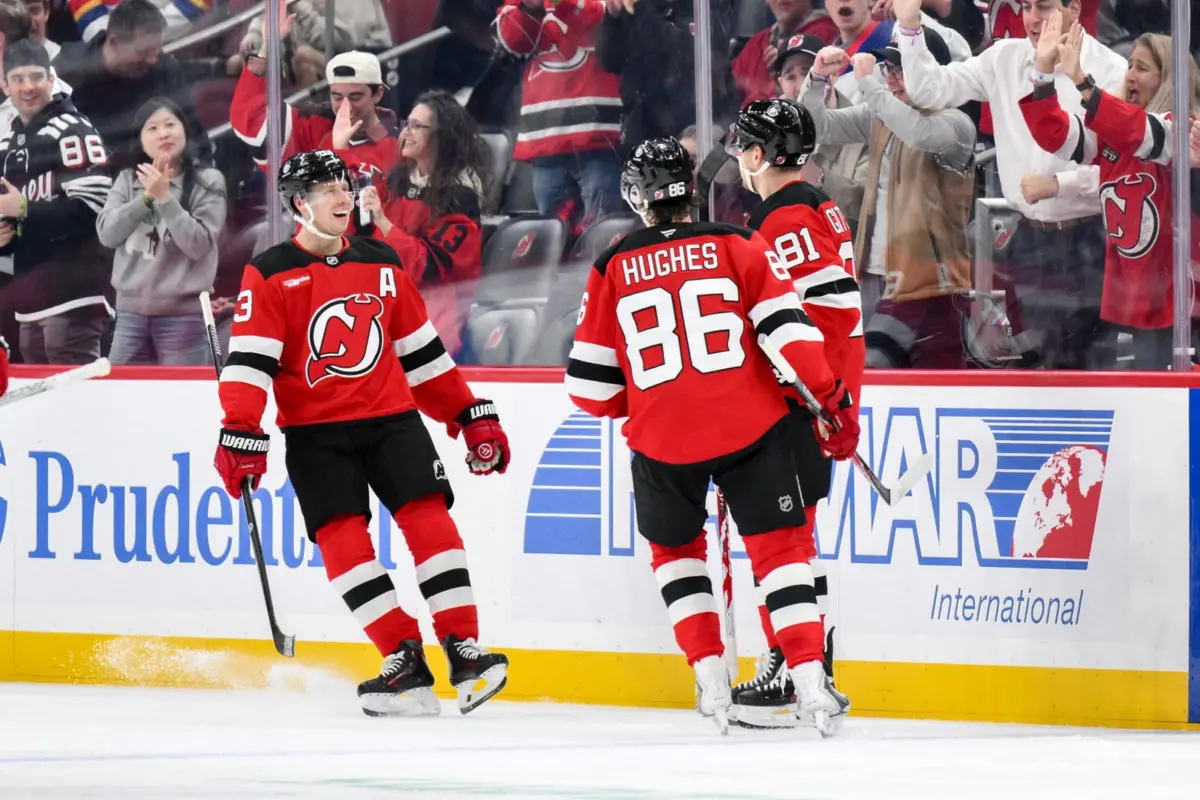
At first glance, a 5-4-0 record through the early stages of the 2026-27 NHL regular season might not seem like a reason to panic. In a grueling, 82-game schedule where momentum swings are inevitable, hovering above the .500 mark is something many teams would comfortably accept out of the gate. But for the New Jersey Devils, scratching just beneath the surface reveals a much more troubling reality—one that should have the franchise’s leadership deeply concerned about their competitive hopes and long-term trajectory this year.
While the win column shows five victories, the manner in which those wins and losses have unfolded tells a significantly more complex and alarming story. The Devils’ record is not merely misleading; it is actively masking systemic flaws that threaten to derail their campaign before it truly gains traction.
To understand the fragility of New Jersey’s start, one only has to look at the composition of their victories. Beyond a couple of tighter contests, their standout wins include a lopsided 7-1 romp over a young, overmatched goaltender in Dylan Garand and the New York Rangers—a cross-town rival that appeared fundamentally due for a massive stinker. Their other notable triumph came via a narrow, hard-fought decision over the Colorado Avalanche, a formidable opponent that has paradoxically found itself mired in an early-season slump of its own. When the Devils have won, the circumstances have frequently aligned in their favor, masking underlying vulnerabilities that sharper competition readily exploits.
Conversely, when New Jersey has fallen short, the collapses have been absolute and uncompromising. In their four losses this season, the Devils have been thoroughly trounced, getting outscored by an eye-watering 19-6 margin. That massive discrepancy speaks volumes about the wildly lopsided, inconsistent efforts head coach Sheldon Keefe has managed to squeeze out of his players on a nightly basis. One night, the team looks capable of dictating the pace and overwhelming an opponent; the next, they unravel completely, lacking the defensive structure and competitive resilience required to stay competitive against elite or even mid-tier NHL clubs.
A deeper dive into the broader statistical landscape further bears out just how disappointing the Devils have been relative to preseason expectations. New Jersey’s offense has settled into a thoroughly mid-tier existence, currently ranking 13th in the National Hockey League with an average of 3.13 goals-for per game. While not elite, that offensive output should theoretically be enough to keep them in most games, provided the other side of the ice is holding firm. Unfortunately for Keefe and his staff, the Devils’ defense has been considerably worse, languishing down in 22nd overall with an average of 3.38 goals-against per game.

Perhaps most importantly, and most alarmingly, New Jersey’s goaltending—which stood out as one of the single biggest question marks heading into the 2026-27 campaign—has proven to be thoroughly sub-par when the team has needed stability the most. Through his first six appearances of the season, veteran starter Jake Allen has struggled to find a consistent rhythm, posting an uncharacteristic .883 save percentage alongside a 3.18 goals-against average. Meanwhile, backup netminder Nico Daws has fared even worse in limited action, carrying an .857 save percentage and a 3.38 goals-against average. In a modern NHL where elite goaltending can mask a multitude of roster flaws, shaky play in the crease is translating directly into multi-goal blowouts on the scoreboard.
These glaring statistical red flags are more than enough to set off loud alarms in the executive offices, specifically for first-year general manager Sunny Mehta. Taking over the managerial reins of a team with playoff aspirations was always going to be a monumental challenge in a hyper-competitive Metropolitan Division, but the early returns suggest his job could become even more difficult as he attempts to steer the Devils back onto a stable, competitive track.
It may still be relatively early in the grand scheme of an 82-game marathon to have sweeping panic conversations, and few expect Mehta—a renowned and calculating elite poker player who built his reputation on analytical precision and emotional control—to openly show his hand to the media or the rest of the league. Mehta is undoubtedly monitoring every shift, evaluating every line combination, and assessing the true character of the roster he inherited.
Yet, even for a seasoned tactician accustomed to high-stakes pressure, the Devils’ erratic, roller-coaster start to the year has made them one of the most intriguing and unpredictable storylines in the league. Having now watched his club navigate approximately 10 percent of the regular season, Mehta simply cannot be pleased with the bulk of what he has observed from the bench and the ice.
Whether sweeping roster trades, a high-stakes coaching intervention, or a combination of both drastic measures are looming on the horizon remains to be seen. But what is abundantly clear is that the New Jersey Devils’ opening act has been far from encouraging. In the unforgiving ecosystem of professional hockey, persistent underperformance almost certainly guarantees that change is well on the way.