
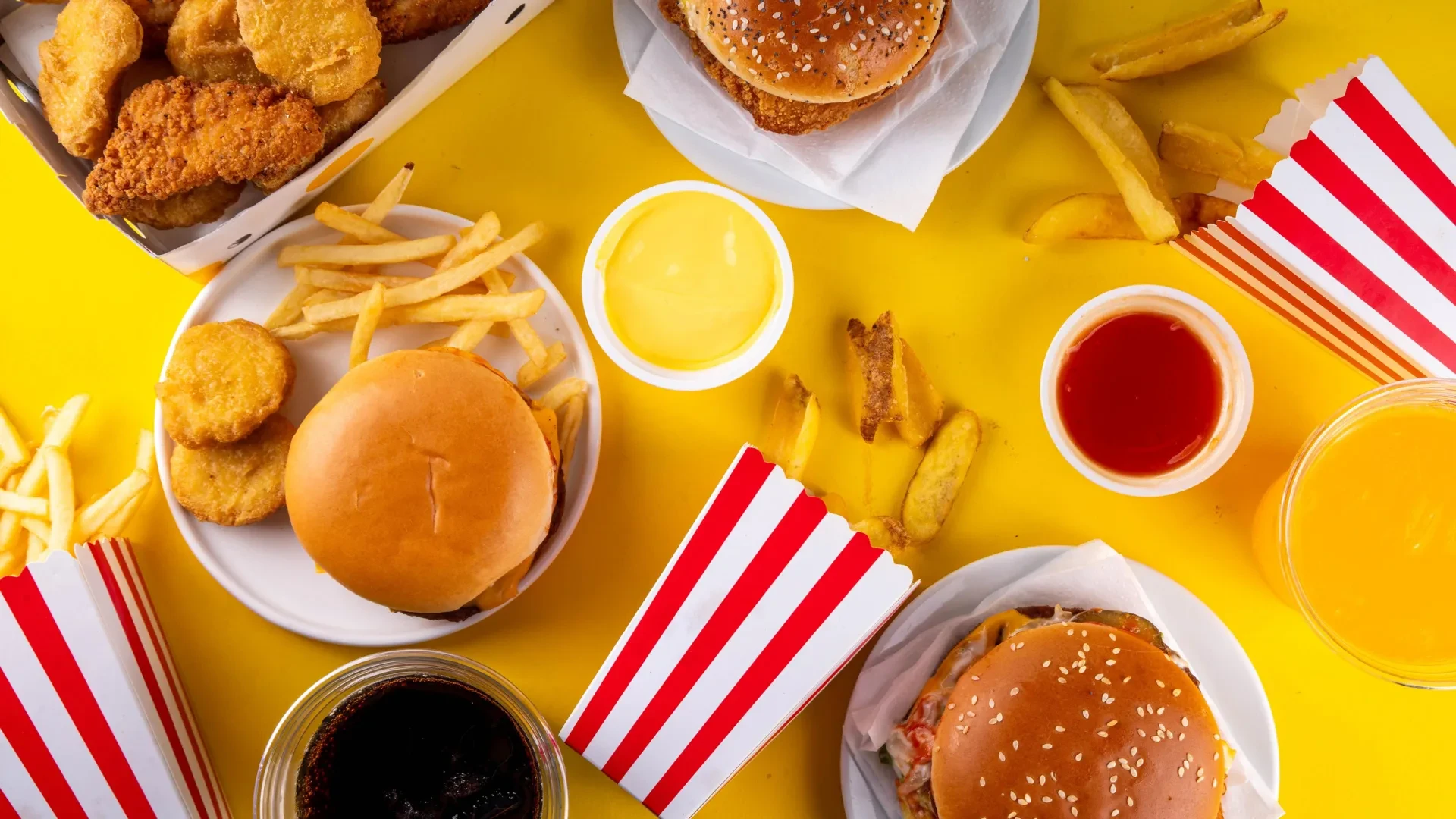
A sweeping, nearly two-decade-long study involving more than 460,000 American adults is challenging conventional wisdom regarding ultra-processed foods and their relationship to colorectal cancer. While ultra-processed products have faced mounting public health scrutiny and regulatory debates, researchers from the National Cancer Institute discovered that eating a high volume of these foods was not directly associated with a higher overall incidence of colorectal cancer.
However, the findings reveal a far more nuanced reality beneath the surface. Rather than pointing to a blanket correlation between industrial processing and cancer risk, the data shows a sharp divergence: certain categories of ultra-processed foods were actually linked to lower rates of the disease, while others were associated with significantly higher rates.
Published on October 15 in the open-access journal PLOS Medicine, the research was led by Erikka Loftfield of the National Cancer Institute. The findings strongly suggest that the health implications of ultra-processed foods depend heavily on the actual nutritional composition of the products themselves, rather than the level of manufacturing or processing they undergo before reaching store shelves and dinner tables.
Ultra-processed foods—a broad category encompassing everything from packaged mass-produced breads and breakfast cereals to ready-to-eat meals, soft drinks, and processed meats—now account for more than half of all calories consumed by adults in the United States. In recent years, these convenient products have drawn intense scientific and media attention due to emerging links with a wide array of chronic health conditions, including cardiovascular disease, obesity, and gastrointestinal cancers like colorectal cancer.
Yet, the sheer diversity of the ultra-processed food category has long posed a significant hurdle for nutritional epidemiologists. Lumping a nutrient-dense, fiber-rich whole-grain breakfast cereal into the exact same category as highly processed hot dogs or sugary carbonated beverages makes it difficult to accurately assess the true health effects of individual items.
By taking a granular look at the data, the research team found that specific ultra-processed foods—such as whole grain items and dairy products—exhibited inverse associations with colorectal cancer, correlating with a lower risk of the disease. Conversely, processed meats within the ultra-processed category maintained a strong link to increased cancer incidence. This critical distinction raises fundamental questions about whether the degree of processing alone serves as a reliable or useful indicator of a food’s long-term health consequences.
A Massive Study Tracks Cancer Risk for Nearly 19 Years
To investigate these complex dietary nuances with a high degree of statistical power, researchers turned to one of the most comprehensive long-term health initiatives in the United States: the NIH-AARP Diet and Health Study. The team examined detailed health records, lifestyle factors, and dietary questionnaires from 461,682 American participants who were between the ages of 50 and 71 when they enrolled in the study back in 1995 and 1996.
At the very beginning of the multi-year investigation, participants completed extensive food frequency questionnaires detailing their typical dietary habits, including how often they consumed a wide spectrum of different foods and beverages. Nutritional scientists and researchers used these detailed survey responses to estimate the overall quantity of ultra-processed foods in each individual’s daily diet.
Following the baseline assessment, participants were tracked continuously through 2018. The median follow-up period spanned an impressive 18.8 years, providing researchers with a robust longitudinal view of how varied dietary patterns interacted with cancer development over nearly two decades of adult life. During this extensive follow-up window, thousands of colorectal cancer cases were recorded and analyzed against the initial and ongoing dietary data.
When the research team initially evaluated total dietary intake, the results showed no overall association between total ultra-processed food consumption and colorectal cancer incidence. In plain terms, participants who consumed a higher volume of ultra-processed foods did not experience higher overall rates of colorectal cancer as a cohesive group compared to those who ate fewer of these products.
However, when the investigators peeled back the broad category to examine individual food groups and components, a much more complicated and revealing picture emerged.
Some Ultra-Processed Foods Linked to Lower Cancer Risk
Breaking down the data by specific food categories shifted the narrative entirely. The researchers discovered that higher consumption of whole grains, dietary fiber, dairy products, and calcium derived from ultra-processed food sources was consistently associated with a lower incidence of colorectal cancer. Far from driving disease, certain processed items that delivered beneficial nutrients appeared to offer protective benefits that mirrored established nutritional science regarding whole foods.
Meat products derived from ultra-processed sources, however, displayed the exact opposite pattern. Greater consumption of ultra-processed meats was clearly associated with a higher incidence of colorectal cancer over the course of the study.
To further quantify these relationships, the research team modeled hypothetical dietary shifts to see what might happen if individuals replaced ultra-processed foods with less processed alternatives. Their analysis revealed that substituting minimally processed or unprocessed foods for just 10% of a person’s daily ultra-processed food intake by weight was associated with a modest yet statistically significant 2% lower incidence of colorectal cancer.
These findings suggest that the fundamental nutritional characteristics of individual foods provide far more valuable insight than simply classifying everything by its level of industrial processing. Foods that sit side-by-side within the same broad classification can possess radically different biological properties and vastly divergent associations with long-term cancer risk.
Why the Findings Come With Important Limitations
Despite the extraordinary scale of the study, the massive cohort size, and the exceptionally lengthy follow-up period, the researchers emphasize that their conclusions come with notable caveats and may not apply universally to every demographic group.
Most participants enrolled in the NIH-AARP Diet and Health Study were older, predominantly white adults living in the United States. Consequently, the findings may not accurately reflect the dietary realities, genetic backgrounds, or disease risks of younger adults, children, or more racially and ethnically diverse populations whose dietary traditions and access to food options might differ significantly.
Another important limitation stems from the methodology used to collect dietary information. Participants reported their eating habits through questionnaires only once at the very beginning of the study in the mid-1990s. Because of this single baseline measurement, researchers were unable to account for how individual diets evolved, improved, or deteriorated over the subsequent two decades.
Furthermore, the commercial availability, marketing, and chemical formulation of ultra-processed foods expanded dramatically during the decades following the initial survey. As a result, the baseline dietary assessments may have ultimately underestimated participants’ actual cumulative consumption of ultra-processed foods as the food supply itself transformed over time.
Finally, because the research is observational in nature, it cannot definitively establish direct cause-and-effect relationships. Observational studies can identify correlations and trends, but they cannot prove definitively whether particular foods directly cause or prevent cancer on an individual physiological level.
What the Results Mean for a Healthy Diet
Rather than treating all ultra-processed foods as equally harmful or uniformly toxic, the findings support a more nuanced approach to public health messaging—one that evaluates foods according to their underlying nutritional content and their specific, documented health associations.
The results are largely consistent with longstanding dietary guidelines for colorectal cancer prevention, which encourage individuals to consume adequate amounts of whole grains, fiber, dairy products, and calcium-rich foods while actively limiting the intake of processed meats.
Reflecting on the implications of the work, Erikka Loftfield of the National Cancer Institute noted that the data aligns closely with established preventative wisdom when analyzed by specific food groups rather than broad processing categories.
"In this large population of older US adults, we did not observe an association between total ultra-processed food intake and colorectal cancer incidence; however, when we looked at food groups, like whole grains, dairy, and meat, by UPF or non-UPF source, we found that associations were in line with current dietary guidance for colorectal cancer prevention such that higher whole grain and dairy but lower meat intakes were associated with lower colorectal cancer incidence," Loftfield explained.
Ultimately, the study highlights why reaching for a single label like "ultra-processed" may obscure critical details about what is actually on the plate. When evaluating risks associated with colorectal cancer, the specific types of foods people consume appear to matter far more than the simple processing category to which they have been assigned.
The study was funded entirely by the Intramural Research Program of the National Cancer Institute, part of the National Institutes of Health. Several authors listed on the paper are current or former employees of the National Cancer Institute’s Intramural Research Program, though the funding organization played no role in the design of the study, the collection or analysis of the data, the decision to publish the findings, or the preparation of the final manuscript.