
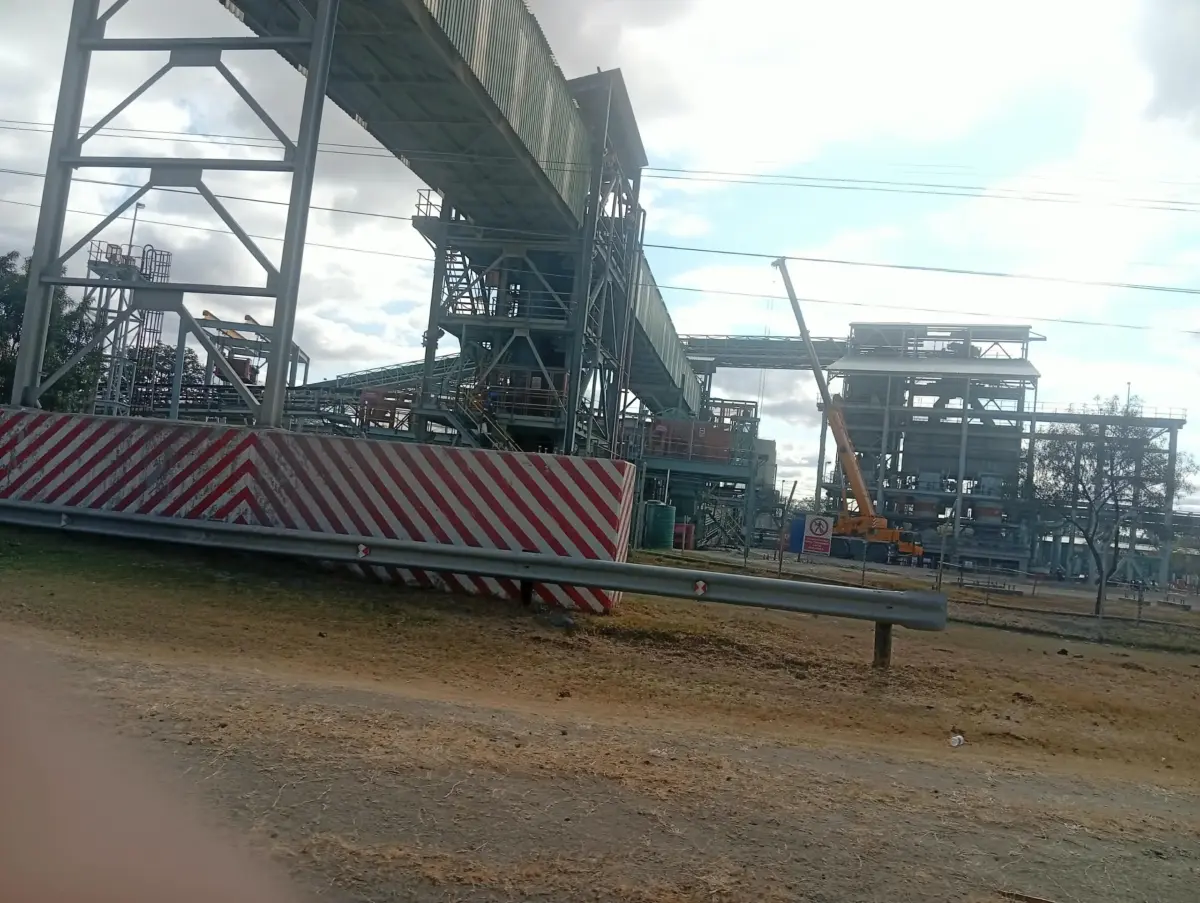
MIMOSA, Zimbabwe — Across the sweeping, mineral-rich landscapes of central Zimbabwe, the platinum mining industry is extracting unprecedented wealth from deep beneath the earth, generating billions of dollars in export revenues and capitalizing on historical surges in global commodity prices. Yet, in the dusty settlements and villages situated just beyond the perimeter fences of these multi-million-dollar operations, local residents report a starkly different reality. For those living atop the world’s second-largest platinum reserves, basic infrastructure—from paved roads and decent classrooms to clean drinking water and functional sanitation—has overwhelmingly failed to keep pace with the immense riches being extracted from their ancestral lands.
The stark divide between corporate revenue and community development comes at a time of extraordinary market strength for platinum group metals (PGMs). According to data from the World Platinum Investment Council, platinum prices touched an all-time high of $2,923 an ounce on January 26, propelled by a broader rally across precious metals markets and sustained global anxieties regarding supply constraints.
For Zimbabwe, the price surge represents a critical macroeconomic opportunity. The Southern African nation sits atop the Great Dyke, a massive geological formation containing the world’s second-largest known PGM deposits, trailing only neighboring South Africa. The mining sector serves as the primary engine of Zimbabwe’s foreign currency earnings, accounting for approximately 75 percent of the nation’s total exports and contributing roughly 14.5 percent to its gross domestic product (GDP), according to figures compiled by the United States International Trade Administration.
This commodity windfall was clearly reflected in recent national financial performance data. Export earnings from the mining sector surged to a record $8.5 billion in 2025, representing a dramatic increase from the $5.9 billion recorded the previous year. According to John Musekiwa, who served as president of the Chamber of Mines of Zimbabwe during that period, this notable growth was driven by robust operational output across major sites and highly favorable international market prices, particularly for gold and platinum group metals.
However, the macroeconomic success celebrated in executive boardrooms and government ministries stands in sharp contrast to the daily struggles reported by residents living alongside some of the country’s largest extraction sites. Across key mining corridors, local community members, traditional leaders, and civic representatives argue that the wealth generated from their soil has yielded negligible returns for local public infrastructure, leaving towns burdened by environmental degradation, overburdened public facilities, and persistent poverty.
In the Mhondoro-Ngezi district, one of Zimbabwe’s primary platinum-producing hubs, this underlying socio-economic tension is visibly written across the landscape.
A rich mineral belt, struggling communities
The Great Dyke stretches longitudinally across central Zimbabwe, a rich geological trench hosting vast quantities of high-grade PGMs, gold, chrome, and nickel. Within the Mhondoro-Ngezi district, major operator Zimplats has established expansive mining, ore concentration, and chemical processing facilities.
Inside the highly secured industrial complexes, modern machinery converts raw rock into high-value mineral concentrates, while heavy haulage trucks continuously transport material between underground mines and processing plants. But step outside the corporate gates into surrounding rural centers like Turf, Mamina, Murambwa, and adjacent hamlets, and the infrastructure picture changes dramatically. Local residents describe settlements where municipal development has utterly failed to keep up with the rapid population influx triggered by the mining boom.
Ernest Denhere, the traditional headman of Denhere village in Ward 3, emphasized that international mining corporations have an ethical and social obligation to leave a lasting, positive legacy in the territories they exploit.
"We call upon Zimplats and other mines to build a road from Kadoma/Kwekwe to Turf, Benhura, Mamina, Murambwa and Kadhani, linking to the Harare-Masvingo highways," Denhere said, highlighting how the current state of local transport networks severely restricts economic movement and regional integration for ordinary citizens.
The shortfall in infrastructure extends far beyond unpaved roads into fundamental social services, particularly education. Ward 3 Councillor Emmah Chikwai pointed out that young children in the district are forced to endure taxing physical journeys merely to access basic secondary education.
"Children from Jompani, Majoki, Maleti and Makwavarara walk between 15km and 25km [9 to 15.5 miles] to reach Musinambi Secondary School," Chikwai stated. She urged corporate operators to step in and fill the logistical gap: "My appeal is for the mines to assist in setting up a satellite secondary school in Makwavarara."

Schools, water and livelihoods under pressure
The pressure on local public institutions is equally acute in primary education. During a visit to the region on September 7, reporters observed pupils at Turf Primary School attending lessons outdoors beneath the branches of trees, as rapid residential growth driven by the mining sector has far overwhelmed the school’s physical classroom capacity.
Directly adjacent to these outdoor learning areas, a localized environmental and social crisis plays out daily. At an informal municipal waste dump, cattle and goats graze among heaps of trash while impoverished women and young men sift through refuse in search of recyclable plastics to resell for survival.
For local resident Sakina Lice, picking through garbage dumps is the sole means of keeping her household afloat amidst a lack of formal economic opportunities.
"I have 11 children and nine grandchildren. Picking up plastics is the only way I survive. When I resell them, I can make maybe $20 a month," Lice explained. "I am the breadwinner. My husband is late, so it is just hand to mouth. My wish is for the mine to empower women, so we can start projects and support our families."
Beyond solid waste management and classroom shortages, community members voiced deep concern regarding liquid waste contamination and environmental health risks tied to nearby waterways. Residents focused their grievances on the Ngwazani River, located approximately 100 meters (330 feet) from the local dump site. Villagers alleged that untreated sewage originating from expanded mining and residential compounds has spilled into the river, rendering a vital public water source hazardous.
Edson Mabure, whose family was previously displaced from their ancestral land to accommodate the expanding footprint of commercial mining operations, stated that the polluted river has introduced continuous hardship into his relocated community.
"Our village was where the mine is today, so we were relocated," Mabure said. "From our new village, I cross the Ngwazani River, which is now flooded with sewage coming from the mine. Since the mine started operating, there is nothing tangible that has been done to leave a lasting legacy for the community. I don’t know whether the responsibility lies with the council or Zimplats."
Agnes Handidikundiona, who was encountered crossing the Ngwazani River alongside her young children, recounted how the waterway once served as a pristine lifeblood for surrounding households before industrial activities altered the landscape.
"We are facing a serious challenge because the water is no longer clean," Handidikundiona said. "Before the sewage spill, we used to use this water for domestic purposes, such as washing clothes and watering our nutritional gardens."
Handidikundiona added that seasonal weather patterns exacerbate the river hazard, effectively cutting off children from attending school when water levels rise. "Children from many villages cross here to go to school. Sometimes when the river is flooded, they cannot go to school. We need a footbridge here," she said.
The rapid economic expansion of the Great Dyke has led to demographic shifts that local governance structures appear ill-equipped to handle alone. Ward 11 Councillor Nhomboka Kurebwa Javangwe noted that the arrival of mine workers, contractors, and job-seekers has caused the area’s population to skyrocket. While acknowledging that Zimplats has previously constructed some housing units and classroom blocks in the area, Javangwe emphasized that community demand continues to outpace existing facilities by a wide margin. He urged the mining company to take full responsibility for constructing and operating a dedicated primary school to alleviate local overcrowding.
Furthermore, Javangwe expressed frustration over administrative barriers that prevent grassroots representatives from engaging directly with corporate executives to resolve urgent community grievances.

"We do not have direct access to the mine to raise the concerns of our people," Javangwe stated, explaining that internal protocols dictate that only the district council chairperson is authorized to conduct direct meetings with Zimplats management.
The socio-economic tension and calls for institutional accountability recorded in Mhondoro-Ngezi are echoed across other major platinum-producing centers throughout Zimbabwe.
In the town of Shurugwi, where Anglo American’s Unki Platinum Mine operates, residents have similarly voiced frustration regarding the gap between corporate mineral extraction and municipal development.
"I call upon Unki to consider assisting with classroom blocks for schools, water and sanitation, and roads in Shurugwi town," said Bulle Madzitire, chairman of the Shurugwi Residents Association.
In nearby Zvishavane, home to the extensive Mimosa Platinum Mine, local civic representatives shared identical concerns. Kamino Simango, chairman of the Zvishavane Residents Association, argued that Mimosa must pivot its corporate social responsibility strategies toward funding large-scale infrastructure projects that directly benefit the broader municipal populace.
When contacted for comment regarding these community concerns, Unki Platinum Mine offered a detailed defense of its localized investments. Unki’s public relations manager, Evelyn Mawimba, stated that the mining corporate has sustained an average investment of $1.5 million annually in local community development programs over the past five years. According to Mawimba, these financial commitments cover a broad spectrum of local needs, including public education, healthcare facilities, clean water provision, sanitation networks, agricultural support, and local civil infrastructure.
Mawimba highlighted specific completed initiatives, noting that Unki has drilled 63 community boreholes to expand access to safe drinking water, provided institutional support to 32 local schools through its STEP-UP educational initiative, and committed $2.75 million toward land acquisition and site infrastructure for the Impali housing estate. In addition to direct corporate projects, Mawimba noted that Unki contributes approximately $130,000 annually in municipal levies to the Shurugwi Town Council, alongside an annual contribution of roughly $850,000 paid to the Tongogara Rural District Council.
In contrast, management at Mimosa Platinum Mine did not respond to formal inquiries regarding its local community investments, despite repeated follow-up requests.
Efforts to seek clarity from local government authorities yielded limited results. The chairperson of the Mhondoro-Ngezi Rural District Council, Alderman Ephraim Pepukai Chengeta, was contacted regarding Zimplats’ local developmental contributions and municipal planning. While Chengeta initially agreed to discuss the matters, he ultimately failed to return subsequent phone calls or respond to messages. The rural district council’s chief executive officer, Itai A. Mawonde, declined to answer immediate questions verbally and requested that all inquiries be submitted formally in writing.
Similarly, Zimplats’ head of corporate affairs, Hama Saburi, was contacted directly regarding the specific pollution, infrastructure, and educational concerns raised by Mhondoro-Ngezi residents. Saburi stated that the company would formulate and provide a formal response to the issues raised, but failed to provide any statements prior to publication.
As global markets continue to drive multi-billion-dollar valuations for platinum group metals, the rural communities living along Zimbabwe’s Great Dyke remain firm in their demands. For residents walking past state-of-the-art mining complexes on their way to polluted rivers or under-resourced outdoor classrooms, the central challenge remains securing a fair share of the wealth extracted from beneath their feet.
"What is beneath our land speaks volumes," Headman Ernest Denhere said. "We need to see a lasting legacy for our communities."