
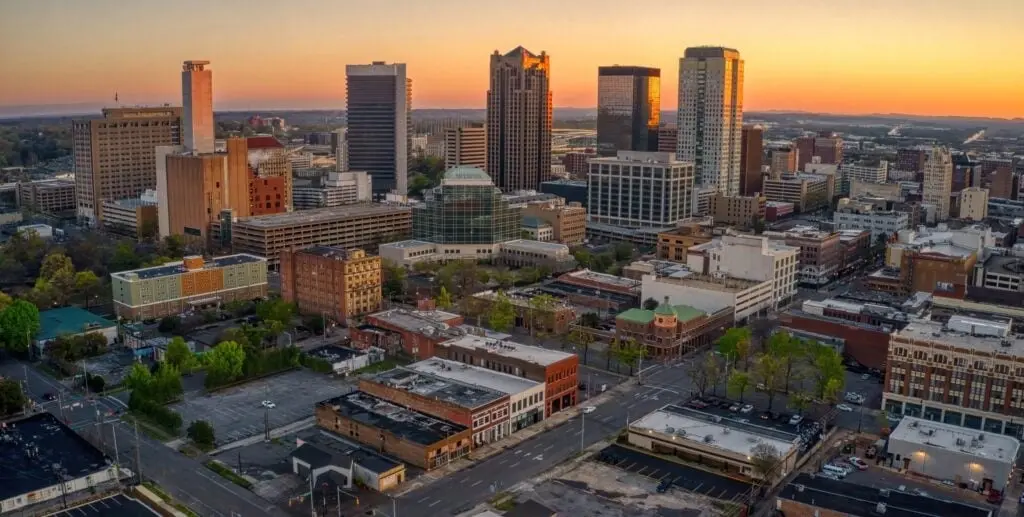
In an era defined by stubbornly high interest rates and compressed profit margins across much of the United States, finding real estate that delivers immediate returns can feel like an impossible pursuit. Yet, even in this challenging macroeconomic climate, certain metropolitan areas continue to defy broader trends. Among them, Birmingham, Alabama, has claimed the top spot on Realtor.com’s list of the top 50 U.S. cities for real estate investors, driven by a compelling combination of low acquisition costs and steady rental demand.
With a median purchase price of $160,000 and a median monthly rent of $1,300, Birmingham offers the kind of fundamental math that makes traditional cash-flow investing viable again. According to recent housing data, the city recorded the highest net share of investor homebuyers in the nation, with 21% of all sales going to investors and 14.4% of sellers also classified as investors. This dynamic resulted in a net investor purchase share of 6.6%, underscoring a high level of market liquidity and ongoing institutional and private interest.
A Cash-Flow City in a High-Interest Climate
While the very concept of positive cash flow has occasionally been dismissed as a relic of a bygone era by investors navigating today’s lending environment, it remains the defining characteristic of Birmingham’s housing market.
"In Birmingham, the money is in the rent check, not the resale," said Cameron Walker of Clever Real Estate in an interview with Realtor.com. "That’s the whole story of why investors hold."
This sentiment is shared across several legacy industrial and mid-sized metros throughout the country. Hannah Jones, senior economist at Realtor.com, highlighted the distinction between these markets and high-flying coastal hubs. Seven of the top metros on the index—including Memphis, Birmingham, Kansas City, St. Louis, Pittsburgh, Columbus, and Cleveland—represent classic cash-flow markets. In these regions, affordable entry prices, steadily climbing rental rates, landlord-friendly tax environments, and durable tenant demand consistently draw capital. By contrast, coastal outliers like Miami and New York are largely driven by buyers betting heavily on future price appreciation and easy exit strategies rather than immediate rental income.
Navigating Neighborhoods: Where to Invest in Birmingham
While the broader Birmingham market offers clear opportunities, market experts emphasize that location selection remains critical to long-term success. The city’s fundamental economic stability is bolstered by several robust pillars, including a thriving healthcare sector, financial institutions, and a large, recurring student population anchored by the University of Alabama. Naturally, neighborhoods situated in close proximity to these major regional employers experience the most consistent tenant demand.
For real estate investors, the sweet spot for balancing risk and return typically lies within stable B- and C+ neighborhoods. Properties in these sectors often require a nuanced understanding of local dynamics. Moving up slightly into B+ cash-flow and growth hybrid markets, home prices generally range between $180,000 and $250,000. While investors who focus on these areas may trade away some immediate, high-yield cash flow and accept more modest appreciation, they benefit significantly from a higher quality tenant pool. For landlords looking to minimize day-to-day operational friction, investing in these sturdier neighborhoods brings a greater degree of stability to a passive income strategy, making them well-suited for long-term holds.
Exploring Alternative Markets Across Alabama
For investors who are cautious about the heightened level of competition and activity in Birmingham, the broader state of Alabama still offers several alternative markets. These regions share similar advantages, including the state’s notoriously low property taxes and favorable income tax structures, while catering to different economic drivers.
Huntsville, for example, represents a distinctly different investment profile. While housing is notably more expensive—with Zillow reporting average home values hovering around $290,453—the city is supported by a high-income employment base anchored in aerospace, defense, engineering, and technology. Local developments continue to fuel this growth; recent reports indicate that defense manufacturer Redwire plans to expand its Huntsville operations significantly, adding thousands of square feet of facility space and bringing over 150 new skilled jobs to the area. Consequently, Huntsville is widely viewed as a long-term play rather than a quick cash-flow turnaround.
Further south, Mobile offers another perspective on Gulf Coast real estate. Supported by manufacturing, shipbuilding, and the activity surrounding the Port of Alabama, Mobile features single-family home prices with a median hovering near $199,226 and average rents around $1,293. While these figures place the market in neutral territory from a pure cash-flow perspective, investors must account for additional regional overhead, such as storm-related insurance and maintenance costs, which can impact net returns.
Meanwhile, Montgomery benefits from a stable economic foundation anchored by government, military, and educational institutions. With a median single-family home price sitting just above $152,000 and average rents around $1,347, Montgomery frequently surfaces in positive cash-flow territory. Success in this market relies on identifying modestly priced properties situated in decent neighborhoods near reliable employment centers. While it lacks the frenetic activity seen in Birmingham, it requires a similarly deliberate approach to neighborhood selection.
Regional Comparisons: Memphis and Mississippi
Investors seeking alternatives outside of Birmingham who also prefer to avoid the colder climates of the Northeast and Midwest often look toward Memphis, Tennessee, and the state of Mississippi.
Realtor.com ranked Memphis directly behind Birmingham in net investor buying activity, with a local median listing price of roughly $167,000. Fundamentally, the two cities share many operational similarities. For many landlords, the final decision between Memphis and Birmingham often comes down to micro-level factors, including neighborhood-specific tax variations, insurance rates, crime statistics, day-to-day property management costs, and the overall condition of the housing stock.
Mississippi presents another affordable regional option, with statewide median home values resting around $196,333. The state has experienced notable appreciation in recent years, though prospective buyers must weigh the escalating costs of coastal property and windstorm insurance when calculating their potential yields.
Final Thoughts and Due Diligence
It is easy to understand the powerful attraction of investing in Birmingham. In a national housing market where conventional financial metrics frequently fail to align, Birmingham stands out for its straightforward cash-flow potential.
However, the high volume of localized investor transactions—including the notable percentage of investors selling properties to other market participants—warrants careful consideration. Because Birmingham is not historically known for rapid property appreciation, buyers must weigh their exit strategies and operational goals carefully.
The realities of boots-on-the-ground real estate management often differ significantly from theoretical projections calculated on a spreadsheet. Successful investors must account for variable expenses that do not always appear in macroeconomic overviews, including utility costs, local property inspection requirements, regulatory nuances, and crime rates, alongside standard operational expenditures like vacancies, property taxes, insurance, and routine maintenance.
Running meticulous financial models and comparing micro-markets across different neighborhoods, cities, and states remains essential for determining the most resilient location for capital deployment. While careful analysis is required, the underlying numbers ensure that Birmingham will remain central to the broader conversation about real estate investing for the foreseeable future.