
For generations, the real estate industry has operated under a single, unquestioned mantra: always put the client first. From late-night contract negotiations to answering calls while on vacation, agents have long worn their exhaustion like a badge of honor, treating every real estate transaction as a breathless emergency. But a growing conversation among industry veterans is beginning to challenge this relentless hustle culture, driven by harsh personal wake-up calls that are forcing top producers to reconsider the true cost of relentless over-extension.
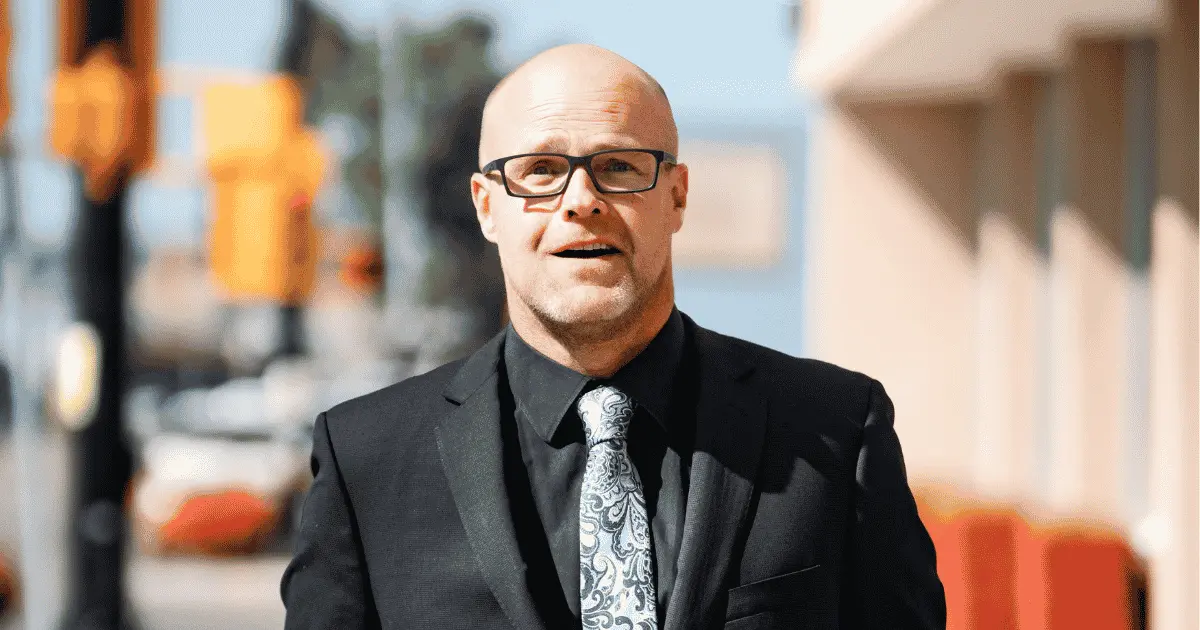
Consider the analogy of an airplane oxygen mask, a comparison frequently raised by Trevor Bolin, a veteran Realtor and franchise owner with RE/MAX in Fort St. John, British Columbia. Passengers are always instructed to secure their own oxygen masks before attempting to assist anyone else. Yet, in the high-stakes world of real estate sales, professionals routinely neglect their own foundational needs to service their clientele, rarely pausing to consider the long-term toll on their physical and mental well-being.
Bolin, who manages a RE/MAX franchise in his hometown along the Alaska Highway, understands this dynamic intimately. Alongside his demanding real estate career, Bolin has maintained an exceptionally active public profile, serving as a long-time city councillor, owning several franchise locations of a major fast-food chain, authoring self-help literature, and previously leading the Conservative Party of British Columbia. However, his relentless pace came to an abrupt halt this past spring.
At the age of 46—a milestone he notes should represent the prime of life—Bolin received a devastating cancer diagnosis. Medical testing revealed a stage 2 tumour blocking a significant portion of his colon. Reflecting on the diagnosis, Bolin acknowledges that he spent his entire professional life placing himself third or fourth in priority, actively ignoring early warning signs and treating his own physical health as an inconvenience.
A Hard Lesson to Learn
Bolin’s schedule was emblematic of modern real estate culture: round-the-clock availability, last-minute property showings, frantic driving schedules, excessive screen time, and a blurring of the boundaries between professional hours and personal rest. Looking back, he recognizes that the lifestyle—marked by eating rushed meals in cars between appointments, managing elevated stress levels, late-night drinks, and early-morning habits—created an environment where a medical crisis became almost inevitable.
The diagnosis forced a profound shift in perspective. Bolin emphasizes that the industry must fundamentally change its evolution. He argues that real estate does not require professionals to live in a perpetual state of emergency, asserting that nearly all real estate matters can be handled effectively within professional business hours. While acknowledging that the profession does not lend itself to a rigid, nine-to-five Monday-to-Friday schedule, he maintains that treating the job like an emergency room triage unit is both unsustainable and dangerous.
Following his diagnosis, Bolin underwent major surgery. The tumour, along with his entire colon, 21 lymph nodes, and the lining of his abdominal wall, was successfully removed. He describes the intervention as having stopped the cancer in its tracks. Today, he carries a renewed message regarding personal wellness, warning colleagues that failing to intentionally carve out time for health will ultimately result in the body forcing time for illness.
Even as he navigates his recovery, Bolin’s characteristic drive remains evident. He is currently running for mayor of Fort St. John in the city’s upcoming October 17 election, demonstrating that it is entirely possible to pursue ambitious civic and professional goals while establishing healthier boundaries for personal well-being and family life.
Making Time for What Matters
Bolin is not alone in his reassessment of industry norms. Across the country, other real estate professionals are stepping forward to share similar realizations about the hazards of unchecked hustle culture.
Andrew Mizzoni, an agent with Capital North Realty in the Greater Toronto Area and a childhood cancer survivor, has long prioritized intentional lifestyle management. Mizzoni, whose dedication to pediatric cancer research earned him a government medal, notes that the fast-paced nature of real estate often leads to poor nutritional habits, excessive caffeine consumption, and chaotic daily schedules. By implementing proactive measures to manage his calendar, pack nutritious meals, and handle professional challenges as they arise rather than letting them bleed into personal time, Mizzoni has found a sustainable rhythm that protects both his health and his career longevity.
Industry observers note that these individual reassessions are occurring against a backdrop of broader market shifts. With a prolonged market slowdown and an increasing reliance on automated digital platforms, many veteran agents are naturally shifting their priorities. While the hustle culture has not entirely disappeared, it is increasingly giving way to structured operations, professional boundaries, and more sustainable business models.
A Body That Keeps Score
For Juliana Vallee, a Greater Vancouver-based RE/MAX agent, coach, and industry educator, the wake-up call came in the form of a brain tumour pressing against her optic nerve. The subsequent surgery left her blind in one eye, a stark physical consequence of a career built on self-sacrifice.
Vallee recalls the extreme measures she once normalized, noting that she was texting a counter-offer to another agent between pushes while in active labor, and showing homes just days after giving birth. At the time, she wore those actions as badges of honor, failing to recognize that the habits she bragged about were the ones carrying the highest price tag. The reminder of her medical journey remains visible in small, poignant ways, such as her son wearing bright pink laces on his hockey skates so she can easily pick him out on the ice with her remaining vision.
Vallee now coaches other agents to reject the trap of busyness and instead focus on intentionality. She points out that the real estate industry quietly rewards harmful behaviors, leading professionals to measure their self-worth solely through production volume. When production becomes the only scorecard, she warns, an agent will perpetually feel behind. By integrating health, personal relationships, and peace of mind into their metrics of success, agents can make fundamentally different, healthier decisions.
Emphasizing that a career should be a vehicle to grow a fulfilling life rather than consume one, Vallee and other industry leaders hope to steer the real estate profession toward a future where professional dedication no longer requires personal sacrifice.