
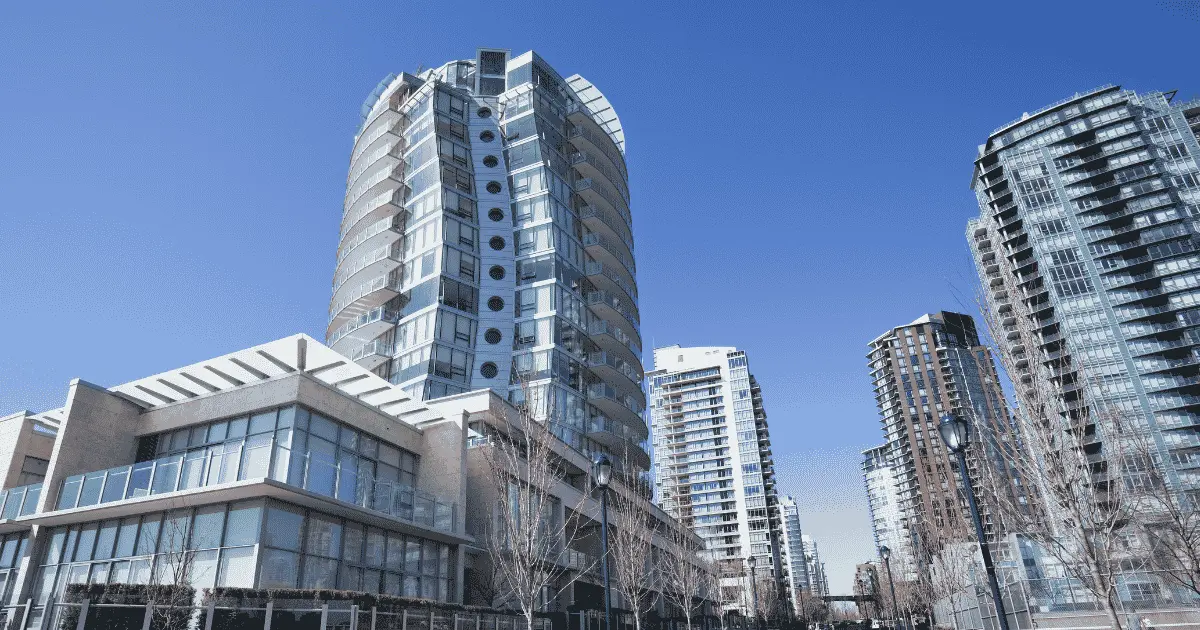
Canada’s national housing conversation has long been dominated by a single, pressing refrain: a severe shortage of available homes driving up the cost of living for everyday citizens. However, a comprehensive new report from real estate analytics firm CoStar reveals a starkly different reality operating beneath the surface of the broader market. While affordable rental housing remains critically tight, the high-end and luxury rental sectors are experiencing a massive glut of vacant units, exposing a profound disconnect between what developers have been forced to build and what renters can actually afford.
According to CoStar’s data, high-end rentals in Canada are currently grappling with a vacancy rate of nearly 17 per cent, dwarfing the tight sub-three per cent vacancy rate recorded for more affordable housing options. To break down these numbers, CoStar relies on a proprietary rating system that categorizes properties by quality, finishes, amenities, and architectural significance. Within this framework, out of 26,600 top-tier five-star units across the country, a staggering 4,500 are sitting empty, translating to a striking vacancy rate of 16.9 per cent.
The report establishes a clear threshold for these elite properties, noting that four- and five-star buildings are typically set apart by premium finishes, extensive amenity packages, and architecturally striking facades. Expanding the scope slightly to include four-star properties reveals a similar trend of oversupply. Out of a total of 222,190 combined four- and five-star units in Canada, 25,500 are currently unoccupied, resulting in an overall vacancy rate of 11.5 per cent for this broader luxury tier.
These figures stand in sharp, contrasting relief against the rest of the market. CoStar’s data indicates that mid-tier three-star buildings enjoy a much healthier vacancy rate of 4 per cent, while older or more modest one- and two-star buildings boast an exceptionally tight vacancy rate of just 2.7 per cent.
Two Distinct Narratives
For industry experts, these wide disparities point to a fractured housing landscape. Mario Lefebvre, CoStar’s chief economist for Canada, highlighted in an interview with Real Estate Magazine that the vastly differing vacancy rates illustrate two entirely separate narratives unfolding simultaneously within the Canadian rental ecosystem: one defined by scarcity and desperation at the lower end, and another defined by an overabundance of choice at the upper end.
Lefebvre places the primary responsibility for the lofty high-end vacancy rates squarely on the shoulders of developers who have been churning out luxury stock. The root cause of this trend, he explains, is rooted in the skyrocketing cost of construction. Over the course of the COVID-19 pandemic, development costs rose dramatically, surging by as much as 60 to 70 per cent. Crucially, everyday incomes have failed to keep pace with these exponential cost increases.
This financial squeeze has created a nearly insurmountable barrier for developers aiming to build genuinely affordable housing while still managing to recoup their investments. Faced with these economic realities, developers were forced to crunch the numbers and alter their strategies.
"Developers started doing the math themselves and said, ‘I’m going to go to the higher end,’" Lefebvre explained. "The problem is, they built and they built, and now we wind up with double digits at the higher end in terms of vacancy."
To offset the brutal escalation in material and labor expenses, developers reasoned that they could target wealthier clientele by incorporating luxury finishes and high-end amenities, allowing them to charge premium rental rates. At the time these projects were greenlit earlier in the decade, market conditions appeared ripe for such a strategy, driven by optimistic long-term economic projections.
However, the macroeconomic environment has shifted dramatically since those early planning stages. The Canadian market has experienced a significant slowdown, hampered by a combination of lower immigration levels, persistent inflation, and broader economic strains, including trade tensions and potential U.S. tariffs.
CoStar’s report underscores that the absorption of new units simply could not keep pace with the massive wave of high-end apartment deliveries. Consequently, the national vacancy rate for luxury rentals has climbed sharply from roughly 7 per cent in 2022 to its current double-digit highs. This fundamental mismatch suggests that when analysts and politicians discuss the ongoing housing shortage, they are specifically referring to a shortage of affordable homes, as the market currently boasts an ample supply of luxury units.
A Slow Return to Equilibrium
Looking ahead, Lefebvre suggests that the market will eventually navigate its way back toward equilibrium, though the process will be gradual. As property managers and landlords adjust to the surplus of empty units, rents are expected to soften, making high-end stock marginally more accessible to a broader pool of renters. Simultaneously, the pace of overall construction has begun to slow down, giving organic demand time to catch up with the existing inventory of newly built homes. Even with these market corrections, however, Lefebvre warns that it will take several years to fully absorb the current oversupply.
CoStar’s predictive models point to a steady, incremental increase in unit absorption beginning around the close of 2026. This recovery is expected to be spurred by declining rent prices and a tightening of overall supply, potentially supplemented by landlord concessions such as offering a few months of free rent to entice hesitant tenants. Despite these anticipated shifts, the report projects that vacancy rates in the high-end luxury segment will stubbornly remain above 10 per cent through the end of 2028.
Not Expensive by Design
While CoStar’s metrics paint a striking picture of the luxury tier, other prominent industry bodies offer slightly varied perspectives on the high-end segment, though they generally acknowledge the underlying trend of rising vacancies in newer builds. The Canada Mortgage and Housing Corporation (CMHC), for instance, calculates the vacancy rate for higher-end rentals to be lower than CoStar’s figures, though still elevated compared to historical norms.
According to CMHC data released in October 2025, the vacancy rate for the highest rental quartile in Canada sat at 5.2 per cent, where the national average rent for that bracket hovers slightly above $1,950 a month. While notably lower than CoStar’s double-digit luxury metrics, this 5.2 per cent rate is nearly double the typical pre-pandemic vacancy rate for expensive rentals, which stood at a tight 2.8 per cent in October 2019.
Tania Bourassa-Ochoa, deputy chief economist at CMHC, noted that vacancies have been visibly higher across newer developments over the last few years. She attributes this trend primarily to the sheer volume of recent construction, which has intensified competition among property managers fighting to attract a limited pool of qualified tenants.
Furthermore, Bourassa-Ochoa emphasizes that while newer builds are undeniably expensive—often reaching price points that render them unattainable for the average Canadian—they are generally not expensive by design. Developers did not consciously set out exclusively to cater to an ultra-luxury elite; rather, the baseline cost of bringing a building to completion has risen so steeply that charging high prices has become a mathematical necessity for survival.
"The demand for rental housing has slowed down quite significantly," Bourassa-Ochoa said. "That demand has not disappeared, it’s just waiting for better conditions and more affordable options."