
The Indianapolis Colts have officially plunged headfirst into a fire sale and a sweeping rebuilding era, leaving head coach Shane Steichen navigating some of the most turbulent waters in the National Football League. While the franchise has historically flirted with being competitive, true success has proven to be agonizingly fleeting during Steichen’s tenure. That lack of sustained momentum has predictably placed him squarely on the hot seat, casting him as one of the most vulnerable head managers in the league when analysts and insiders begin speculating about the next coaching casualty.
For a brief window earlier in the week, it appeared as though the front office was operating with absolute urgency, slamming the accelerator down on a full-scale roster teardown. The franchise stunned observers by trading All-Term offensive guard Quenton Nelson to the Seattle Seahawks, quickly following up that blockbuster by shipping star defensive tackle DeForest Buckner to the San Francisco 49ers just a day later. These aggressive maneuvers signaled to the rest of the league that Indianapolis was ready to strip the roster to the studs, stockpile draft capital, and build entirely for the future.
However, the aggressive momentum has suddenly hit a roadblock. According to NFL insider Jordan Schultz, the prevailing belief around the league is that the Colts have essentially pressed pause on active trade conversations. Instead of rushing to finalize deals before the weekend, the organization has opted to play through Sunday’s slate of games, with the clear intention of circling back to finalize trades for their remaining marquee assets on Monday or Tuesday, right up against the league’s trade deadline.
This strategy is clearly designed to create leverage, squeeze every last drop of value out of their remaining stars, and maximize their return on investment. Yet, it is an inherently high-stakes gamble that carries a very real risk of backfiring on the front office.
At present, Indianapolis holds three primary trade assets that are generating genuine buzz across the league: star running back Jonathan Taylor, dynamic wide receiver Josh Downs, and formidable defensive tackle Grover Stewart. While a handful of other roster pieces could theoretically be packaged or moved before the deadline, those three names represent the crown jewels of the Colts’ remaining inventory and are driving the vast majority of the trade discussions.
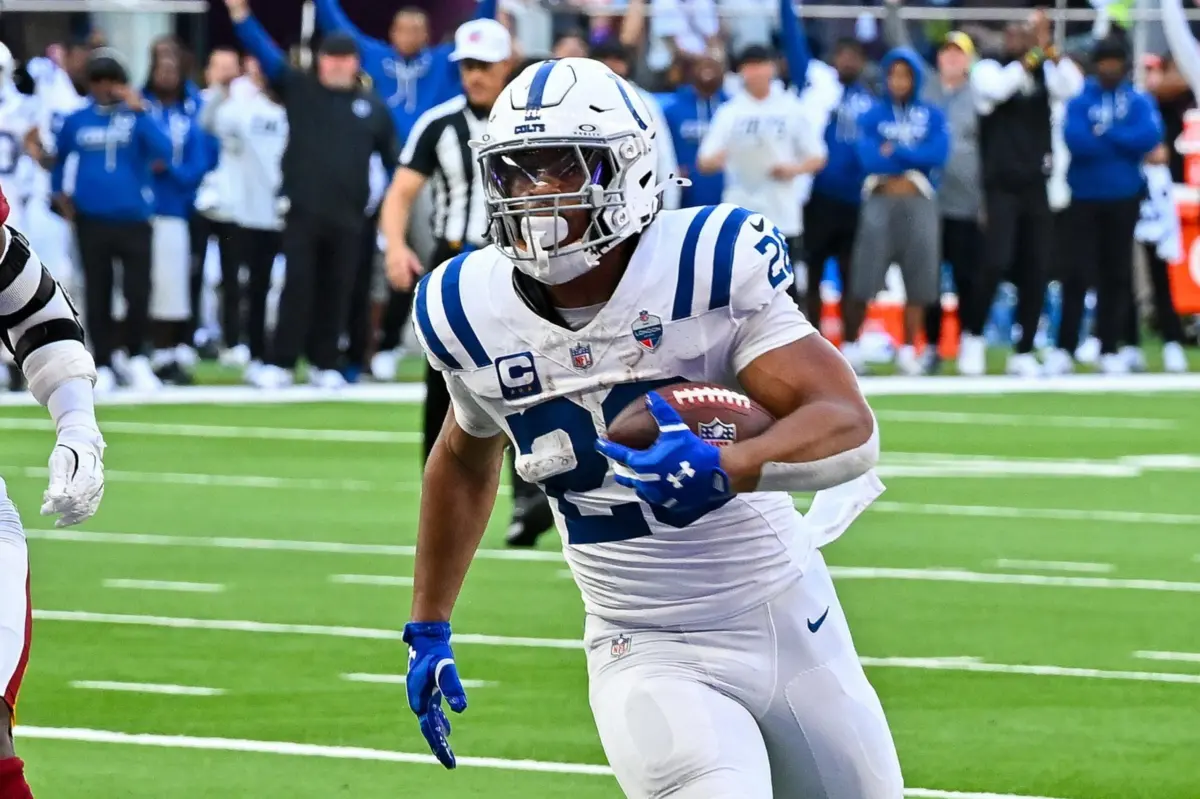
Jonathan Taylor stands out as the ultimate prize on the mid-season market. When evaluating the current landscape of the NFL, a select few franchises naturally emerge as logical landing spots for a dynamic running back of his caliber: the Minnesota Vikings, who are in desperate need of offensive firepower; the Seahawks, who could look to further bolster a running attack despite their earlier trade with Indianapolis; and the New England Patriots, who urgently need to alleviate some of the immense pressure resting squarely on rookie quarterback Drake Maye to carry the bulk of the offense.
The Minnesota Vikings currently sit in an enviable position at 6-1, holding down the top spot in a competitive NFC North. Despite their impressive record, however, they often look like a team lacking the sustained horsepower required to maintain a deep championship run. Right now might represent the absolute peak window for a deal with Minnesota, supplying them with the offensive ammunition they desperately need to keep pace with powerhouse contenders, such as an upcoming clash against the Buffalo Bills on Monday Night Football.
If the Colts choose to wait out the weekend, they run a massive risk. Should Minnesota stumble against the Bills, fall to 6-2, surrender first place in the division, and begin re-evaluating their immediate trajectory, the calculus changes entirely. While a single regular-season defeat certainly wouldn’t knock the Vikings out of playoff contention, it could easily introduce internal hesitation regarding whether sacrificing premium draft picks for Taylor is truly the missing piece to get them over the hump. Should that hesitation set in, the robust trade return the Colts are banking on could evaporate overnight.
In Seattle, front office decision-makers will similarly be weighing whether the juice is ultimately worth the squeeze. The Seahawks have already engaged in business with Indianapolis to reinforce their offensive line, meaning that double-dipping and surrendering more valuable assets for a running back might simply be too rich for their blood. While Seattle should theoretically handle the Arizona Cardinals on Sunday to improve their record to 5-4, the broader outlook in the NFC complicates matters. The conference is shaping up in a manner where both Wild Card spots look destined to be claimed by powerhouse teams out of the NFC North, leaving a narrow margin for error.
Within the NFC West, the San Francisco 49ers are currently positioned comfortably at the summit, with the Los Angeles Rams applying steady pressure. It becomes a remarkably difficult sell to let this weekend’s games play out, watch the 49ers, Rams, and Seahawks all potentially secure victories, and then attempt to justify trading multiple premium draft selections just to chase a dominant 7-1 team in San Francisco.
The New England Patriots find themselves sitting in a remarkably similar holding pattern to the Seahawks. It remains genuinely unclear whether New England possesses the roster depth and overall potency to make a serious, deep postseason push this season. With a daunting matchup against the Green Bay Packers looming on Sunday, the outcome of that contest could easily dictate whether the Patriots slip to 5-4. Given the fierce, congested competition for AFC Wild Card berths, New England’s front office could easily exercise caution, look at the bigger picture, and decide that parting with valuable draft picks right before the deadline simply does not make financial or strategic sense.
If current reports are accurate—and the sudden silence emanating from Indianapolis certainly corroborates the idea—the Colts are firmly entrenched in a waiting game. The underlying danger is that the longer they delay pulling the trigger, the higher the probability becomes that these player-needy franchises will pivot toward alternative options or fundamentally reassess the realistic ceiling of their respective seasons.
A legitimate nightmare scenario for Indianapolis would involve waiting too long, watching the most desperate prospective buyers quietly bow out of discussions, and ultimately being forced into a corner. In that grim outcome, the Colts might have to trade Taylor to a savvy operator like the San Francisco 49ers—a front office wily enough to submit a drastically reduced trade package, knowing full well that Indianapolis is openly operating in a desperate sell mode.
To a lesser degree, these exact same market dynamics and timeline pressures are playing out around Josh Downs and Grover Stewart as well. Fundamentally, a stark gulf is rapidly emerging across the NFL landscape this season, separating the elite tier of Super Bowl contenders from the rest of the league that are already casting a pragmatic eye toward the future and planning for 2027.
This environment does not favor sellers looking for a division leader operating under the delusion that they are a single piece away from a championship, nor does it yield teams desperate enough to execute a truly reckless, overvalued deal of the kind the Colts pulled off last season with their aggressive trade for Sauce Gardner. Front offices across the league generally operate on a spectrum of promise and imagination. The more live games you allow to unfold before finalizing a blockbuster transaction, the more concrete clarity teams gain regarding their true competitive standing.
This moment represents a classic "bird in the hand" dilemma for the Indianapolis front office. By choosing to hold firm and ride out the weekend schedule instead of locking in deals immediately, the Colts are playing a dangerous game that they may ultimately live to regret.