
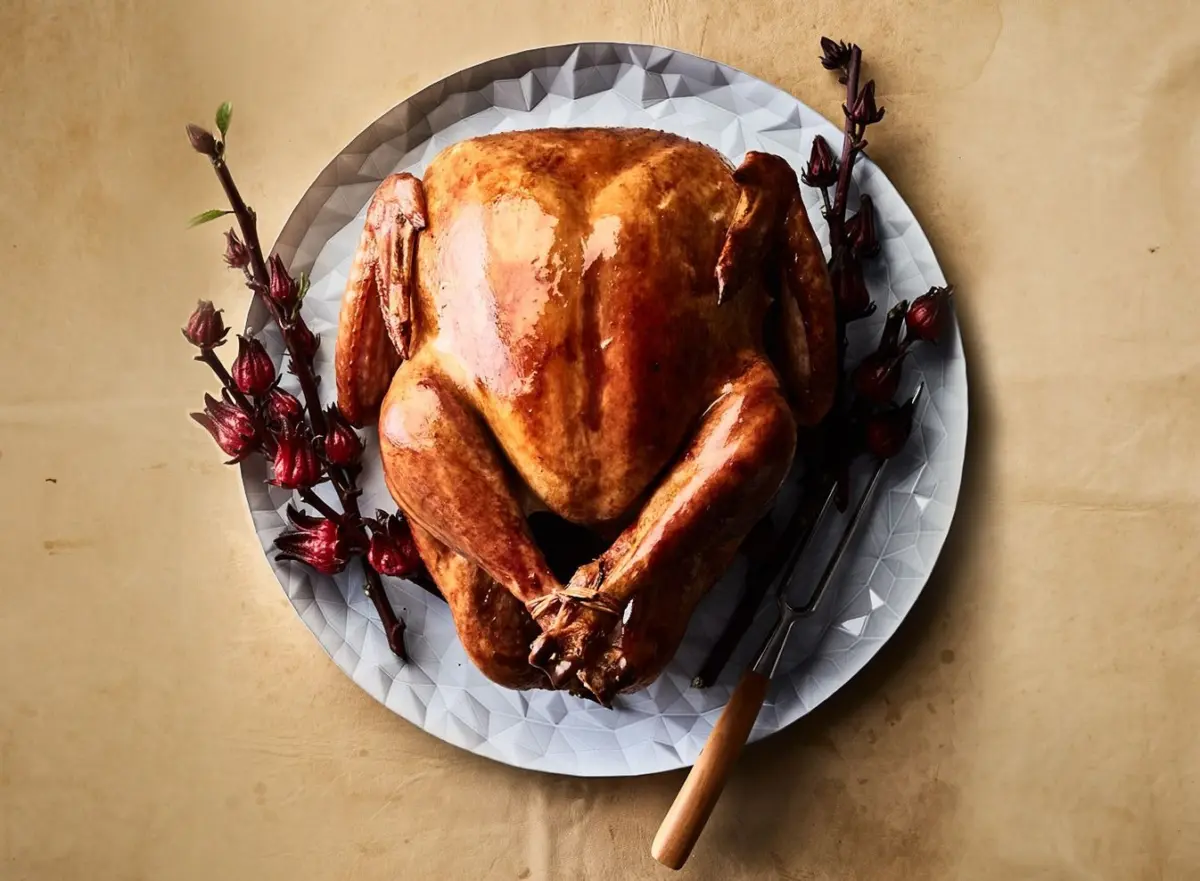
The annual logistical challenge of preparing a Thanksgiving feast often begins long before the turkey ever touches the oven. For home cooks across the country, fitting a massive, multi-pound bird into a standard household refrigerator alongside pies, side dishes, beverages, and ingredients is an ongoing holiday puzzle. However, culinary television personality and author Alton Brown has long championed a clever workaround that solves both the refrigerator space crisis and the perennial problem of dry holiday poultry: using an insulated beverage cooler to wet-brine the bird.
By shifting the brining process out of the kitchen appliance and into a portable cooler, hosts can reclaim precious cold storage while ensuring their holiday centerpiece is deeply seasoned and remarkably moist. The technique relies on a straightforward, classic wet brine composed of kosher salt, sugar, and vegetable broth. This flavorful mixture works its culinary magic during a designated soaking period, allowing the proteins within the turkey to absorb moisture that is locked in during the subsequent roasting process.
While the prospect of utilizing a cooler for food preparation might raise eyebrows among novice hosts, food safety experts and experienced home cooks note that it is an entirely viable method, provided strict temperature controls are maintained. The core requirement is keeping the brine and the bird at or below 40 degrees Fahrenheit the entire time it is submerged. To achieve this, cooks must use a thoroughly cleaned, food-safe insulated cooler and monitor the liquid continuously with a reliable probe thermometer. Sealed ice packs can be added to the mixture as needed to maintain a safe holding temperature, effectively mimicking the climate of a standard refrigerator without consuming its valuable interior shelving.
Mastering the Roast and Ditching the Basting Routine
Once the bird has completed its monitored soak in the cooler, the transition from prep work to cooking requires precision and high heat. According to the method popularized by Brown, the first step after removing the turkey from the brine is to pat the skin thoroughly dry. Eliminating surface moisture is a critical factor in achieving the coveted golden and ultra-crisp exterior that defines a successfully roasted holiday bird.
Rather than starting at a moderate temperature, the turkey goes straight into a blazing-hot 500-degree Fahrenheit oven. This intense burst of heat kickstarts the browning process, rapidly rendering the skin crisp. After roasting at this elevated temperature for 30 to 40 minutes, the process shifts phases to ensure the interior meat cooks evenly without burning the delicate skin. The cook must shield the breast portion with aluminum foil to prevent it from overcooking, then lower the oven temperature to 350 degrees Fahrenheit to let the bird finish roasting until it reaches the proper internal temperature.
This streamlined approach offers an additional, highly appealing benefit for busy holiday hosts: it eliminates the need for constant supervision. Traditional roasting often demands frequent attention, including the tedious task of opening the oven door repeatedly to baste the bird with pan juices. Under this method, basting is entirely unnecessary. The wet brine has already done the heavy lifting by pre-seasoning the meat and infusing it with moisture, leaving the cook free to step away from the oven and focus attention elsewhere in the kitchen. With no hovering required, hosts find themselves with ample time to dedicate to classic holiday accompaniments, ranging from sweet potato casseroles and traditional apple pies to the myriad other dishes that make up a complete Thanksgiving feast.
Alternatives and Timing Considerations for Every Kitchen
For cooks who prefer to avoid the logistics of a wet brine altogether, alternative techniques offer equally impressive results. A dry-rubbed roast turkey provides a simplified path to crispy skin and seasoned meat without the need for liquid immersion. Meanwhile, for those working with strict time constraints, breaking down a whole turkey into individual parts cuts cooking times significantly, allowing a complete poultry dinner to be prepared and roasted in under two hours.
Timing remains a critical element for those who choose the traditional wet-brine route. For a standard 14- to 18-pound turkey, culinary guidelines recommend a soaking window of eight to 12 hours. This duration provides enough time for the salt to penetrate the muscle fibers, seasoning the meat throughout and maximizing moisture retention. Although it might be tempting to extend the soak to 24 hours in pursuit of deeper flavor, doing so can over-salt the meat, ruining the balance of the dish. Sticking strictly to the recommended time frame prevents the turkey from becoming overly dense or excessively salty.
Another crucial factor for home cooks to verify before beginning is the labeling on the turkey itself. Many supermarket-grade turkeys are sold pre-brined or injected with a saline solution, frequently marketed on packaging under terms such as "self-basting," "enhanced," or "contains a solution." Subjecting a pre-enhanced turkey to an additional wet brine will result in an unpalatably salty final product. Checking the packaging ahead of time and selecting an entirely unbrined bird ensures that the recipe yields the intended savory flavor profile.
Finally, utilizing a brined turkey impacts the preparation of subsequent dishes, most notably the holiday gravy. Because the brining process thoroughly seasons the meat, the resulting pan drippings can carry a high concentration of salt. Culinary experts advise tasting the drippings before incorporating any extra seasonings, and recommending the use of low-sodium or unsalted broth as a base for greater control over the final flavor. Should the finished gravy turn out overly salty, cooks can balance the profile by whisking in a few pats of unsalted butter or thinning the mixture with additional salt-free broth, ensuring a harmonious and flavorful addition to the holiday table.