
For anyone who has ever experienced a surge of irritation at the sudden, premature arrival of pumpkin spice displays—or, worse yet, full Halloween decorations—during an 85-degree week in September, there is comfort to be found. If you understand that there are what will feel like infinite months left to spend shivering in heavy coats and longing for hot stew, and that there is no logical reason to rush into them, you are far from alone.
It is a familiar late-summer frustration: staring down digital advertisements for heavy wool coats and autumnal comforts when you are still very much living in the heat of late summer, desperately trying to hold onto the season. When confronted with these premature nods to winter, the immediate impulse is often to grit your teeth and remind yourself—or your screen—that there is still a full week or more of summer left.

Yet, against the rising tide of autumn marketing, there remains a stubborn commitment to embracing summer cooking for precisely as long as summer produce lasts. Tomatoes, in particular, anchor this seasonal defiance. They are missed far too much throughout the long, cold winter months to be abruptly thrown out of the kitchen the absolute second the first apple arrives on grocery store shelves.
This culinary resistance is entirely about the ingredients, of course, and has nothing whatsoever to do with any complicated personal feelings regarding the changing household dynamics of children growing older—such as one child starting middle school and another entering their senior year of high school. The dwindling summer produce stands purely on its own merits.

The Inspiration Behind the Dish
The concept for a new late-summer dish often traces its lineage back to past culinary favorites. Consider, for instance, classic rice-stuffed tomatoes, where the magic lies in how short-grain rice absorbs the clear-noted, pure tomato sauce as it bakes. That specific flavor profile—clean, bright, and intensely tomato-forward—serves as a constant culinary reference point.
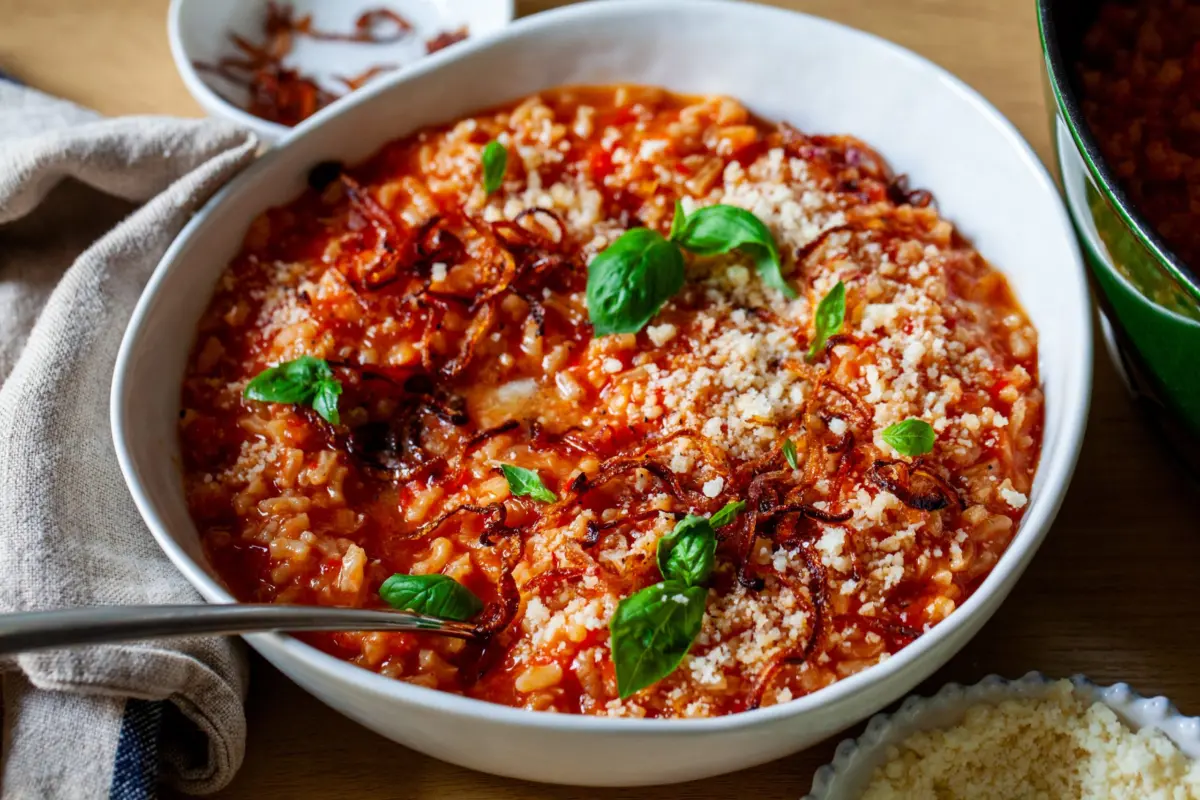
That persistent craving is what ultimately leads to a streamlined, standalone recipe designed to capture that exact essence without the fuss of stuffing whole vegetables. To create a tomato risotto that is as simple and uncluttered as possible, the preparation relies on grated tomato pulp, a modest base of onion and garlic, and a thoughtful glug of wine. Because the goal is to capture the pure, unadulterated taste of fresh summer tomatoes, traditional vegetable or chicken broth is bypassed entirely in favor of plain water.

This approach leans into a broader culinary philosophy regarding risotto: almost everything we have traditionally been taught as mandatory about making the dish turns out not to be strictly necessary. This includes not only the standard reliance on heavy broths, but also the exhausting requirement for constant, meditative stirring, as well as the addition of heaps of butter and cheese at every turn.
Rethinking Risotto Tradition
Traditional risotto methods demand intense physical labor and strict adherence to sequential steps, but modern adaptations prove that efficiency does not have to come at the expense of flavor. By utilizing a simplified oven method, the cooking process shifts from the stovetop to a controlled, even environment inside the oven, freeing the cook from the stove while still yielding a rich, creamy final product.

The only real embellishment needed for this streamlined dish is a contrasting texture to cut through the rich creaminess of the rice. While many might reach for obvious savory additions like pan-crisped prosciutto, salami, or bacon, a more nuanced option exists in thinly sliced red onions that are "frizzled" early in the cooking process.
These onions are handled in two stages: half are folded directly into the risotto as it bakes, while the remaining half are saved to be sprinkled generously on top at the very end. The technique imparts a remarkable fragrance, unexpected depth, and a gentle kiss of savory complexity to a dish that remains firmly rooted in late-summer flavors.

The final presentation can be customized to fit various dietary preferences. The dish can be finished with a scattering of torn fresh basil leaves, grated parmesan cheese, and a small knob of butter or a final drizzle of olive oil. Alternatively, it can be kept entirely plant-based and vegan by relying solely on olive oil, fresh basil, and the sweet, crispy frizzled onions. With so much natural flavor packed into the base ingredients, nothing essential is missed.