
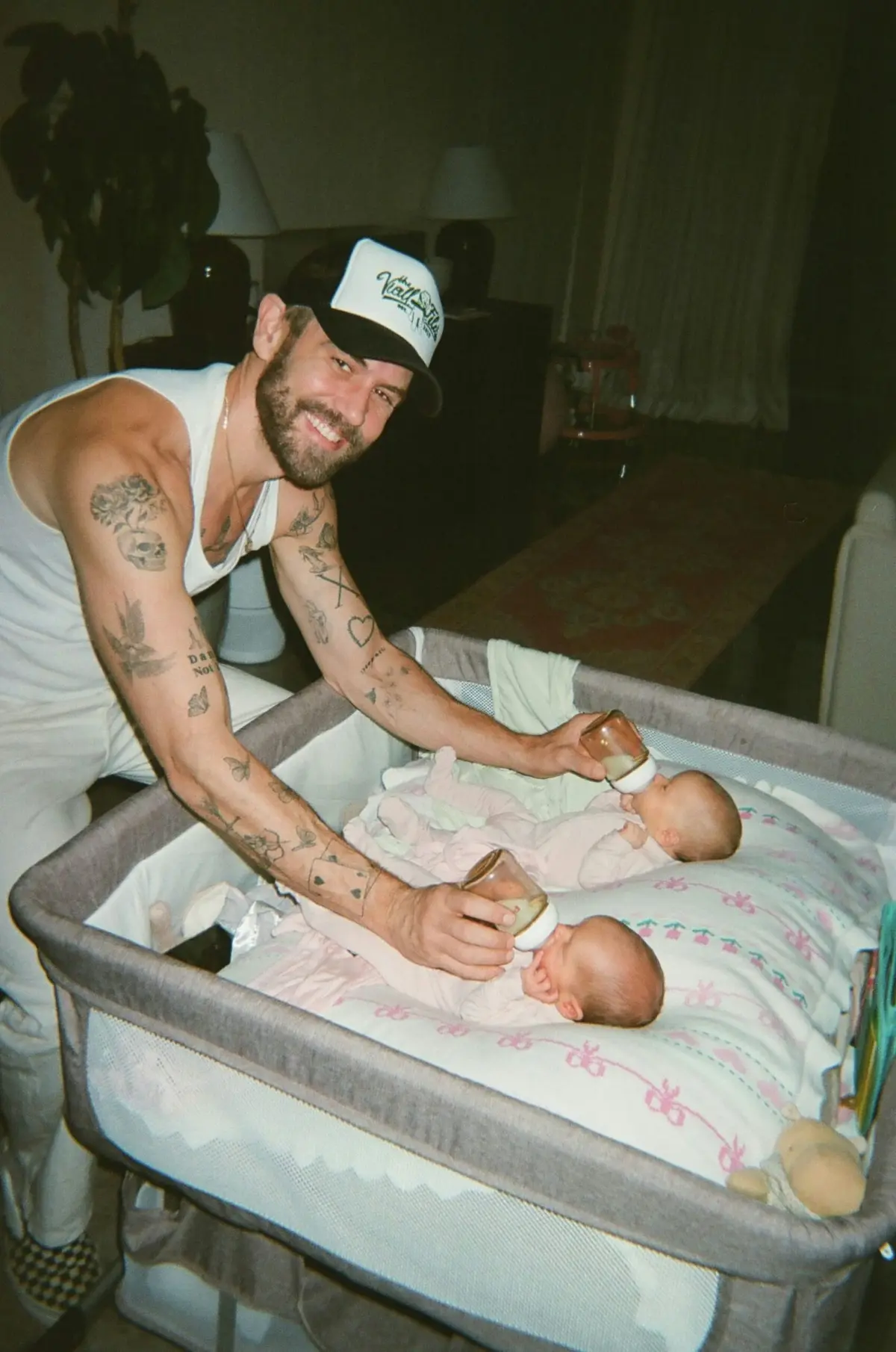
For more than a decade, Nick Viall has been a ubiquitous presence on American reality television. First stepping into the public eye 12 years ago on The Bachelorette, Viall carved out a remarkably durable career in the entertainment industry, transitioning through various high-profile franchises including Bachelor in Paradise, Dancing With the Stars, and The Masked Singer. Today, his media footprint remains vast; alongside his wife, Natalie Joy Viall, he co-hosts Age of Attraction and steers The Viall Files, one of Apple’s most popular relationship podcasts, which broadcasts three to four times a week.
Yet, beneath the polished media persona and the demands of a relentless broadcasting schedule lies a deeply domestic reality that many viewers might not fully appreciate. Viall, a native of Wisconsin and the second oldest in a sprawling family of 11 siblings, is now navigating the intensive world of modern fatherhood. Following the birth of their two-year-old daughter, River, the couple expanded their family significantly this past July with the arrival of twin infants.
Reflecting on the whirlwind transition to becoming a father of three children under the age of three, Viall offers a candid look at the realities of parenting multiples, balancing intense career demands, and drawing inspiration from his own blue-collar upbringing in the Midwest.
Embracing the Chaos of Twin Parenthood
When expecting twins, prospective parents are often inundated with unsolicited warnings. Viall admits that he and his wife were no exceptions to this phenomenon, frequently bracing themselves for the worst based on feedback from friends and acquaintances.
"When you tell people you’re expecting… people are more prone to just kind of, I call doomsday kind of advice," Viall explains, recalling the apprehension that preceded the twins’ birth. However, the reality of day-to-day life with newborns proved vastly different from the alarming narratives painted by well-meaning peers.
"And then it happens, and you’re so happy and everything feels like a blessing," he notes. Rather than a descent into chaos, Viall jokingly compares the experience to receiving a retail promotion. "For the most part, it just feels like you got a BOGO, like a buy one, get one free. And it’s like, great."
Acknowledging the physical toll of the pregnancy on his wife, Viall is quick to highlight the disparity in the burdens carried by mothers versus fathers during such a monumental life change. While newborn life brings predictable challenges—such as interrupted sleep schedules, routine feedings, and the occasional flurry of simultaneous crying spells—he views the early potato-like stage of infancy with a sense of humor and grounded perspective. Ultimately, looking at their family of five, Viall marvels at the efficiency of the journey: "We already have three kids, and it only took two pregnancies."
A Hyper-Involved Approach Rooted in Childhood Dynamics
Viall’s approach to parenting is decidedly hands-on, a philosophy he attributes directly to the teamwork he observed growing up in a large, lower-middle-class family in Wisconsin. With ten brothers and sisters and parents who balanced traditional blue-collar responsibilities, Viall learned early on that household maintenance and child-rearing required a collective effort.
"My mom stayed home and raised the kids, my dad worked, but that wasn’t based on some kind of a decision they made. It was more like that was the situation they had," Viall recalls. Despite traditional roles, his parents operated as a cohesive unit. His father would frequently cook dinner, while his mother might mow the lawn—an all-hands-on-deck mentality that Viall and Natalie have seamlessly integrated into their own relationship.
This philosophy manifests in a hyper-involved, shared domestic routine where traditional boundaries of "his chores" versus "her chores" are largely nonexistent. The couple divides and conquers based on mutual preferences and logistical needs—joking that while Viall is practically allergic to laundry, he happily takes on the dishes, leaving the reverse for his wife. From managing the household before River’s birth to Natalie stepping in to work alongside him on their media projects, the pair approaches parenting as a collaborative partnership every step of the way.
Reclaiming the Past for the Next Generation
When considering what values and experiences from his own childhood he hopes to pass down to his children, Viall’s mind immediately turns to a very specific geographical landmark. A couple of years ago, he achieved a monumental personal milestone by buying back his grandfather’s lake house in Wisconsin—a property that had been sold following his grandfather’s passing when Viall was in the fourth grade.
Describing the loss as a form of childhood trauma that haunted him with recurring dreams well into adulthood, Viall expresses profound gratitude for the opportunity to reclaim that special place. He envisions the lake house as a cornerstone for his children’s upbringing, providing them with the kind of unstructured outdoor freedom that defined his own youth.
Drawing parallels to modern concerns about screen time and digital dependency—echoing themes from Jonathan Haidt’s book The Anxious Generation—Viall hopes his children will experience a renaissance of outdoor play, imagination, and nature. "I’m really hoping my kids get to embrace the world and get outside and play make-believe with their friends and things like that," he says, contrasting contemporary anxieties with his own fond memories of riding bikes and exploring the outdoors in rural Wisconsin.
Balancing Postpartum Pressures and Partnership
Navigating the postpartum period requires intentional emotional support, a role Viall takes seriously in his marriage. Recognizing the immense physical and psychological pressures that new mothers place upon themselves, he strives to act as a steadfast pillar of encouragement for Natalie.
"There’s so much burden and pressure on moms postpartum. I like to think that my job is just to be a cheerleader," he explains. When he senses his wife becoming overwhelmed or stressed, his immediate reaction is to encourage her to rest and take a break, offering constant reassurance that she is performing exceptionally well in her maternal role.
Of course, domestic life is not without its minor frictions. When asked what his wife might find annoying about him, Viall laughs off a laundry list of domestic shortcomings. "I don’t know how to close a cupboard. I don’t put things away. I leave a trail of destruction wherever I go. I’m messier than our two-year-old," he admits.
He also touches upon his recent return to video gaming, a pastime that he approaches with strict moderation to ensure it never interferes with his responsibilities as a partner and father. According to Viall, the secret for any parent wishing to maintain a hobby is simple: ensure it never supersedes domestic teamwork and active participation in family life.
Fatherhood as the Ultimate North Star
Amidst the accolades, professional achievements, and public visibility that have defined his adult life, Viall views parenthood as a profound grounding force that has fundamentally shifted his perspective. While individual career accomplishments and awards offer temporary satisfaction, he describes raising children as an incomparable source of clarity and purpose.
"Once you have a child, I describe it as the easiest North Star," Viall reflects. "Fatherhood, parenthood is just… you always know why you’re doing something. You always know what the purpose is."
Even during grueling 2:00 AM wake-up calls, the intrinsic purpose behind the exhaustion provides a deep sense of accomplishment. Furthermore, fatherhood has acted as a calming antidote to his natural tendencies toward anxiety and high-stress professional environments.
To ensure he remains fully grounded when transitioning from the professional sphere back to his family, Viall and his wife have instituted a deliberate household best practice: when he walks through the door, work is immediately set aside. Even if professional obligations remain unfinished, Viall makes it a rule to step away from his phone and give River and Natalie his undivided attention upon arrival. It is a small ritual, but one that underscores the intentionality he brings to his role as a father—a role he embraces with both humility and enthusiasm as he guides his expanding young family into the future.