
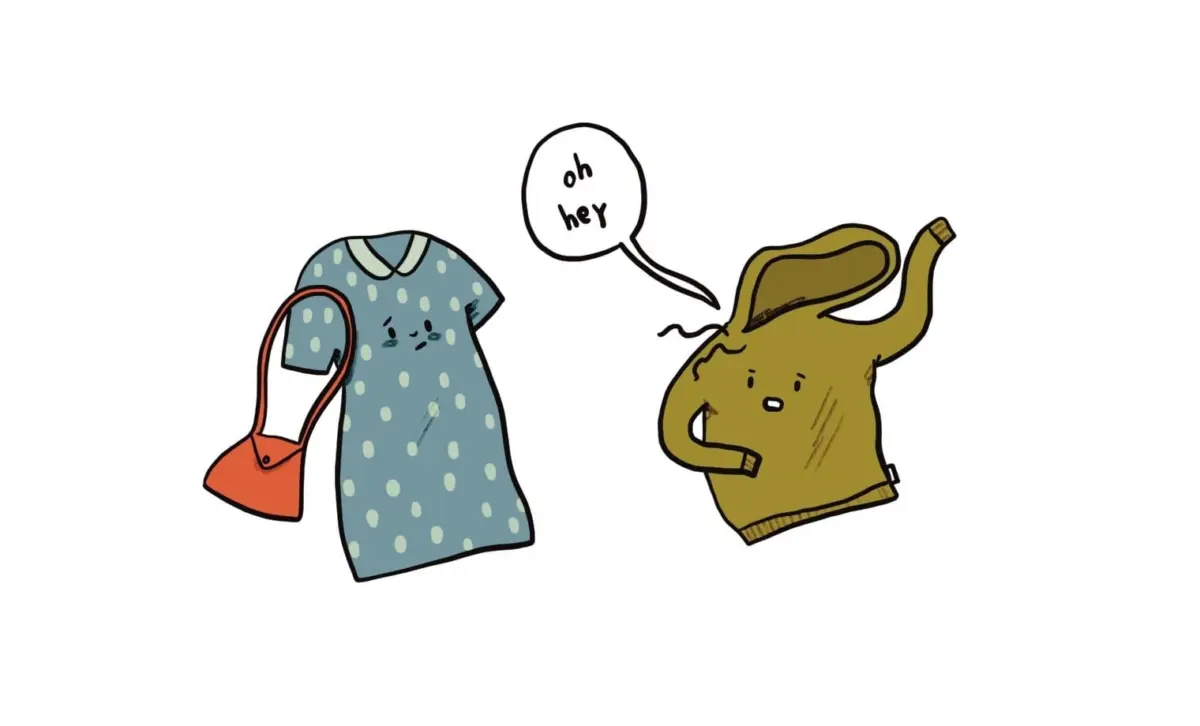
The featured insight comes from Laura Fenton, a writer and editor who has spent more than two decades navigating the spatial constraints of small New York City apartments. Drawing from her extensive experience living in compact urban homes—where efficient organization is not merely a preference but a daily necessity—Fenton shared a piece of advice she received years ago from a professional organizer. The concept has stuck with her through countless seasonal closet transitions and remains her ultimate litmus test for garment retention.
"A professional organizer once gave me this advice, and I’ve never forgotten it: When you’re uncertain about a dress, shirt, or pair of jeans, ask yourself if you would want to run into your ex while wearing it," Fenton explained. "As soon as I heard that, I knew exactly which pieces I was ready to give away, like a denim dress that always makes me feel frumpy."
This relational stress-test cuts straight to the emotional core of closet clutter. For many people, the difficulty of parting with clothing items rarely stems from their practical utility; rather, it is anchored in aspirations, guilt over sunk financial costs, or lingering hesitation about identity and self-presentation. When individuals hoard items that evoke negative self-perceptions—such as garments that induce feelings of being frumpy, uncomfortable, or misaligned with their current lifestyle—they inadvertently create a daily psychological friction every time they open their wardrobe doors. By introducing the hypothetical encounter with an ex-partner, the professional organizer’s trick forces an immediate external perspective, stripping away sentimental justifications and highlighting how a piece of clothing truly makes a person feel in the present moment.
The release of this particular tip has already sparked a wider conversation among readers and lifestyle commentators regarding the broader psychology of wardrobe curation. The Cup of Jo column frequently explores the intersection of personal style, minimalist living, and domestic contentment. Previous explorations on the platform have delved into the lessons learned from capsule wardrobes, examining how reducing overall clothing volume can streamline daily routines and foster a deeper appreciation for versatile, high-quality pieces.
As urban living spaces continue to command premium square footage and the modern lifestyle increasingly values intentional consumption, the strategies people use to manage their personal belongings have evolved beyond simple tidiness into exercises in mental clarity. The lively engagement surrounding the column—evidenced by more than a hundred reader comments pouring in shortly after publication—demonstrates that wardrobe editing remains a universally relatable and occasionally emotional undertaking.
Readers of the platform have long utilized the comments section to exchange their own idiosyncratic rules for closet organization, ranging from the classic hanger-reversal method to seasonal rotation systems. Fenton’s contribution adds a distinctly behavioral angle to the mix, emphasizing that physical decluttering often requires an emotional breakthrough first. As the discussion continues to unfold online, individuals are left to evaluate their own clothing collections through this newly minted filter, pondering whether their current wardrobe selections would pass the ultimate test of unexpected encounters.