
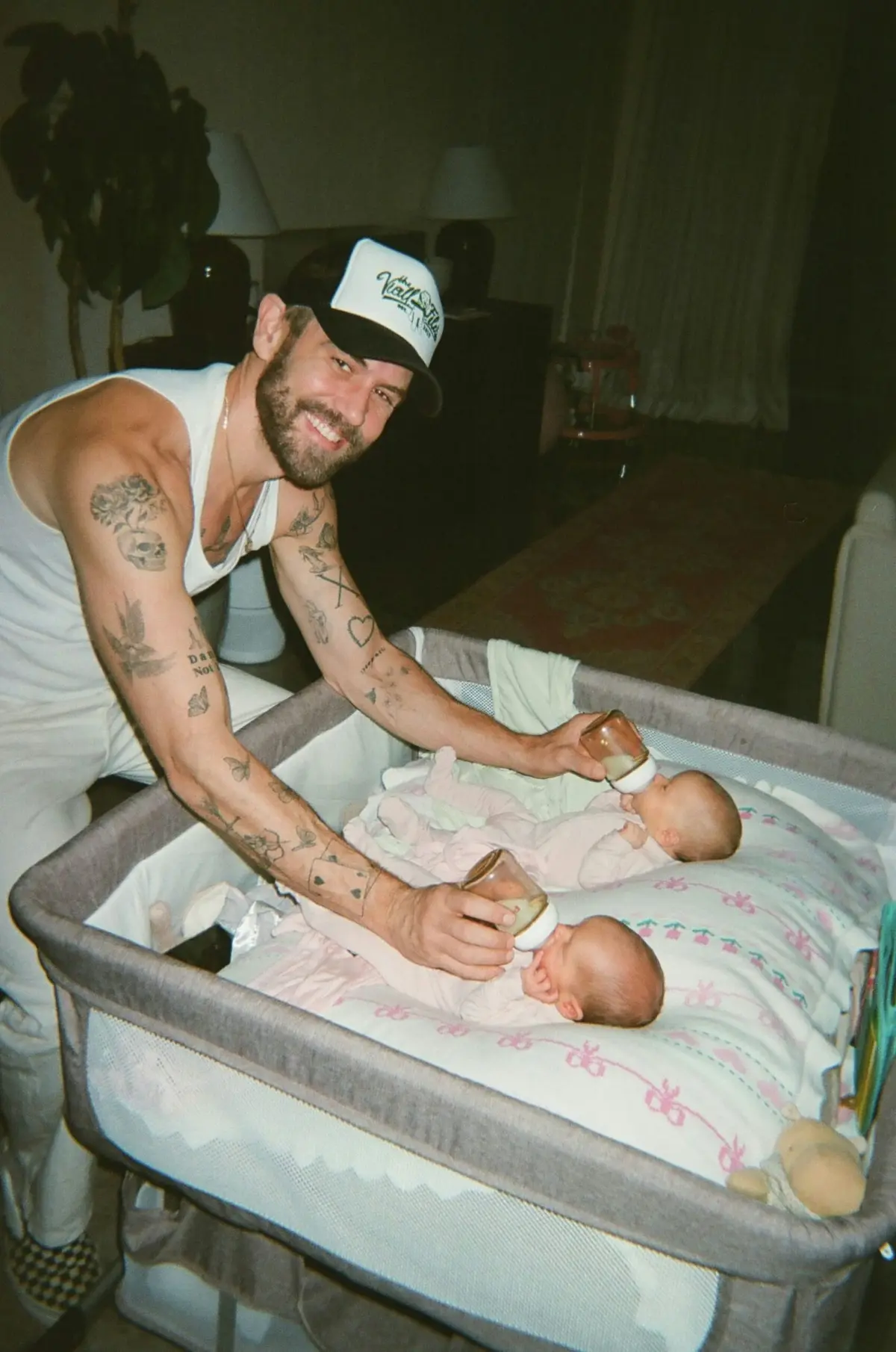
Nick Viall first captured public attention on The Bachelorette a dozen years ago, launching a prolific reality television career that eventually spanned Bachelor in Paradise, Dancing With the Stars, The Masked Singer, and Age of Attraction, a dating series he currently co-hosts with his wife, Natalie Joy Viall. Beyond his television appearances, Viall is widely recognized as a prominent relationship expert, doling out advice alongside his wife on The Viall Files, one of Apple’s most popular relationship podcasts, which releases new episodes three to four times a week.
Yet, beneath his well-known media persona and busy professional schedule, a very different reality defines his day-to-day life. Viall hails from Wisconsin, where he grew up as the second oldest of 11 siblings in a blue-collar family. Today, he is a father of three. In addition to a two-year-old daughter named River, the couple welcomed twin infants this past July.
Navigating life as a father of three young children—including newborns—comes with its unique set of hurdles, but Viall approaches the experience with characteristic optimism. Reflecting on the unsolicited warnings often directed at expecting parents, he notes that people are frequently quick to offer what he describes as "doomsday advice." However, once the babies arrive, the reality proves vastly different. Viall views the experience as a profound blessing, even joking that having twins feels akin to a buy-one-get-one-free deal.
Adjusting to Life as a Twin Dad
When discussing the realities of parenting newborns alongside a toddler, Viall maintains a grounded perspective. While acknowledging that every developmental stage presents its own challenges, he describes early infancy with gentle humor, noting that newborns initially resemble "little potatoes."
The routine demands of feeding and waking multiple times throughout the night can certainly induce fatigue, and Viall admits that moments of overwhelming stress do occur. He points to familiar scenarios where one infant begins to cry, only for the cycle to repeat just as the first is soothed. Despite these fleeting moments of chaos, he emphasizes that the anxiety surrounding a twin pregnancy often far exceeds the reality of day-to-day parenting.
For Viall, the emotional reward outweighs the physical exhaustion. He credits his wife for bearing the heavier physical burden during the twin pregnancy, noting that carrying two children simultaneously requires immense resilience. Yet, looking at their family dynamic now, he marvels at the outcome, observing that they successfully expanded their family to three children across just two pregnancies.
A Hands-On Approach and Childhood Lessons
When asked about his parenting style, Viall describes himself as deeply involved and hands-on. He and his wife established a dynamic of shared household responsibilities early in their relationship, long before they became parents. This egalitarian approach is something Viall traces directly back to his own upbringing.
Growing up in a lower-middle-class household with ten brothers and sisters, Viall witnessed his parents working together as an effective team. While his mother stayed home to raise the children and his father worked outside the home, the division of labor was practical rather than rigidly traditional. His father would often cook dinner, while his mother might mow the lawn—an all-hands-on-deck mentality that Viall and Natalie have naturally integrated into their own lives.
This partnership extends seamlessly into their professional and personal routines, especially since Natalie began working alongside him on his show. Rather than assigning rigid roles, the couple divides tasks based on preference and necessity. Viall humorously admits to being "allergic" to laundry while handling the dishes, whereas his wife prefers the reverse. Ultimately, they approach parenting and household management through a collaborative lens, ensuring that neither feels overburdened.
Preserving Childhood Nostalgia in a Fast-Changing World
Reflecting on his own childhood in Wisconsin, Viall feels a deep sense of gratitude for being able to recreate certain aspects of his youth for his own children. A couple of years ago, he successfully purchased his grandfather’s former lake house, a property that had served as his personal sanctuary before it was sold following his grandfather’s passing when Viall was in the fourth grade.
Describing the sale as a devastating childhood loss that haunted him with recurring dreams well into adulthood, Viall expresses immense joy at having bought the property back. He envisions it as a foundational space where his own children can grow up, experience nature, and build monumental family memories.
Beyond preserving family history, Viall worries about the rapid pace of the modern world and the pervasive influence of technology on youth. Drawing parallels to contemporary discussions surrounding childhood autonomy and digital distraction, he fondly recalls an upbringing defined by riding bicycles and engaging in imaginative outdoor play with neighborhood friends. He hopes to foster a similar environment for his children, encouraging them to step away from screens, embrace the outdoors, and experience the simple freedoms that defined earlier generations.
Partnership, Support, and Finding Perspective
Balancing demanding careers with the intensive demands of raising three young children requires mutual appreciation and understanding. When considering what his wife values most about him, Viall hopes it is his role as her steadfast rock. Recognizing the immense postpartum pressure and emotional burdens placed on mothers, he views his primary responsibility as acting as a supportive cheerleader. Whenever he senses that his wife is feeling overwhelmed, he encourages her to take a break and rest, striving to remain consistently available and reassuring.
Conversely, Viall readily acknowledges his own shortcomings, joking that his wife’s list of grievances could be quite long. He admits to a perpetual inability to close cupboards, a tendency to leave a trail of disorder wherever he goes, and jokingly notes that he is often messier than their two-year-old. Additionally, his recent return to playing video games occasionally draws gentle disapproval, though Natalie generously allows him brief moments to decompress. Viall emphasizes that moderation is key, noting that enjoying a video game should never interfere with responsibilities as a partner and father.
For Viall, fatherhood provides an ultimate sense of purpose, serving as an unambiguous North Star amid the complexities of modern life. While individual career accomplishments and accolades bring temporary satisfaction, parenting offers a profound, grounding motivation that instantly silences professional anxieties. He credits a daily practice initiated by his wife—ensuring he steps away from his phone and gives River his undivided attention the moment he walks through the door—with helping him remain fully present for his family. Ultimately, Viall finds immense joy and fulfillment in the daily rhythms of raising his children, viewing fatherhood as a deeply rewarding journey.