
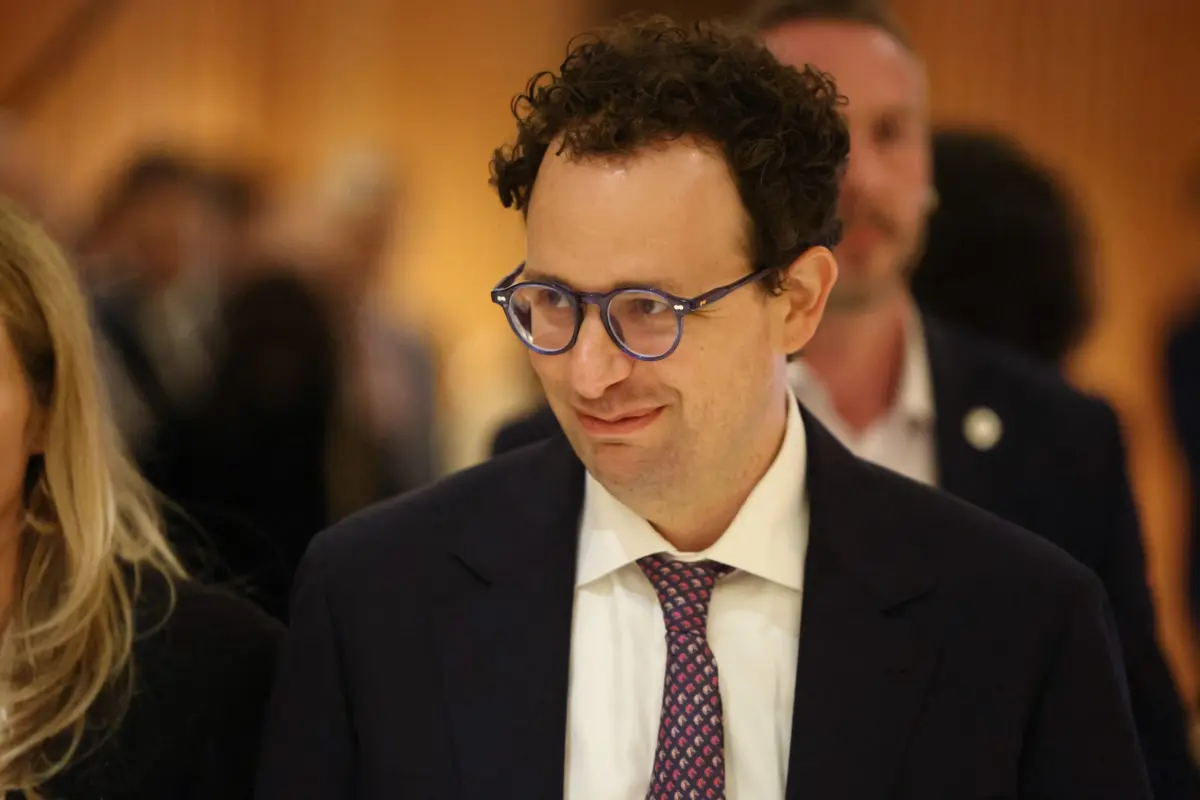
It has been a truly remarkable weekend for Dario Amodei. The chief executive officer and co-founder of artificial intelligence pioneer Anthropic has seemingly been everywhere at once, capturing the public consciousness through a rare mix of mainstream pop culture and high-stakes political engagement. For a leader who typically operates within the dense, technical domains of neural networks, safety alignment, and computational scaling, the contrast between his weekend appearances highlights just how central artificial intelligence has become to the broader cultural and political conversation.
The whirlwind weekend began on Saturday night when Amodei found himself unexpectedly thrust into the spotlight of late-night television comedy. To the surprise of viewers tuning into the season premiere of Saturday Night Live, the prominent tech executive was lampooned in a satirical sketch, cementing his status as a recognizable public figure far beyond Silicon Valley. Yet, if appearing on Saturday Night Live represented the surreal cultural apex of his weekend, the professional reality that followed was equally weighty.
Later that same weekend, Amodei was scheduled to sit down for a high-profile dinner with President Donald Trump at the White House. The upcoming one-on-one meeting represents a pivotal moment for both leaders, bringing together the head of one of the world’s most influential frontier AI labs and the leader of the executive branch at a time when artificial intelligence policy, national security, and regulatory oversight are under intense public scrutiny.
News of the scheduled White House dinner was first broken by Axios, a report that was subsequently confirmed by TechCrunch through a source familiar with Amodei’s itinerary. While high-level meetings between technology executives and the commander-in-chief are not entirely unprecedented in the modern digital economy, the timing of this particular summit is especially sensitive given the recent policy disagreements and public friction that have defined the relationship between Anthropic and the current administration.
The upcoming dinner marks the first official one-on-one meeting between President Trump and Amodei. The encounter takes place against a backdrop of differing philosophies regarding how artificial intelligence should be governed, developed, and integrated into society. In recent weeks, both men have staked out distinct positions on the future trajectory of the technology, finding themselves on opposite sides of a fierce debate over AI safety, pacing, and public perception.
Earlier in the month, Amodei made headlines by outlining a comprehensive plan designed to pace the development of frontier artificial intelligence models. His proposal argued for a more measured, cautious approach to scaling intelligence, emphasizing the need for rigorous safety guardrails and deliberate evaluation periods before deploying increasingly powerful systems. This stance on slowing down or carefully managing the velocity of AI development is rooted in Anthropic’s corporate philosophy, which places heavy emphasis on AI safety and constitutional alignment.

Conversely, President Trump has taken a markedly different approach to the discourse surrounding the technology. The administration has frequently pushed back against mounting anxieties regarding advanced systems, with Trump insisting—without evidence—that the broader public backlash and panic surrounding AI risks amount to a Democratic hoax. Furthermore, the administration has floated novel proposals regarding the nomenclature and branding of the industry, with the president suggesting that the technology should be rebranded as “super intelligence” as part of a broader strategy to shape its public image and geopolitical competitiveness. Alongside these branding initiatives, the administration has also discussed the creation of specialized governmental bodies, such as a proposed AI force, to navigate the strategic implications of the technology.
Even before this recent exchange of differing visions, the relationship between Anthropic and the Trump administration has experienced notable friction. Earlier in the year, the Pentagon took aggressive action against the company, designating Anthropic a supply-chain risk. The punitive label was applied in direct response to the company’s insistence on placing strict contractual and technical guardrails around the military and governmental use of its artificial intelligence technology.
Faced with a designation that could severely hinder its ability to partner with federal entities and defense contractors, Anthropic did not back down. The company chose to challenge the government’s decision, taking the administration to court in a high-stakes legal battle. Recently, Anthropic secured its first major court win over the Pentagon’s supply-chain risk label, marking a significant legal milestone in its ongoing dispute with federal defense officials.
Despite these sharp legal and philosophical disagreements, the administration’s stance toward the company has not been entirely monolithic. Even as defense agencies and certain officials sparred with Anthropic over safety constraints and supply-chain designations, other parts of the administration have maintained a more pragmatic or friendlier disposition. Observers have noted that various federal officials have kept open channels of communication with the company, recognizing its crucial role in the domestic technology landscape and the broader global race for artificial intelligence supremacy.
The White House dinner offers an unprecedented platform for Amodei and President Trump to address these tensions directly, bridging the gap between the administration’s aggressive push for technological dominance and Anthropic’s insistence on cautious, safety-first development. As the technology continues to evolve at a breakneck pace, shaping both the global economy and national security frameworks, the outcome of this dialogue could have far-reaching implications for how artificial intelligence is regulated and deployed in the years to come.