
If you have not yet seen Louis Theroux’s latest documentary, Louis Theroux: Inside the Manosphere, it is rapidly becoming essential viewing for parents, particularly those raising boys. However, a word of warning should precede any recommendation: it functions much like a psychological thriller that lingers long after the credits have rolled. Standard horror films pale in comparison to the unsettling digital realities documented within the manosphere.
In the documentary, Theroux, known for his understated and unflappable British journalistic style, calmly and somewhat distantly explores the inner workings of the manosphere. As he engages with some of the movement’s most extreme influencers—peddlers of misogyny, anti-Semitism, conspiracy theories, and homophobia—he finds himself pulled directly into the friction. He is turned into content, pulled out of context, and expertly trolled, even while holding his own camera. During a particularly disturbing night out, one British influencer looks directly into Theroux’s lens and remarks, “He really don’t wanna be in the live. He don’t wanna be on the content. But he’s got no choice.”
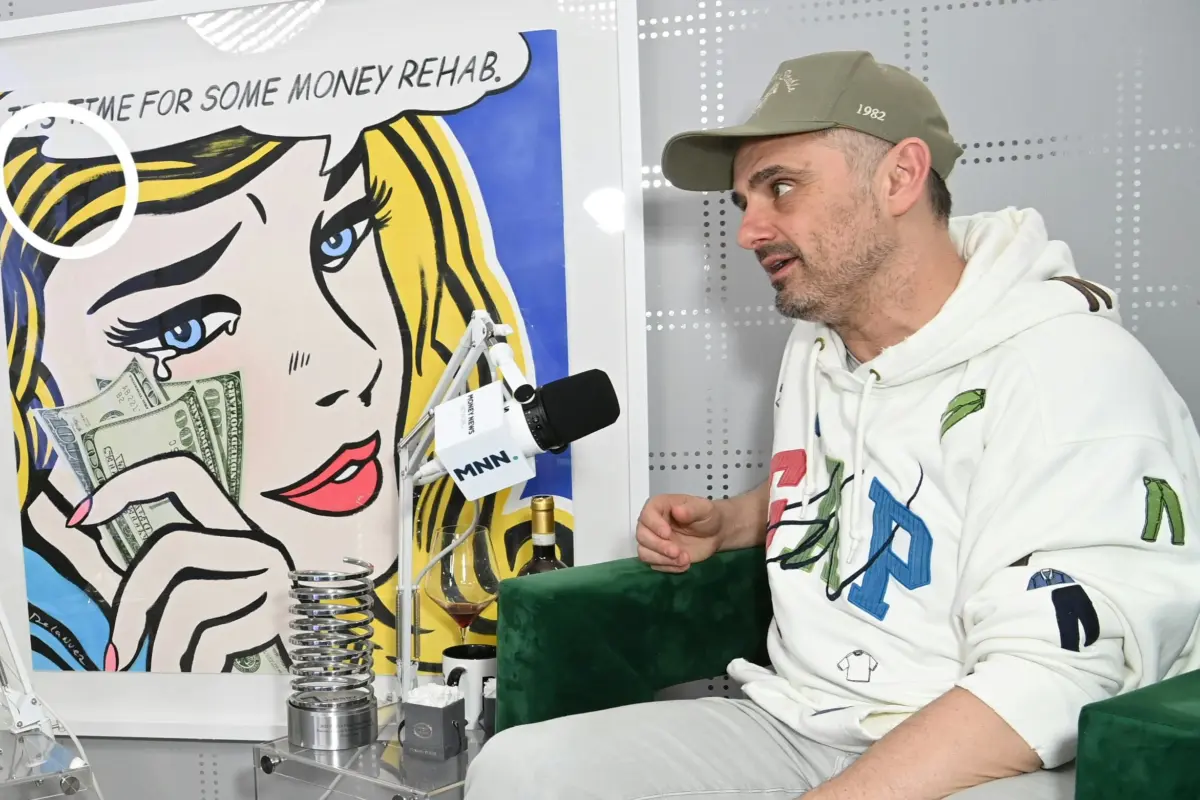
Parents, by contrast, still retain a choice. They have the agency to shield their children from digital depravity, push back against cultural creep, and steer them toward more constructive role models. Among those counters to the vitriol of the manosphere is Gary Vaynerchuk, the best-selling author, radio host, entrepreneur, and unapologetic advocate for kindness. As an executive holding the titles of CEO of VaynerMedia and Chairman of VaynerX, he cuts a hard-nosed, fast-talking figure who firmly believes in bootstrapping one’s life. Yet, he also maintains an underlying commitment to basic human decency. “I know I was well parented,” Vaynerchuk tells Fatherly, “and I have all of my validation, and I mean all of it, wrapped up in being a nice guy.”
While Vaynerchuk argues that parents can choose to lead with kindness, he also emphasizes accountability. He warns against the modern trap of coddling children on one hand while attempting to exert absolute remote control over them on the other, such as tracking their locations via family mobile plans or rushing to intervene in their daily conflicts. “Supporting your child is everything,” Vaynerchuk says. “Enabling your child is a disaster.” Navigating that fine line, he suggests, is the defining challenge of modern parenting.
When discussing the broader societal phenomenon of young people checking out from the workforce and traditional social life, Vaynerchuk points directly to systemic shifts in modern parenting. He believes society has made crucial mistakes and often uses social media as a convenient scapegoat to avoid personal accountability.
“Mistake number one: I do think, especially for boys, we got a little too into eighth-placed trophies, a little too ‘fighting isn’t the way to resolve things,’ a little too coddle-y-coddle-y,” Vaynerchuk says. While describing himself as a devoted mama’s boy, he recalls getting into numerous schoolyard fights without his mother treating it as a crisis. He contends that parents today have become overly entangled in their children’s business, noting that historical generations of parents rarely descended upon schools to contest a teacher’s grading decision. Furthermore, he questions the practice of constantly tracking young adult sons through shared digital networks. “The fuck are we texting our sons who are 27 because we have the family fucking plan and knowing where everyone is? Let men be men,” he argues, posing a rhetorical question about the raising of resilient individuals. “Who do you think wins in a fight: a lion that grew up in the Bronx Zoo, or a lion in the jungle?”
Vaynerchuk views competitive sports as a crucial training ground for developing emotional resilience and handling conflict. He recounts encouraging young athletes who cried after losing, seeing it as a natural reaction that should be validated rather than suppressed. Teaching children that competition does not matter, he warns, can pave the way for depression. He asserts that sports teach valuable lessons about authority, noting that children must learn to tolerate difficult coaches because they will eventually encounter difficult bosses, demanding governors, and unyielding authority figures throughout their lives. Raising adults who throw temper tantrums when faced with minor professional friction stems from a failure to teach children how to handle uncompromising authority early on.
Humility, according to Vaynerchuk, is another critical trait forged through competitive environments. Reflecting on his own childhood, he admits to an oversized sense of self-importance in fourth grade due to athletic success in his neighborhood. However, repeated losses and the sobering reality of broader competition provided a necessary awakening. He compares the acquisition of humility to an acquired taste, similar to caviar, truffles, or oysters—unfamiliar and jarring at first, but ultimately essential for character development. Now, he views his humility as his primary superpower and hopes observing it behind the scenes inspires younger generations to view it as a strength rather than a weakness.
Central to Vaynerchuk’s philosophy is a rejection of the idea that parents should strive to be their children’s best friends. Drawing from his interactions with thousands of daily social media messages and his analysis of modern family dynamics, he argues that failing to teach consequences creates severe long-term problems. While he acknowledges the warmth of close parent-child relationships, he warns that many mothers and fathers slip from being supportive into enabling bad behavior.
“They come to you because you’re their fucking drug dealer,” Vaynerchuk says regarding parents who avoid enforcing boundaries. “You’re dealing the drug of non-accountability. You’re dealing the drug of no consequences. You’re giving them a little hit of, ‘It’s everyone else’s fault but yours.’”
When the conversation shifts to financial independence and work ethic, Vaynerchuk advocates for a direct approach: cutting off financial support as young adults reach their mid-teens or late teens. While acknowledging that his own parents might argue for an even earlier age, he maintains that financially supporting a 23-year-old or 27-year-old son actively harms his development.
Vaynerchuk describes a phenomenon he has observed among young men in their mid-to-late twenties who accept financial support from their parents to maintain a specific lifestyle—such as dating, vacations, high-end gym memberships, and dining out—while privately resenting the dynamic. Through these parental actions, he argues, unintentional messages are sent that undermine a young man’s self-respect. True success, in Vaynerchuk’s view, is not merely about accumulating wealth, but about achieving peace of mind, minimizing anxiety, and developing the independence required to navigate the world without complaint.