
The number 13 has long carried a spooky, unlucky connotation, making it an entirely fitting milestone for American Horror Story: 13 to attempt its creepiest season to date. With the help of an all-star lineup of returning cast members—including Jessica Lange reprising her iconic role as Constance Langdon—alongside some new evil faces, this latest installment of Ryan Murphy’s celebrated anthology series serves as a grand convergence of previous seasons. Airing Thursday nights at 9 p.m. on FX and streaming on Hulu, the new season centers much of its terrifying action in an eerie New York City penthouse that cleverly doubles as the devil’s lair.
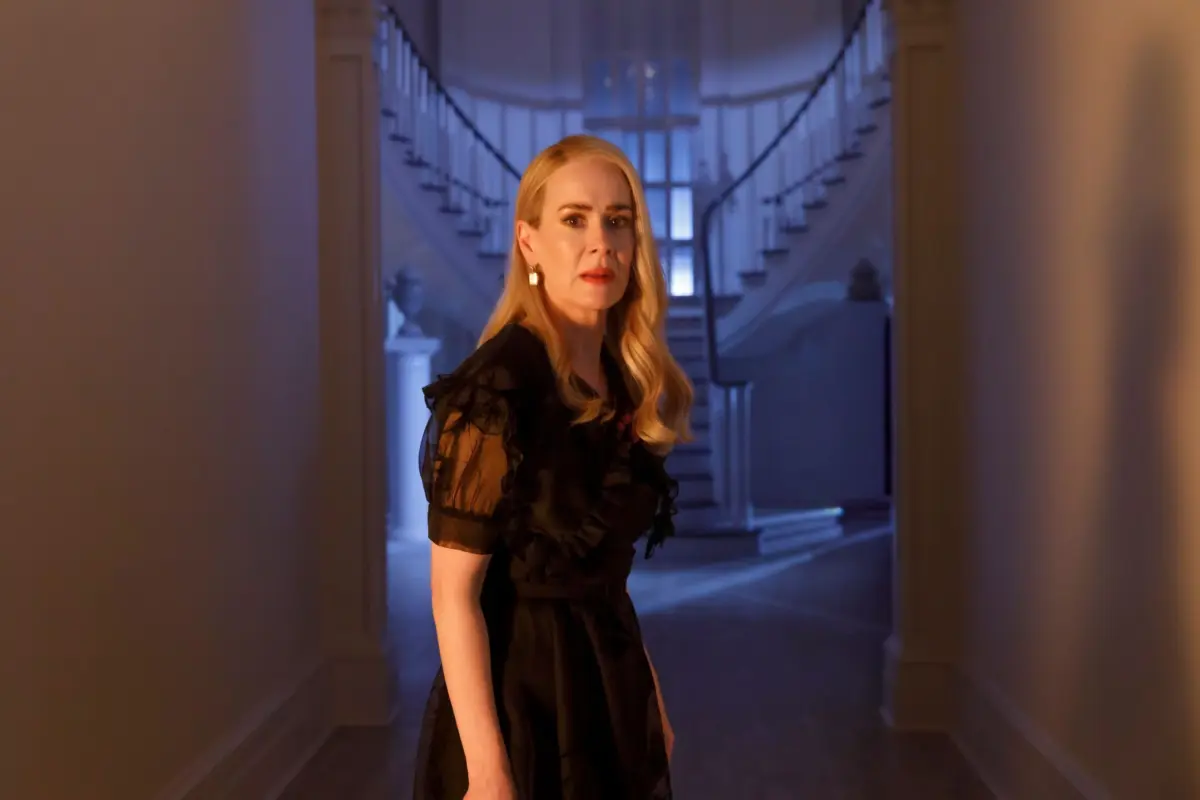
While 13 does not revisit every alluringly creepy location from the rich history of AHS—leaving behind past touchstones like the Tudor Revival murder house and the Art Deco hotel—one major fan-favorite location has thankfully been resurrected for the new episodes: Miss Robichaux’s Academy for Exceptional Young Ladies, the emotional and narrative heart of AHS: Coven, which originally aired as the third season. The historic home of the witches, led by the formidable Supreme Cordelia Goode, portrayed by Sarah Paulson, provides a striking contrast to the devil’s penthouse upon its dramatic reappearance.

According to production designer Anu Schwartz, the juxtaposition of these two distinct environments was a deliberate creative choice. Placing these two worlds side by side gives installment 13 an instant visual language for the grand, ongoing battle between good and evil. The opalescent interiors of the academy embody the bright, protective magic of the matriarchal coven, standing in direct opposition to the dark, seductive atmosphere of the penthouse.
For the production team, designing the devil’s lair required adopting a very specific psychological and aesthetic framework. The guiding design principle was to imagine what Satan’s home would look like after nearly a century of living among mortals in human form: refined, wealthy, and meticulously curated with the finest things the world has to offer. Every single object and design choice was intended to evoke temptation and seduction, physically manifesting the malevolent intent of the devil himself.
In stark contrast stands the legacy of Miss Robichaux’s Academy. When the all-girls boarding school for young witches first appeared on the show years ago, the historic Buckner Mansion in New Orleans was used for its exterior shots, perfectly underscoring Coven’s signature spooky Southern Gothic aesthetic. Several scenes were shot directly on location at the home, situated in New Orleans’ picturesque Garden District. Ultimately, the show’s massive fanfare helped the 1856-built Greek Revival estate transform from a quiet historic walking tour mainstay into a viral tourist attraction. Today, loyal fans of the franchise still flock to the location to catch a glimpse of the sprawling manse. While it was a private residence when Coven was filmed and remains one today, modern visitors are politely directed to view the historic home from the sidewalk.

Rebuilding the revered academy for AHS: 13 presented the production team with a colossal design challenge. When Schwartz learned about the ambitious creative direction of the new season, he felt an immediate rush of excitement. Knowing that the production was going to reach back into previous storylines, weave them together, and simultaneously construct entirely new physical sets fueled his determination to honor the legacy of the original locations.
While all of Miss Robichaux’s interiors during Coven had been shot on a dedicated stage set in New Orleans, the passage of 13 years meant that much of the original material had been lost to time. The paint swatches were gone. The architectural plans had vanished. The specific profiles and proportions existed only in memory, and the original sets themselves had long been torn down. Nothing from the original set had been saved.
Faced with these hurdles, Schwartz turned to Mark Worthington, the original production designer for Coven, to see what could be pieced together from the past. Worthington was able to share a valuable packet of historical photographs, which Schwartz poured over in exhaustive detail. He froze his screen, zoomed in closely, and studied every square inch, attempting to capture all the intricate nuances of the original design.

Further persistence paid off when Schwartz eventually secured a copy of the original Coven plans from a Disney production archive. This crucial discovery allowed his team to successfully identify the exact companies that had originally produced the specialized fireplaces and the ceiling medallions used for the grand chandeliers, enabling them to be faithfully and precisely recreated for the new season.
When it came to tracking down suitable décor and furniture, the production team relied heavily on secondhand platforms to find period-appropriate pieces. For instance, the antique piano featured on the set is not the same instrument that Stevie Nicks famously played in Coven. Instead, it was an accidental discovery on Facebook Marketplace, sourced locally in New York City. According to Schwartz, the seller was helping a 91-year-old man part with a beloved piano he had cherished for decades, and the owner was thrilled to know the instrument would embark on a vibrant second life as part of the television series.
The piano’s journey to the screen was not without its minor dramas. On the very morning a major scene was scheduled to be filmed on the set, actress Emma Roberts sat down at the instrument, only to discover that it did not work. The production team had to scramble quickly to resolve the issue, bringing in a specialized technician to fix the instrument. Once repaired, the piano functioned properly for the remainder of the shooting schedule.

Recreating the exact aesthetic atmosphere of the academy also extended to the walls. Schwartz sought the precise shade used for the whitewashed walls in Coven, but after more than a decade, the original paint chip was long gone. He embarked on a meticulous camera test, a detailed color analysis, and extensive investigation. Ultimately, a warm white and a slightly cooler, gray-tone white were selected for the walls and the architectural trim, respectively. Recognizing that the trim required a different treatment than the surrounding walls, Schwartz worked closely with the director of photography and the set decorator to ensure the lighting and tones aligned perfectly.
While the team could not find the exact original items for every single corner of the set, they treated the process with a rigorous commitment to authenticity, ensuring everything came as close as humanly possible. Scale, profile, silhouette, and shape ultimately proved far more important than tracking down identical artifacts.
Time was perhaps the most formidable antagonist of all. From start to finish, the crew had approximately six weeks to completely rebuild Miss Robichaux’s Academy on a soundstage at Broadway Stages in Brooklyn—a timeline Schwartz candidly describes as bonkers.

That rapid, high-pressure production schedule ultimately paid off in a deeply emotional moment when the cast members walked onto the stage and saw the familiar-yet-foreign set for the first time in more than a decade. Schwartz vividly remembers watching the actors as they soaked in the space, completely awestruck, simply unable to believe their eyes.
For eagle-eyed fans watching closely, a careful look at the set’s instantly recognizable grand staircase reveals a subtle hidden detail: the 13th spindle has been turned upside down. As Schwartz notes, it was a deliberate, quiet little homage to the milestone of season 13.