
INDIANAPOLIS — The Indiana Fever certainly did not expect to be reflecting on the conclusion of their season on a Saturday morning. Built on the back of a historic, high-powered offense, the franchise felt it possessed a genuine opportunity to make a deep and sustained run into the WNBA postseason. Instead, they ran squarely into a familiar roadblock—a championship-caliber "buzzsaw," as general manager Amber Cox described them—in the form of the Las Vegas Aces, who eliminated the Fever from the playoffs for the second consecutive year.
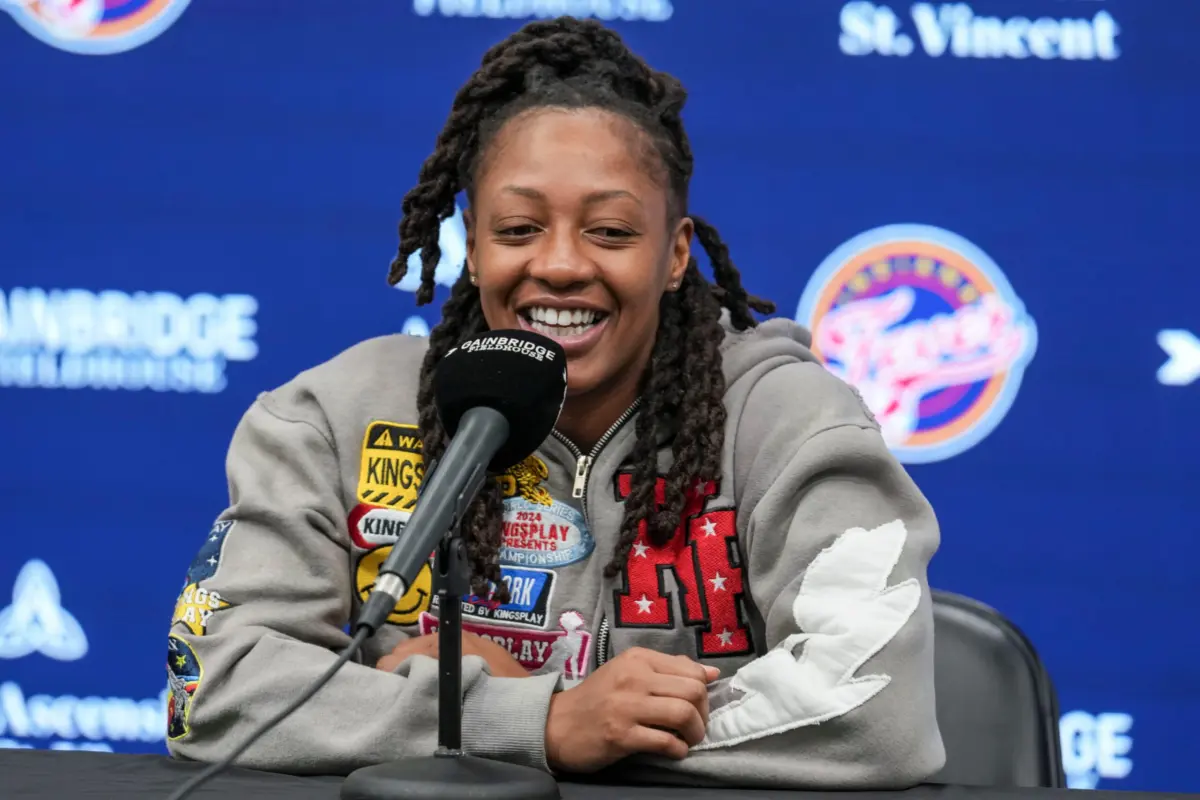
"That part sucks, man," veteran guard Kelsey Mitchell said following the early exit. "I thought we had put in a lot of work to be the last couple of teams standing. It was unfortunate. It sucked. It hurt to not really be the last four standing."
Instead of preparing for a deep playoff battle, the Fever now head into an offseason filled with familiar questions alongside an undeniable need for notable improvements if they want to break through to the next tier of championship contenders. As the front office, coaching staff, and players break down the film and conduct end-of-season exit interviews, a clear picture is beginning to emerge regarding the franchise’s trajectory.
Here are the five biggest takeaways from the Indiana Fever’s season-ending exit interviews.
Kelsey Mitchell Will Be "Selfish" Regarding Free Agency
For the second straight offseason, securing Mitchell’s services in free agency stands as "priority number one" for the Fever, according to head coach Stephanie White. However, the dynamics surrounding this upcoming negotiation have fundamentally shifted. Unlike previous years, Indiana cannot use the core designation on Mitchell this time around, leaving open the very real possibility that the veteran guard could sign with another franchise for the first time in her professional career.
"I have to be selfish," Mitchell said of her impending free agency. "I think that’s where I am in my career about what I probably need and what’s probably best for me, so I have to be selfish in that room."
Reading between the lines, Mitchell spoke like a player who is entirely content with evaluating her next chapter while acknowledging the deep roots she has established in Indiana. Mitchell’s entire nine-year WNBA career has played out in a Fever uniform, and she has reaped the rewards of her long-term labor in recent seasons, including this year, where she firmly placed herself in the league’s Most Valuable Player conversations.
However, external pressures are mounting. The Fever are navigating a complex salary cap crunch, managing the intense media spotlight and added external attention that naturally comes with playing alongside global phenomenon Caitlin Clark, and weighing Mitchell’s own career fulfillment. All of these factors combine to make the possibility of a departure feel entirely plausible.
"I think it’s about figuring out what I need, figuring out what my family needs," she explained. "Ultimately figuring out, I’m getting older, I’m not getting younger, unfortunately. But I’ve obviously built a Fever family here, so it’s like whatever conversation I have to have, I’ll have them. I just think it’s kind of too early for me to really tell what I need to do, but I wouldn’t be here without Indiana. Everything I am is kind of instilled and everything I’ve grown to be is kind of the Fever and so it’s a lot to kind of hash out and figure out. But I guess TBD."
Caitlin Clark Nears EPIC Contract Extension
While Caitlin Clark was occupied in Iowa City earlier in the morning and was not a constant topic of conversation during the Saturday media availability, her towering presence over the franchise remained obvious. General manager Amber Cox revealed to reporters that the organization plans to engage in formal discussions with Clark regarding an Exceptional Performance on Initial Contract (EPIC) extension.
"I would say the other priority is Caitlin has earned the opportunity to sign her EPIC extension," Cox said. "So we’re really excited to talk to her and her team about that."
The strategic blueprint for this kind of extension was tested just last offseason, when the Fever signed standout center Aliyah Boston to an EPIC extension. Crucially, Boston’s deal was structured with a lower financial figure in the first year to preserve essential salary cap flexibility, giving the front office the necessary wiggle room to build out a competitive supporting roster. Whether Clark will be willing to adopt a similar structure remains a vital question. Such a move could potentially provide the front office with the financial freedom required to offer Mitchell her maximum market value while simultaneously adding quality pieces around the team’s emerging core.
Prioritizing Continuity With the Big Three
To that exact point, maintaining continuity among their core star players was emphasized repeatedly by the front office during exit interviews. The Fever watched closely as the Las Vegas Aces reaped the rewards of keeping a superstar core intact over the last two seasons, capturing championships and establishing a sustained standard of excellence. Indiana is hoping to replicate that exact formula.
"We want to keep these three together," Cox said, referring to the team’s foundational pillars. "I think you’ve seen in the history of the league, and obviously the team we just played, when you’re able to do that, that consistency is really, really important, and that’s how you build the continuity and get to a place where you’re consistently winning championships."
With Aliyah Boston and Caitlin Clark locked into the franchise’s long-term future in some form or fashion, the vast majority of the continuity questions hinge directly on Mitchell’s ultimate decision. Her choice will dictate how much of that foundational Big Three can realistically remain intact heading into next season.
Finding Frontcourt Depth Around Aliyah Boston
When the front office evaluated the structural roster flaws on the court, one of the most glaring weaknesses—both figuratively and literally—was the team’s lack of reliable frontcourt depth.
While Aliyah Boston served as the unquestioned anchor in the paint, the Fever cycled through several players alongside her in the starting lineup throughout the grueling campaign, including Monique Billings, Myisha Hines-Allen, and rookie Makayla Timpson. Of that group, only Timpson managed to stick with the rotation through the end of the regular season, though her playing time noticeably dwindled during the high-stakes pressure of the postseason.
Securing consistent, reliable talent to place around Boston has consequently emerged as a primary focus area for both Cox and White as they map out their offseason acquisition strategy.
"Our front court depth needs to be better," Cox stated bluntly. "I think we have to look at who are we putting around her. It starts there… But that’s an area we have to shore up, I think, moving forward. Make sure we’ve got some depth behind AB at the center or the four, what that becomes, moving forward."
Adding intrigue to these personnel evaluations is Boston’s remarkable offensive evolution. This past season, Boston expanded her offensive repertoire dramatically, shooting an impressive 40.6 percent from beyond the three-point arc on 2.7 attempts per game—representing an absolute career year from long range. Having entered the WNBA primarily known as a traditional, back-to-the-basket center, Boston’s newfound ability to stretch the floor fundamentally alters the tactical dynamics of what the team requires from a frontcourt partner, opening up a wider array of strategic options for the front office to consider.
An Urgent Need to Address Defensive Deficits
By several key statistical measurements, including offensive rating, the Indiana Fever fielded one of the most explosive and historically productive offenses the WNBA has ever seen. Yet, the primary reason the team was holding exit interviews on a Saturday morning rather than preparing for the next round of the postseason was the performance rendered at the opposite end of the floor.
The numbers paint a stark picture: Indiana ranked eighth in the league in defensive rating, 11th in total points allowed per game, and ninth in opponent field goal percentage. By nearly every defensive metric available, they finished the year as one of the worst defensive units in the entire WNBA.
Neither the coaching staff nor the front office attempted to sugarcoat those defensive shortcomings.
"We got to make sure we’ve got people on the perimeter that can shut down some of these elite scorers in the league, which is not easy, on a nightly basis," Cox said.
Head coach Stephanie White echoed those sentiments, emphasizing that defensive identity requires a collective psychological shift rather than just individual talent.
"I thought there were moments where we did [defend well] and I think it’s just about being able to have that mentality consistently," White added. "Our teams in the old days had Tamika Catchings who really set that tone. We have great offensive players who set the tone on the offensive end. So I think just finding ways to blend more consistency in both has got to be the goal."
As thrilling as this year’s Fever team undoubtedly was—capturing the public’s imagination and standing out as must-see television at their absolute best—history shows that a purely offense-first approach has never culminated in a WNBA championship. The organization is fully aware that they must achieve a far greater degree of balance by engineering substantial improvements on the defensive end.
That urgent realization will form just one part of the complex matrix of decisions, both large and small, awaiting the Indiana Fever front office during what promises to be a pivotal offseason.