
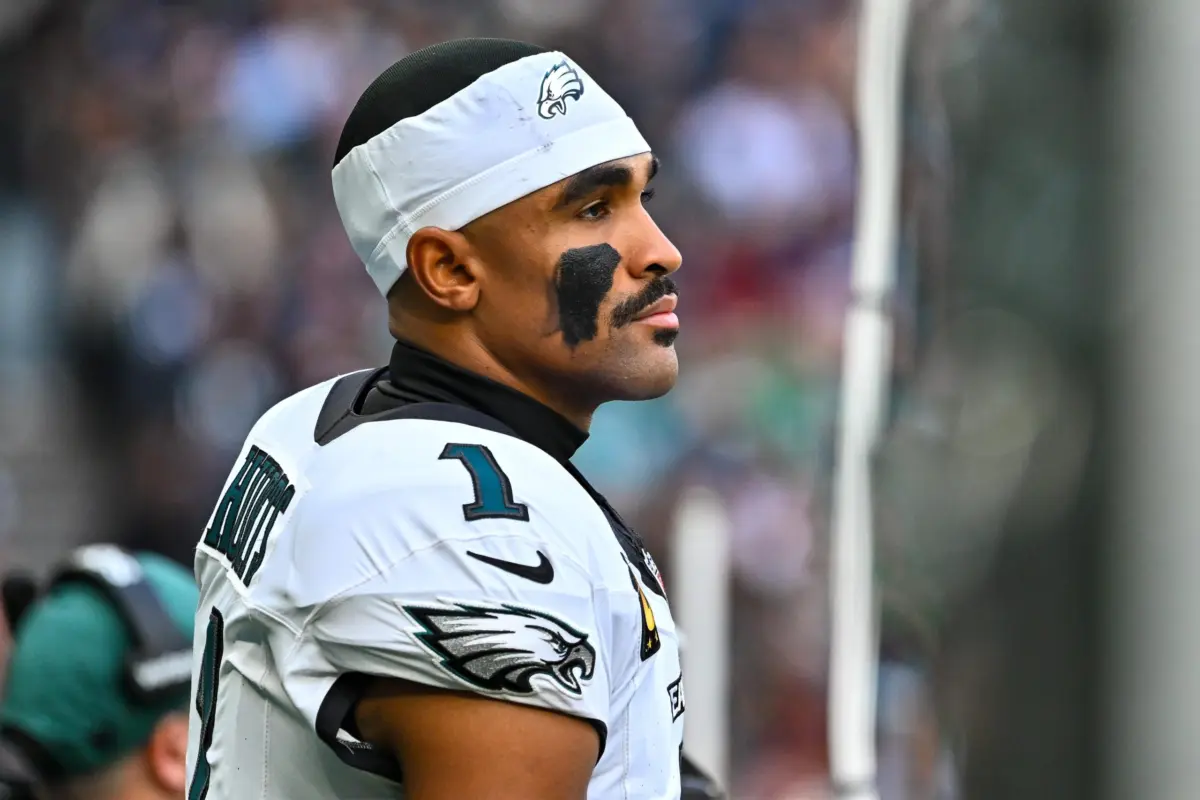
A disastrous season for the Philadelphia Eagles took a severe and alarming turn on Monday morning with the official announcement that starting quarterback Jalen Hurts will miss the remainder of the 2026 NFL season. According to reports, complications arising from blood clots initially discovered in his calf have worsened significantly, forcing a complete shift in his medical treatment and putting a definitive end to his campaign on the gridiron.
The medical crisis escalated over the weekend when Hurts was admitted to the hospital for further diagnostic testing after being ruled out of the Eagles’ matchup against the Carolina Panthers. Advanced imaging revealed a frightening progression of his condition: the blood clots had traveled from his calf, and several new clots had formed and lodged in his lungs. This dangerous development immediately shifted the therapeutic approach from conservative rest and active management to an urgent, aggressive medical intervention.
The treatment protocol moving forward is straightforward yet restrictive, relying on a strict regimen of blood thinners and continuous clinical monitoring. Medical professionals expect that Hurts will make a full recovery with no lasting physiological or athletic effects. However, the condition carries an extraordinarily high risk of exacerbation should the quarterback engage in strenuous physical activity, making a return to professional football impossible for the remainder of the year. A formal statement released by Hurts’ representative on Monday provided additional context regarding the severity of the situation and the player’s current status.
This newly disclosed diagnosis has immediately triggered intense scrutiny and raised major, unanswered questions regarding the decision-making process employed by the Philadelphia Eagles’ medical and coaching staff leading up to the team’s high-profile game in London during Week 5. According to reports from league insiders, Hurts was hospitalized for continuous medical monitoring the very night before the Jaguars game in London. During that hospital stay, medical personnel reportedly deemed sleep too high of a risk due to the nature and volatility of the blood clots, forcing Hurts to remain awake throughout the entire night.
Despite enduring a sleepless night in a hospital bed while battling a potentially life-threatening medical condition, Hurts was subsequently cleared to suit up and play in the international contest. The timeline of events has prompted grave concerns across the sports community. Observers and analysts are questioning why the organization permitted their franchise quarterback to take the field under such perilous circumstances, how he was ever cleared to board a commercial or team flight to England in the first place, and what protocols were overlooked to allow him to fly back to Philadelphia afterward while actively suffering from dangerous blood clots.
The gravity of these revelations has reached a tipping point, leading to widespread calls for a formal NFL investigation into the operational and medical decisions that allowed Hurts to participate in an NFL game less than twelve hours after receiving hospital care for a serious pulmonary risk. The league’s handling of player health and safety will undoubtedly face rigorous examination as details of the timeline continue to emerge.
While the primary concerns surrounding Hurts are centered entirely on his health, personal well-being, and long-term recovery, the competitive ramifications for the Philadelphia Eagles are profound, even if secondary in importance. The team’s 2026 campaign was already veering off course before this latest development, but losing their leader under such dramatic circumstances could very well serve as the decisive blow to their season.
Backup quarterback Tanner McKee stepped into the starting role against Carolina on Sunday and visibly struggled to direct the offense. Facing a depleted Panthers secondary that was playing without both of its starting cornerbacks, McKee managed a meager 215 passing yards on a heavy workload of 47 attempts, highlighting a steep drop-off in offensive capability and execution.
With the Eagles currently sitting at a disappointing 2-4 record, the mathematical possibility of securing a postseason berth remains open within the historically volatile and struggling NFC East. However, any realistic aspirations of mounting a significant Super Bowl run, or even making a deep and competitive push through the playoffs, appear to be functionally finished. As the organization pivots toward managing the remainder of the season with their backup signal-caller, the primary focus in Philadelphia—and across the broader NFL landscape—remains fixed on Jalen Hurts’ recovery and the impending questions regarding the medical decisions that preceded this crisis.